
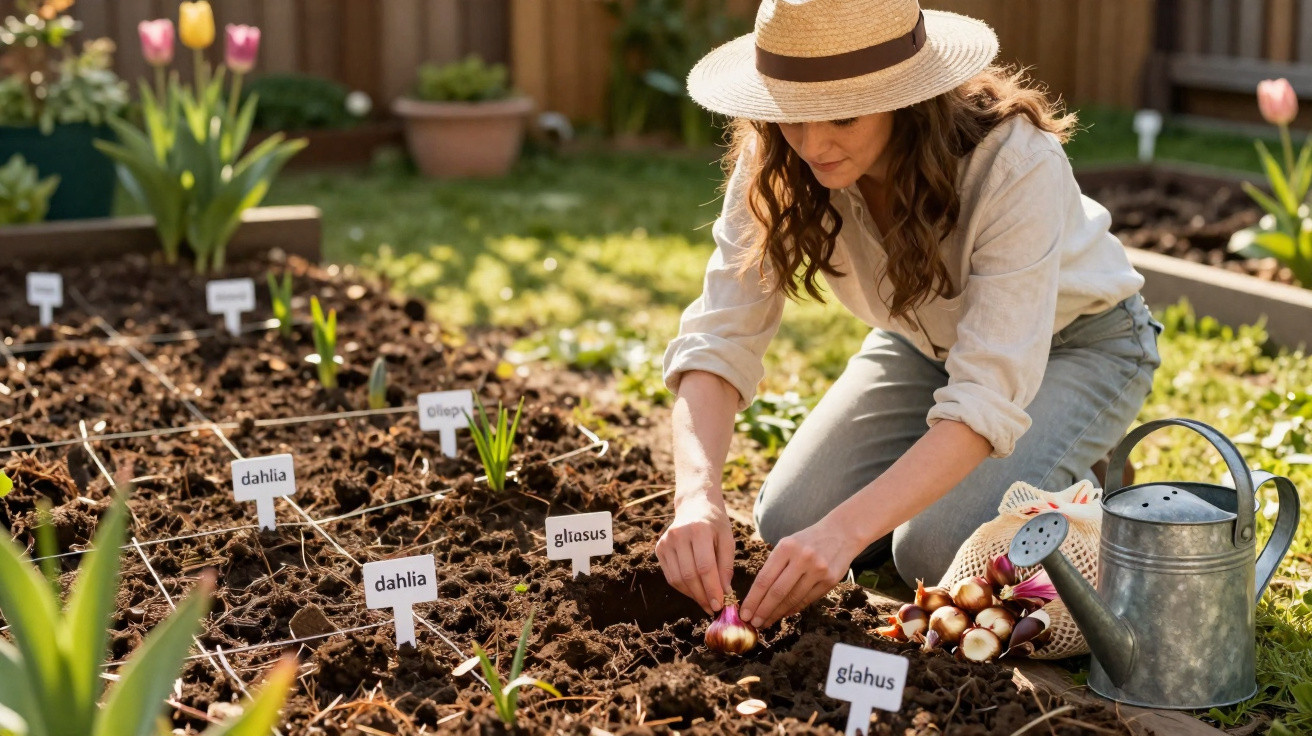
Even when the borders still look bare, the decision has already been made: will your garden erupt with flowers in summer - or fall flat?
Across German-speaking Europe, many hobby gardeners start itching to get going in March: lawn care? roses? veg? Yet well-known gardening experts such as Alan Titchmarsh and plant specialist Sarah Raven point to a different step that’s often overlooked. If you plant certain summer bulbs now, you quietly lay the groundwork for a lavish flowering season from June to August.
Why March is the decisive month for summer bloomers
Climatically, March sits in a kind of “comfort zone”. The days are getting longer, the ground is thawing, and the real heat is still some way off. That’s exactly the window many summer bloomers need - especially those grown from bulbs or tubers.
Alan Titchmarsh often stresses how much planning changes the end result: he wants colour in the garden from winter right through to autumn. His summer tactic is to give the key bulbs and tubers their start now.
"If you plant summer bulbs between late February and early April, you give the plants several months to build strong roots - the foundation for huge, sturdy flowers in high summer."
Sarah Raven notes that early spring is particularly suitable so plants don’t dry out or go mouldy while still in the packet. Bulbs left sitting around for too long lose vigour - and with it, flower size.
A bonus for beginners: summer-flowering bulbs are considered relatively straightforward. Once they’re planted correctly, they need little attention, deliver a lot of colour, and are often much cheaper than large, ready-grown plants from a garden centre.
These summer bulbs should go into the ground now
If you want more than green stems in summer - if you’re aiming for genuinely generous clouds of flowers - March is the time to focus on these groups:
For tall, dramatic borders
- Lilies – elegant, often scented, trumpet-shaped blooms; ideal at the back of a border or as a statement plant near the patio.
- Gladioli – tall, upright flower spikes; excellent as cut flowers and for bold bands of colour through a bed.
- Freesias – shorter, but powerfully fragrant; best for sunny, sheltered spots.
- Crocosmias – looser, fiery red or orange arching sprays that add movement to planting.
Alongside these, several other classics come into their own when planted in March:
- Dahlias – from huge pompons to delicate cactus forms; perfect for large beds and cottage gardens.
- Allium – ornamental onions with spherical, often purple flower heads; add structure and attract insects.
- Begonias – flower all summer in window boxes, pots and shady corners.
- Bearded irises – distinctive blooms with a “beard” that give early-summer borders a refined look.
A key tip from the professionals: don’t dot bulbs and tubers around as single plants. Small clusters look far more impactful.
"Ideally, plant summer bulbs in groups of four to six of each variety. Dense patches of colour stand out much more from a distance than individual ‘lost’ flowers."
When talking about containers and smaller spaces, Alan Titchmarsh is especially enthusiastic about begonias, petunias, verbenas and rudbeckias. They turn pots, tiny beds and balcony boxes into almost solid cushions of bloom that keep going for weeks.
How to plant the bulbs correctly
Whether you’re planting into a border or a pot, the core rules are much the same. Small mistakes at planting time can show up later as gaps or disappointing, weak flowers.
Planting depth, spacing, position
| Plant | Recommended planting depth | Spacing | Position |
|---|---|---|---|
| Lilies | 2–3× the bulb’s height | 20–30 cm | Sun to partial shade, free-draining soil |
| Dahlias | Cover the tuber only lightly with soil | 40–60 cm | Sunny, nutrient-rich |
| Gladioli | 10–15 cm | 10–15 cm | Sunny, sheltered from wind |
| Begonias | Shallow, cover only thinly | 20–25 cm | Partial shade to shade, loose soil |
For containers, Alan Titchmarsh often prefers large terracotta pots. The essentials are:
- Check drainage holes and keep them clear, for example with broken pieces of terracotta.
- Add a thin drainage layer of expanded clay or gravel.
- Set bulbs into loose, peat-free compost with the tip facing upwards.
- Leave enough space so plants don’t crowd each other.
- Keep a small watering rim of 2–3 cm at the top.
In beds, the rule is to avoid waterlogging. Lilies, in particular, dislike wet feet. If your soil is heavy, it’s best to work in sand or fine gravel so water can drain away.
Watering and care: little effort, big impact
Right after planting, bulbs only need modest watering until growth begins. Once shoots appear, the principle is: water deeply but less often, rather than keeping things constantly damp.
"According to Alan Titchmarsh, it’s enough to water thoroughly on a regular basis and make sure excess water can drain away - then many summer bulbs will flower all summer long."
A few simple habits help as well:
- Let the surface dry slightly before watering again.
- In summer, water container plants in the morning or evening, not in the midday heat.
- Remove spent flower heads promptly so energy goes into fresh buds rather than seed production.
- Support tall plants such as gladioli and some dahlias in good time so they don’t topple in the wind.
A hidden enemy inside the bulb: how to protect yourself from thrips
One issue many people underestimate is tiny pests that can hide directly inside the bulb. Thrips in particular - small, narrow insects - often lay eggs between the bulb scales.
The impact is frequently only obvious in summer: buds stay small, flowers develop brown patches or silvery streaks, and the whole plant looks weaker.
To stop it getting that far, specialists recommend a quick health check before bulbs go into the ground:
- Use only firm, plump bulbs with no soft spots.
- Gently clean the surface with a soft brush or your fingers.
- Mix a spray solution: about 1 litre of water with 1 tablespoon of a mild soap solution (such as soft soap or gentle washing-up liquid).
- Spray the bulbs evenly, allow them to dry, and repeat the treatment after three days.
For some types, such as gladioli, ranunculus or anemones, an additional water bath is sometimes used with a splash of a standard household disinfectant cleaner mixed in. These bulbs can soak for a few hours. Tulips, daffodils and dahlias, however, do not tolerate this bath well.
If you can already see clear damage in the border, you can lift affected plants, dispose of infested parts, and then store only healthy, dry bulbs at low temperatures over autumn and winter. This interrupts the life cycle of many pests.
Common mistakes when planting summer bulbs - and how to avoid them
In spring, when the garden to-do list is long, it’s easy to cut corners. Some oversights can cost you a lot of flowering later.
- Planting too late: if you wait until May, you risk weaker roots and a later start to flowering.
- Incorrect depth: bulbs set too shallowly dry out or fall over more easily; too deep and they waste energy pushing through.
- Waterlogging in pots: containers without working drainage holes are an open invitation to rot.
- Overfeeding: fresh compost or strong general fertilisers placed right against the bulb can scorch roots.
- Poor storage conditions: bulbs left for months in a warm, bone-dry garage or cellar lose viability.
How to combine summer bulbs cleverly with other plants
With a little forward planning, you can get even more out of your planting. Many summer bulbs work well alongside perennials, ornamental grasses and even vegetables.
Examples:
- Lilies among airy ornamental grasses: the grasses later disguise yellowing leaves, while the flower heads float above.
- Dahlias with annual companions such as cosmos: they fill gaps until the dahlias really get going.
- Allium along the edge of vegetable beds: ornamental onions draw bees in and can support beneficial insects.
- Begonias beneath lightly canopied shrubs: they make use of partial shade and bring colour to darker corners.
If space is limited, you can also try “layered planting” in large pots: tulips and daffodils at the bottom, with summer-flowering tubers such as begonias or dahlias above. That way, one flowering period follows the next without having to replant.
If you’re still not confident, mixed packs from retailers are a practical option. They often contain varieties chosen to flower together or complement each other in colour. With a single planting session in March, you set the stage for a summer garden that looks far more professional than the effort would suggest.
Comments
No comments yet. Be the first to comment!
Leave a Comment