
When tomatoes and potatoes suddenly turn brown, it is often already too late - but an old method from the 1970s can still save the harvest.
Plenty of home gardeners know the sinking feeling: they nurture their tomatoes for weeks, then one spell of warm, humid weather hits - and within a few days everything starts to collapse. Leaves discolour, fruit rots, and the plants can seem to fall apart almost overnight. For a long time, this outcome felt unavoidable. Yet in the 1970s many gardeners routinely relied on a copper-based treatment that noticeably reduced fungal pressure. That know-how is now making a surprising comeback.
How brown blight wipes out entire beds
Why tomatoes & potatoes are so vulnerable
The dreaded brown blight - often referred to as “late blight” in gardening terms - is a fungal disease that mainly attacks tomatoes and potatoes. It thrives on a mix of warmth and moisture. That is why it often strikes in midsummer: hot days followed by night-time condensation, or frequent rainfall, create ideal conditions.
What makes the damage pattern so deceptive is how quietly it can begin and how quickly it then accelerates. Many gardeners only identify the problem when the infection is already well advanced.
Typical warning signs include:
- Leaves with yellowish or brown patches that steadily spread
- Darkened, soft stems that later die back
- Brown, sunken areas on fruit that quickly rot
"Anyone who ignores these early signs risks the fungus destroying the entire crop within just a few days."
The pathogen spreads via spores carried through the air. Wet foliage, tight spacing, and watering over the leaves act like a turbocharger for infection. This is why the disease used to hit poorly ventilated, densely planted gardens especially hard - and it still does today.
The blue 70s classic: copper against fungal attack
What is behind the “blue brew”
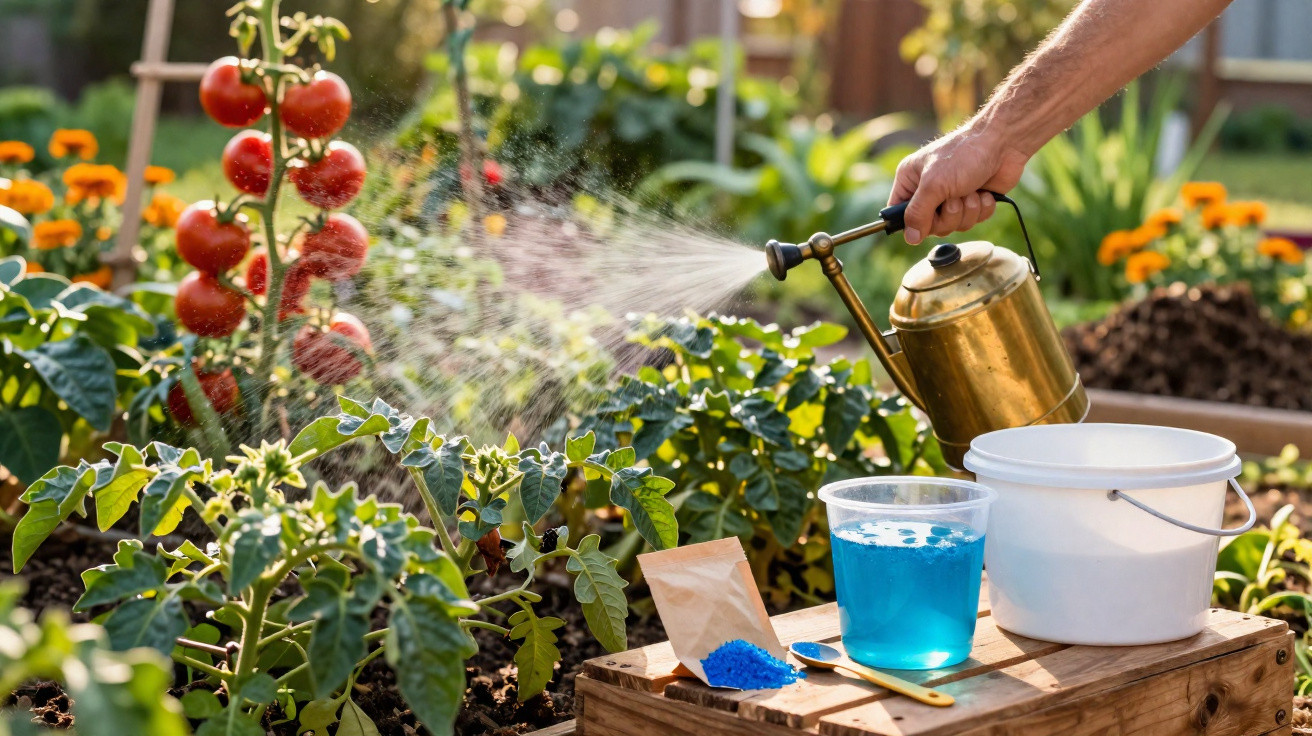
What sounds almost routine in older gardening manuals can feel decidedly unfamiliar to younger growers: spraying a copper-containing solution as a preventative plant protection measure. This refers to products based on copper sulphate, most commonly sold as Bordeaux mixture.
The bluish liquid leaves a thin film on the leaves. On the surface, copper works like a protective shield against fungal spores. The active ingredient does not penetrate deeply into the plant; instead, it blocks new spores from germinating on the outside. That is why the method is chiefly useful for prevention, and far less effective as a last-minute rescue when losses are already underway.
Many long-time gardeners still describe it as a fixed ritual: on Saturday mornings the mixture was prepared, stirred, and sprayed - before sticky thunderstorm weather made the spores take off.
Benefits - and the limits of the method
Copper products are still considered an effective tool against brown blight. Copper is highly toxic to the fungus, generally tolerated by the plant at the correct dose, and even permitted in limited quantities in organic cultivation.
That “limited” point is crucial. Copper is a heavy metal and accumulates in the soil. Anyone who sprays year after year without a plan will, over time, harm soil life, earthworms, and the many small organisms that keep the ground healthy.
"The old method works, but today it calls for more sensitivity: small amounts, targeted use, and combined with other protective measures."
For that reason, modern garden guidance is clear: use copper sparingly, follow strict dosing instructions, and always pair it with other, gentler strategies.
How home gardeners mix and spray the copper solution correctly
Step by step to the “blue protective layer”
If you want to use the traditional copper treatment, accuracy and clean working matter. Typical kit for a medium-sized vegetable garden includes:
- Plant sprayer or pressure sprayer with around 10 litres capacity
- 30–40 grams of copper-based powder (Bordeaux mixture, strictly according to the label)
- Bucket and stirring stick for preparing the solution
- Gloves and, if needed, a respirator mask and safety goggles
Stir the powder into water gradually until everything has dissolved completely, then pour the solution into the sprayer. Important: always follow the manufacturer’s instructions and do not add extra “just to be safe”. More does not mean better here - it simply increases harm to soil and the environment.
Timing is everything
Copper works best before the fungus is visibly active. If you only react once the first fruits are turning brown, you are usually already behind the infection curve.
A commonly used approach:
- First spray shortly before high-risk weather arrives (warm, humid spells in early summer).
- Repeat after heavy rain if the protective film has been washed off.
- No more than five to six treatments per season - and preferably fewer in dry summers.
The best time to spray is in the morning in dry, still conditions. That way the film settles evenly, rather than beading off or drifting away. Midday heat and strong sunshine raise the risk of leaf scorch and should be avoided.
Suitable crops in the vegetable garden
Copper treatment is mainly used for plants at high risk, such as:
- Tomatoes outdoors and in open-sided greenhouses
- Potatoes, especially in wetter regions
- Grapevines - and also sensitive outdoor aubergines and cucumbers during prolonged wet periods
If you only grow a few plants in containers, you can usually reduce spraying significantly, because pots near the house are easier to monitor and move.
Practical tips: how to make protection even more effective
Common mistakes that actually encourage the fungus
Many setbacks come not from too little spraying, but from poor growing practice. Typical pitfalls include:
- Tomatoes planted too close together, with insufficient spacing
- Watering directly over the foliage, especially in the evening
- Leaving the first infected leaves in place
- Choosing varieties purely for yield rather than resilience
A better setup is airy and open: train plants up canes or strings, thin out side shoots, and remove lower leaves that touch the soil. A drier microclimate around the plants noticeably slows the fungus.
How garden professionals combine copper with natural remedies
Experienced gardeners rarely rely on copper alone today. Instead, they use a whole toolkit of measures to keep spray numbers low. Popular options include:
- Nettle feed to support overall plant strength
- Horsetail decoction, which helps firm up plant tissue and makes infection harder
- Garlic or onion extracts with mild fungicidal effects
- Bicarbonate solutions that temporarily alter the leaf surface environment
"Anyone who combines different strategies intelligently needs far less copper - and usually gets more reliable harvests."
Alongside this are classic cultivation techniques: crop rotation (not planting tomatoes in the same spot year after year) and companion planting with herbs such as basil, which can improve the microclimate and attract beneficial insects.
A garden between tradition and ecology
How much copper can healthy soil tolerate?
Copper occurs naturally in soils. It becomes a concern when, over many years, far more is applied than can be broken down. Soil life then suffers. Earthworms become scarcer, microorganisms fall out of balance, and the result can later show up as compacted ground that is hard to work.
If you have used a lot of copper over the decades, it makes sense to pause, mulch generously, and work in organic matter. Compost, leaf mould, and green manures loosen the soil, build humus, and help bind nutrients.
Practical examples for a more resilient vegetable garden
A robust garden against brown blight rests on several pillars. Measures that have proved their worth include:
- Rain covers or simple shelters over tomatoes to keep leaves dry
- Generous spacing to improve air circulation
- A mulch layer of straw or grass clippings to stop soil water splashing onto leaves
- Preferring sturdy varieties, even if they yield slightly less
- Removing the first affected leaves promptly, rather than hoping “it will be fine”
If you take these fundamentals seriously, copper becomes an occasional protective back-up for exceptional summers. That is the real strength of the old 70s method: it works - provided you integrate it into a modern, cautious growing system instead of spraying automatically every weekend as people once did.
In this way, the knowledge of earlier generations can be combined with today’s environmental care - and the chances improve that tomatoes, potatoes, and grapevines will still produce a generous harvest even after a wet summer.
Comments
No comments yet. Be the first to comment!
Leave a Comment