
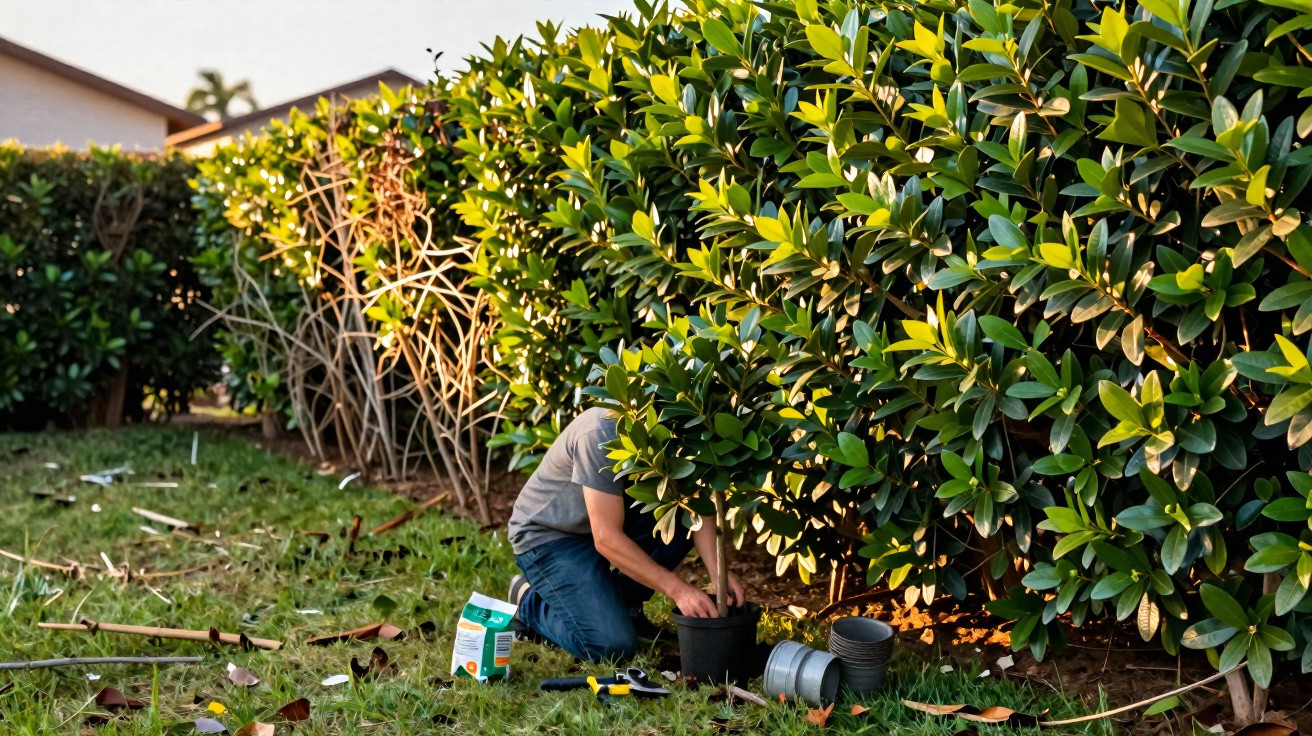
Many front gardens are showing the same disappointing sight at the moment: hedges that used to be thick and red-tipped now look ragged, offer little privacy and mostly create extra work. In France, landscape gardeners are already sounding the alarm and switching to an alternative - an evergreen shrub that is colourful, tough and far less prone to disease. Its characteristics also suit conditions in Germany, Austria and Switzerland perfectly.
Why the former favourite hedge is now failing
Leaves drop, neighbours look in: the disease issue
For years, the fast-growing, red-flushing shrub with glossy leaves was seen as the quick fix for new housing estates and terraced-house gardens. Rapid growth, attractive colour and a dense screen - it seemed to tick every box. But fungal diseases have brought that success story to an abrupt halt.
A particular leaf fungus causes small brown spots that spread quickly. The leaves can barely photosynthesise, then dry out and fall in large numbers. What remains are long, bare shoots - and precisely where you wanted a green barrier, you end up with a literal “curtains up” view towards the neighbour’s garden or the street.
Entire new-build estates now know this scenario: you plan a dense hedge and end up with bare sticks.
Mild winters and damp springs encourage the fungus, allowing it to spread rapidly through whole neighbourhoods. Many owners are realising that this type of hedge is no longer a dependable choice.
High costs, little progress - why many give up
Anyone trying to rescue their hedge often turns to:
- fungicides to tackle fungal disease
- frequent cutting back
- intensive removal of infected fallen leaves
The trouble is that these steps take time, money and patience - and they usually only deliver short-lived improvement. No sooner does the plant seem to recover than the next wet spring brings another wave of infection.
Many amateur gardeners describe a real “maintenance marathon” that, after a few years at the latest, turns into frustration. Instead of an easy-care hedge, they’re left with a permanent project in the garden. It’s hardly surprising that demand for this shrub has noticeably fallen in many garden centres.
What this hedge flop teaches us
The story is reminiscent of the decline of the conifer hedges that were once fashionable: first everyone plants the same species, then a pest or disease arrives - and entire streets are affected.
Monocultures in the garden can be extremely vulnerable to new diseases or shifts in climate. As soon as a pest finds a weakness, it’s faced with an enormous buffet. Many landscape professionals now clearly advise against planting entire boundaries with just one species.
The tough successor: what makes the new shrub so appealing
Evergreen, dense and surprisingly versatile
The shrub many professionals are now backing is Pittosporum. It isn’t yet a common sight in every German garden, but its potential is huge. It keeps its leaves all year round, forms a dense crown and is therefore ideal as a living privacy screen.
Depending on the variety, the foliage comes in different shades - from deep dark green to two-tone leaves edged with cream. Some look almost as if they’ve been drawn with clean, graphic lines; others feel more classically elegant. The leaves have a slight sheen, which helps the hedge look tidy even in winter.
Pittosporum grows faster than many traditional shrubs, but more slowly than the problem candidates - a good compromise between speed and control.
With around 20 to 30 centimetres of growth per year, you can create a solid, private barrier within a few years without constantly reaching for the shears. For many homeowners, that’s the deciding factor: plant once, maintain moderately, and then enjoy the garden.
Less fungal pressure, more enjoyment in the garden
One of Pittosporum’s biggest strengths is its natural resilience to leaf fungi. While other hedge plants quickly develop brown spotting in warm, humid weather, this shrub usually stays healthy.
The benefits are clear:
- significantly less need for plant-protection products
- no regular emergency pruning due to leaf drop
- much steadier, denser foliage over the years
If you prefer a wildlife-friendly approach with as few chemicals as possible, this shrub is a strong ally. In most cases, a light shaping cut once a year is enough, along with a little feed in spring and occasional watering during longer dry spells.
How Pittosporum becomes the perfect privacy screen in everyday use
Choosing the right spot in the garden
Pittosporum does best in sunny to partially shaded positions. Deep shade directly behind tall buildings or under large trees is less suitable, as growth often becomes looser there.
These locations tend to work particularly well:
- along patios and seating areas
- on the boundary next to a footpath or road
- as a green frame for front gardens on new-build estates
- as a living “wall” in front of wire or timber fencing
The soil should be free-draining. It doesn’t like winter waterlogging. In most situations, a loose planting mix with a little compost added at planting time is sufficient.
Plant spacing, final height, care - the key figures
| Aspect | Recommendation |
|---|---|
| Plant spacing for a hedge | 60–80 cm between shrubs |
| Final height (depending on variety) | 1.5 to about 3 metres |
| Pruning | one light shaping cut per year, for example in late summer |
| Watering | regularly in the first two years, then only during longer droughts |
| Feeding | in spring with an organic long-release fertiliser or compost |
If you’re patient during the first year and ensure adequate watering, you’ll typically be rewarded with a hedge line that remains stable for the long term.
Why experts are now recommending mixed hedges
Diversity instead of uniform green
Even though Pittosporum offers a long list of advantages, specialists caution against switching straight back to planting a single species everywhere. Mixed hedges are now considered the gold standard: they look more varied and are far more resilient.
Good companion plants for Pittosporum include, for example:
- Elaeagnus with silvery, shimmering foliage
- hazel shrubs, which show the first catkins in late winter
- bloodtwig dogwood with colourful winter stems
- classic choices such as privet or hornbeam
The result is a living “mixed fence” that has something to offer throughout the year - from flowers and berries to attractive bark in winter.
The more diverse the hedge, the harder it is for pests and diseases - and the more interesting the garden looks all year round.
More life in the garden, without losing privacy
Mixed hedges combining Pittosporum with other shrubs attract birds, insects and small mammals. Flowers provide nectar and pollen, and dense foliage creates nesting sites and shelter. At the same time, the person sitting behind it on the patio still gets the desired protection from prying eyes.
Families with children benefit twice over: the garden becomes a place to observe nature, without sacrificing structure and order. With sensible plant choices, it’s also possible to avoid poisonous species and focus on hardy, low-sensitivity shrubs.
Practical tips for anyone replacing an old hedge
Work in stages rather than going in all at once
If you already have a badly damaged, gappy hedge, it makes sense to plan the changeover in steps. There’s no need to rip out the entire boundary straight away. A sensible approach is to:
- remove the most visibly diseased sections first
- loosen the soil and improve it with well-rotted compost
- plant Pittosporum along with one or two additional species
- replace the remaining older plants gradually over the following years
That way, you keep at least some privacy while the new planting slowly fills in.
What to look for when buying at the garden centre
When shopping, it pays to inspect the plants carefully:
- leaves free from spots or discolouration
- strong, well-branched shoots
- a root ball that is slightly moist but not waterlogged
- a clear variety name and stated origin
If you want to create a mixed hedge, it’s best to ask to see several varieties and picture how they will look through the seasons: who flowers when? Which colours dominate in winter? This helps you create a coherent overall effect rather than a random patchwork.
One more point: some Pittosporum varieties can be sensitive in very cold locations. In harsher areas with severe frost, it’s worth getting advice on which options are considered winter-hardy, or whether a lightly sheltered position makes sense - for example in front of a house wall or a boundary wall.
By keeping these points in mind, you can leave the hedge frustration of recent years behind and look forward again to dense, healthy and visually interesting garden boundaries - without constantly worrying about the next fungal outbreak.

Comments
No comments yet. Be the first to comment!
Leave a Comment