
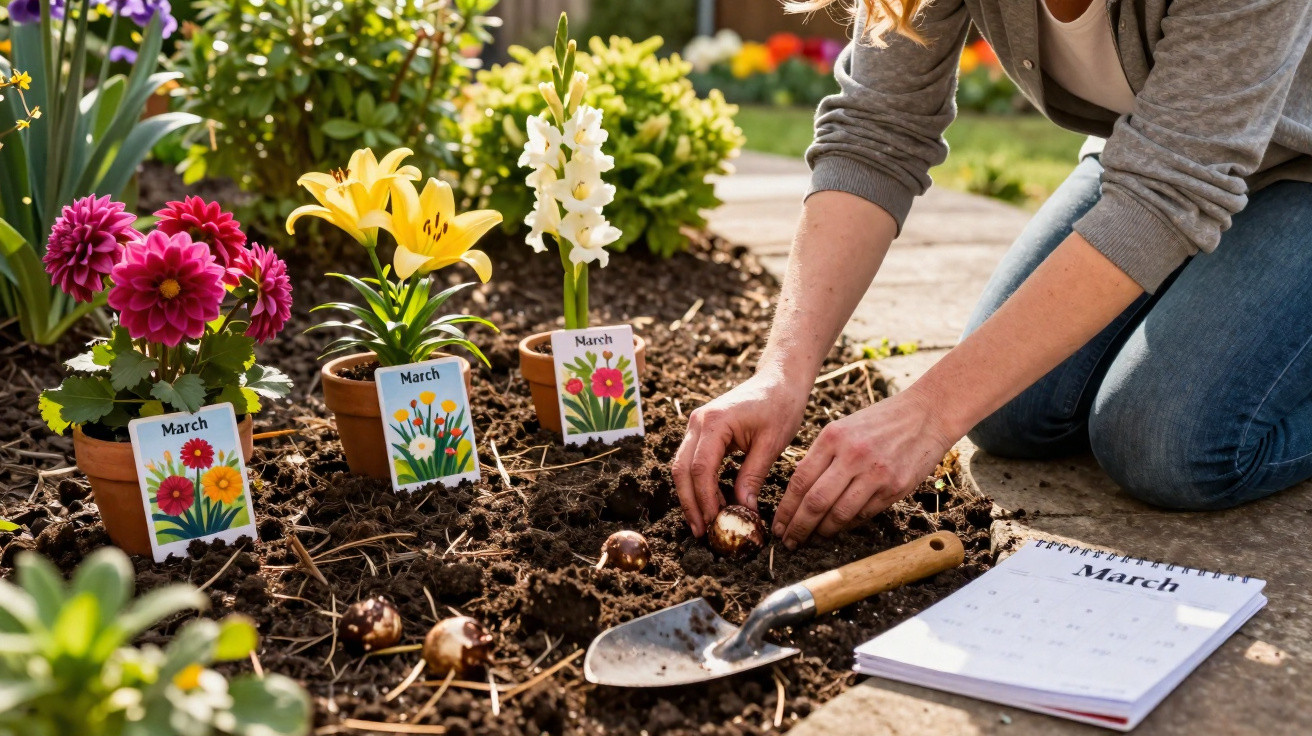
With four carefully selected bulb and tuber plants, you can fill precisely this gap.
When daffodils and tulips fade, the mood in the garden can change abruptly. Colour disappears almost overnight, leaving only green behind. Anyone who simply waits may be waiting for some time: life returns only when roses, perennials and summer flowers begin to perform. Gardeners who put particular bulbs and tubers into the ground in March can avoid this lull and bring flowers into summer much earlier.
Why March determines summer flowering
Timing is the key to a garden that flowers continuously. Many summer-flowering bulbs and tubers need several weeks to send up shoots, establish roots and produce blooms. If they are planted only in late April or May, the first flowers can easily be delayed until high summer.
“Planting in March brings flowering forward by several weeks – turning a bare June into a colourful beginning to summer.”
In many parts of the UK, the suitable planting window opens once severe frosts have passed and the soil has warmed slightly. This is commonly from early to mid-March. That is the ideal time to choose four groups of plants:
- Dahlias for abundant colour from early to late summer
- Begonias for shady corners and balconies
- Lilies as fragrant, structural accents
- Peonies as a long-term investment for future springs
Together, they ensure that the spring bulbs are not followed by weeks with nothing happening.
Dahlias: a fast route to early summer flowers
Dahlias are among the most popular summer-flowering plants. They grow from tuberous root clumps and, provided they are started early enough, produce fresh blooms almost without interruption from June through to October.
Starting dahlias in March
The tubers cannot tolerate frost. Planting them straight into the border risks damage if temperatures drop sharply again. A two-stage approach is therefore advisable:
- In March, place the tubers in pots filled with loose compost, covering them only lightly.
- Keep the pots somewhere bright and frost-free, such as a greenhouse, conservatory or a sheltered windowsill in the garage.
This lets the plants develop roots and their first shoots undisturbed. From mid-May, once the risk of frost has passed, they can be moved into the border with strong growth already underway. This head start usually brings flowering forward considerably, often to June.
Dahlias favour fertile, free-draining soil and a position in sun or light partial shade. Regular watering and an occasional feed during summer reward you with large, richly coloured flowers. Removing spent blooms encourages the continual formation of new buds.
Begonias: colour for shady balconies and north-facing areas
A garden without blazing sunshine does not have to go without flowers. Tuberous begonias thrive where other plants struggle: in partial to full shade, on north-facing balconies or in sheltered courtyard corners.
How to grow begonias from tubers
In March, place the flat tubers in trays or pots with the hollow side facing upwards. Use loose, humus-rich compost that remains evenly moist without becoming waterlogged. Cover the tubers only lightly, or leave them uncovered until the first shoots emerge.
A bright, frost-free spot is ideal. Once the shoots lengthen and temperatures remain reliably mild, the plants can be moved outside in their pots to the balcony or patio. They will flower throughout summer, provided they are not allowed to dry out.
“Begonias bridge the flowering gap in shady spaces, where traditional summer flowers bring little colour.”
One important point: tuberous begonias are sensitive to cold. In autumn, lift the tubers from the soil, allow them to dry in an airy place and then store them frost-free over winter. This way, they can remain part of the garden for many years.
Lilies: elegant, scented accents for gaps in the border
Lilies add another dimension to garden design. Their height, striking and sometimes strongly scented blooms, and bold vertical presence make them particularly effective in beds and borders. Planted among lower-growing perennials and ground-cover plants, they create contrast and interest.
What matters when planting lilies
Plant the bulbs in March as soon as the soil is workable. A few basic rules help prevent losses:
- Planting depth: two to three times the bulb’s height
- Position: sunny to partly shaded, neither too hot nor too wet
- Soil: well-drained, ideally improved with a little sand or fine grit
Depending on the type, many varieties flower from May to August. Combining early- and late-flowering varieties extends the display, so there are barely any gaps in the border. Lilies also make excellent cut flowers for a vase.
Peonies: plant now, admire them in two years
Peonies are enduring garden favourites, but they do not suit the impatient gardener. Planting them in March means planning years ahead, yet the reward lasts a long time. Once established, they often remain in the same position for decades and become more beautiful each year.
Long-term planning for lavish spring flowers
Whether herbaceous or tree peonies, both types prefer deep, humus-rich soil and a site in sun or partial shade. It is essential not to plant them too deeply. On herbaceous peonies, the growth buds should sit just beneath the soil surface; otherwise, flowering may quickly fail.
“Peonies are regarded as ‘long-distance runners’ in the garden – restrained at first, then almost impossible to imagine being without.”
For the first two to three years, newly planted peonies can look rather weak, producing few or no flowers. Give them this time, and they will later reward you with large, sometimes intensely scented flower heads that define late spring and early summer.
How to close the flowering gap effectively
The four plant types each perform a different role through the year. Used together thoughtfully, they leave scarcely any period without colour. One possible planting plan for a border is:
| Period | Main flowering focus |
|---|---|
| March – April | Spring bulbs (daffodils, tulips, crocuses) |
| May – June | First lilies, peonies, early dahlias |
| June – August | Dahlias, begonias, various lilies |
| September – October | Late dahlias, some begonias, autumn perennials |
Planting in March gets this sequence under way at the right time. Those who wait until late April often lose June entirely as a flowering month, simply because the plants have not developed far enough.
Practical tips for strong results
A few straightforward measures will make the effort worthwhile:
- Check bulbs and tubers before planting, discarding any that are soft or mouldy.
- Never plant into wet, heavy soil; mix in some sand instead.
- Consider the plants’ eventual height when placing them: put low-growing types at the front and taller plants, such as lilies and many dahlias, towards the back.
- Give pots and window boxes sufficient volume, otherwise everything dries out too quickly.
If you are unsure, start some of the tubers in pots as a trial and move them into the border later. This makes spacing easier to judge, as you can already see the plants’ actual size.
What many people underestimate: spring risks and opportunities
March may sound like spring, but late frosts are still possible. Tubers in pots or shallow containers are especially prone to cooling down sharply overnight. A simple horticultural fleece, or temporarily bringing them into the garage, prevents damage. In the border, a thin mulch of leaves or grass clippings helps buffer the soil slightly.
At the same time, an early start to the year brings another opportunity. If you notice while planting that borders look bare or paths seem poorly proportioned, there is still time to make changes. Perennials have not yet reached full growth, so the area remains easy to assess. Step by step, this creates a garden that stays colourful from the first day of spring until autumn, without long, dreary intervals in between.

Comments
No comments yet. Be the first to comment!
Leave a Comment