
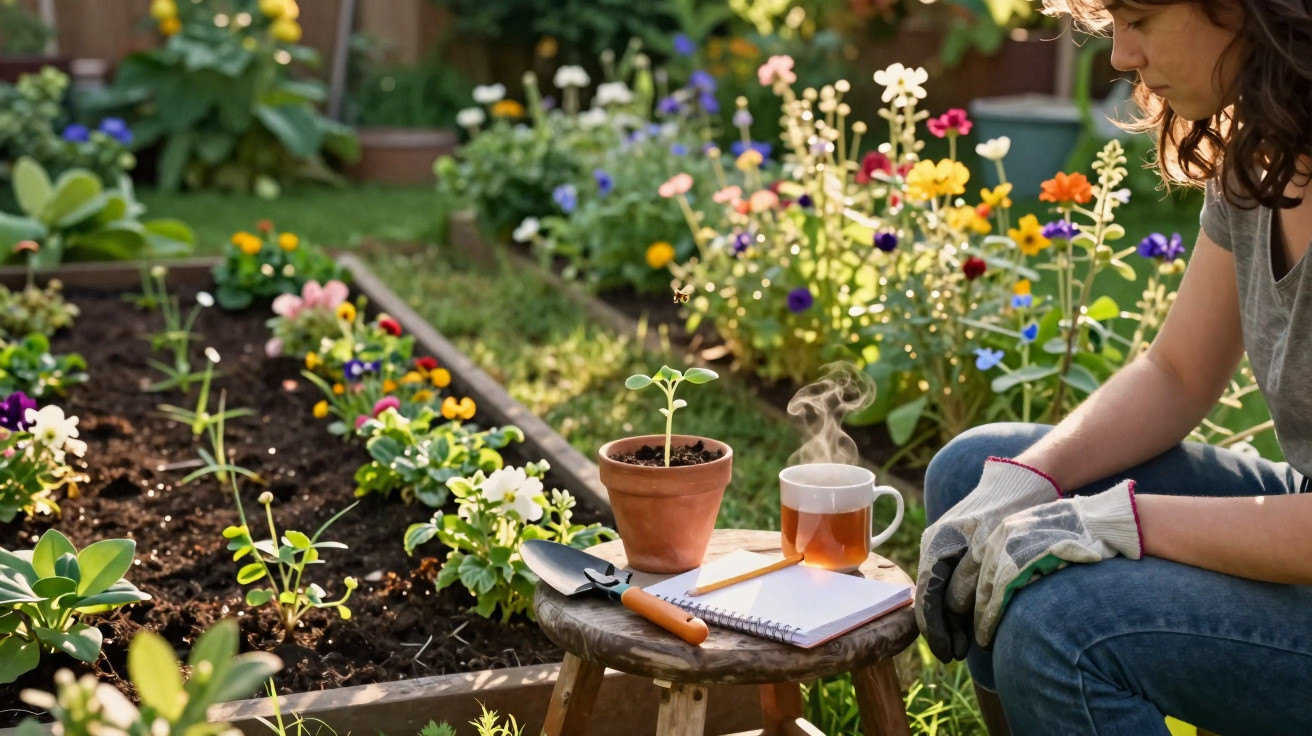
On a late Sunday evening, with the light softening every rough edge, many gardeners become restless. You can sense it around the neighbourhood: one person hauling out a hose, another opening a new “must-have” device said to treble tomato crops. A bed that seemed perfectly acceptable the day before suddenly appears… inadequate. A touch too untidy. Not good enough for those immaculate Instagram garden reels.
A shrub is relocated. A border is dug up. Yet another “pollinator mix” is scattered over one that has not even completed a season. The garden is rarely allowed the time to settle.
Oddly, these repeated attempts to make things better often produce precisely the outcome we are trying to avoid.
When “fixing” the garden damages what was already working
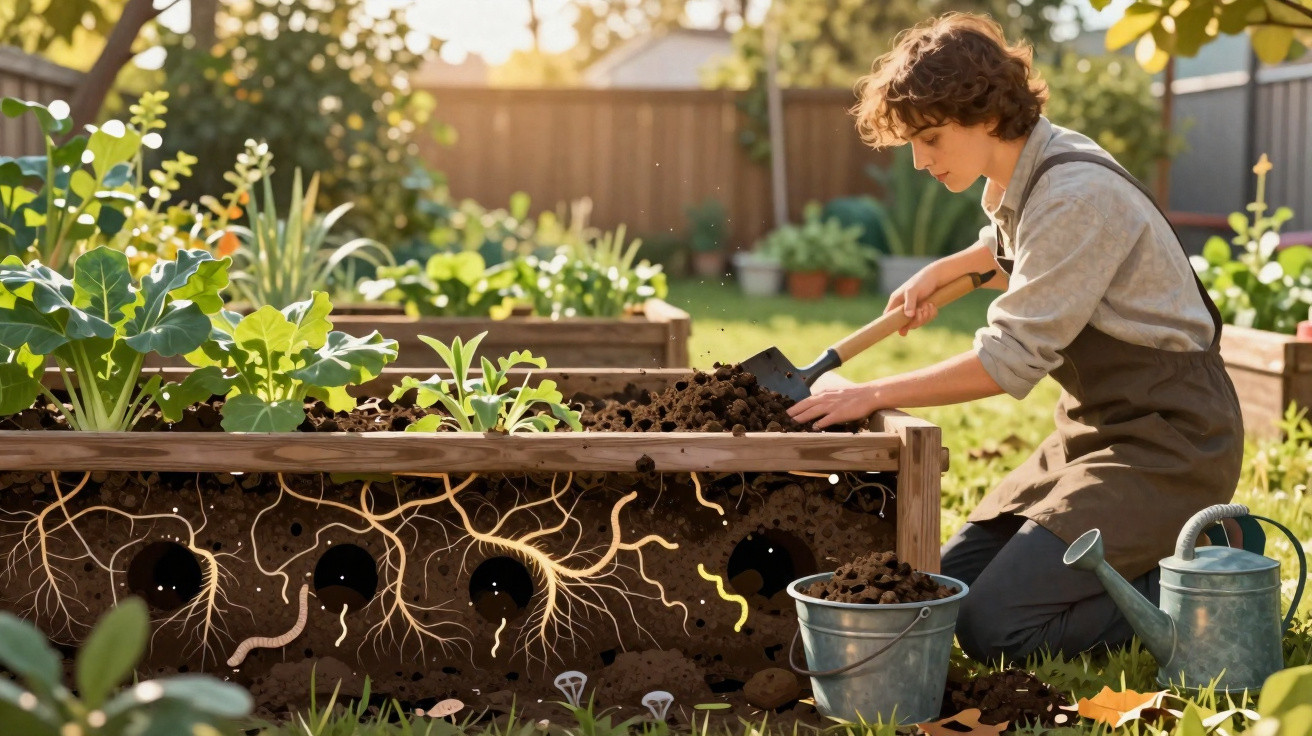
Long before we arrive with a trowel, every garden follows its own quiet rhythm. Roots work their way through dark earth, fungi create unseen pathways, and tiny predators make their rounds after dark. None of this features on glossy seed packets, yet it is the background orchestra that keeps the whole system in harmony.
Then the human impulse to adjust takes over. One leaf turning slightly yellow can send us to the shop for another fertiliser. A bare-looking patch in April suddenly “needs” three extra perennials. We set the timetable rather than letting the garden do so.
That is when the balance begins to shift, subtly at first.
Consider Sophie, a novice gardener who took on a small, slightly untidy suburban garden. During her first spring, it was alive with activity. Bees worked the clover, ladybirds covered the roses, and blackbirds pulled worms from the lawn. Compared with her neighbours’ neatly arranged flower beds, she felt it looked “a bit neglected”.
She therefore set about changing it. The wild corner, where nettles and brambles gave insects cover, was removed. Decorative gravel, a neat border, three flamboyant roses and regular applications of a “complete” fertiliser took its place. By high summer, the flowers were large and vivid… but the garden had become strangely quiet. There were fewer bees. Aphids were more numerous. The blackbirds visited less.
What appeared to be an improvement above ground had quietly removed some of the garden’s systems for regulating itself.
A garden is not a sitting room to be rearranged on a whim. It is more like a miniature ecosystem, shaped by relationships that are not immediately visible. Leaves with a few bite marks? They often show that caterpillars are being fed, and those caterpillars will eventually feed birds. That area of “weeds”? It may be a food store for dozens of pollinators and helpful insects.
With constant intervention, we accelerate one part of the system while holding another back. Powerful fertilisers encourage abundant leafy growth, but can deprive the soil life that breaks down organic material. Frequent digging loosens the ground, yet tears apart fungal networks that enable plants to share nutrients. We gain immediate control at the expense of long-term stability.
Balance is lost quietly, through one “improvement” after another.
Learning to do less, more slowly in a balanced garden
One of the most effective ways to maintain garden balance is surprisingly straightforward: take observation pauses. Before you buy, plant, move or feed anything, wait. Give it at least a week, or an entire season if you can manage it.
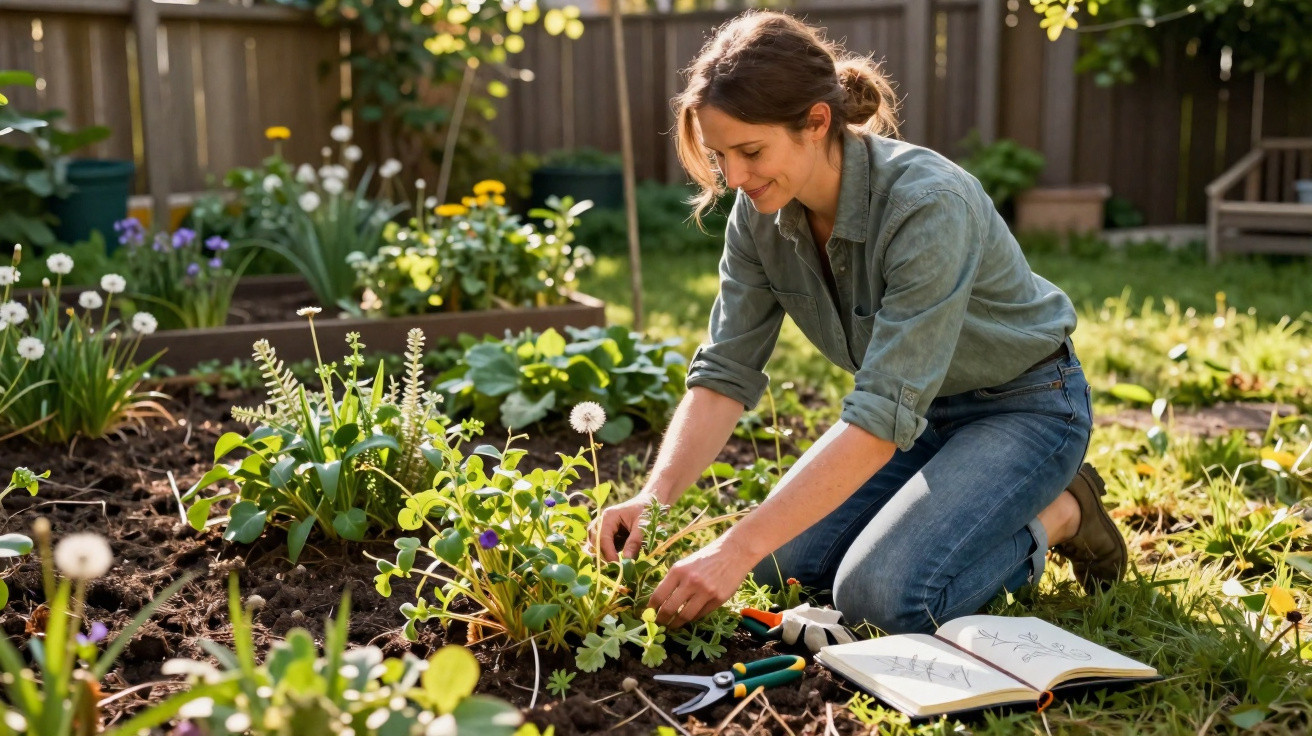
Walk around the garden at several times of day. Go out early, when slugs are active. Look again at midday, as heat reaches the soil. Visit at dusk, when moths and bats emerge. See which plants manage without watering and which areas hum with activity.
After that, alter one small thing at a time rather than five.
A familiar situation goes like this: a gardener spots holes in cabbage leaves and panics. On the next visit to the garden centre, pesticide goes into the trolley. A fortnight later, the caterpillars have disappeared and the cabbages look healthier… but so do the aphids on the roses. Why? The ladybirds that would have kept the aphids under control have also vanished from the treated bed.
We have all experienced that moment when something seems “wrong” and the fastest solution feels irresistible. The garden cannot establish its own checks and balances when we continually rush in to save it.
At times, the kindest thing you can do for a garden is allow it to struggle slightly and see what arrives to assist.
Let us be realistic: hardly anyone manages this every day. Most of us move between neglect and excessive intervention. We leave the garden alone for weeks, then descend on it with secateurs and soil conditioners during one frantic weekend.
In reality, balance responds best to modest, regular care. It does not need grand rescues or relentless upgrades. It needs calm, consistent actions that allow roots, microbes and insects time to react. Gardens thrive on continuity far more than on perfection.
“The more I stopped trying to ‘improve’ my garden, the more it started improving itself,” a long-time allotment keeper told me, leaning on his fork. “My job now is mostly to stay out of the way.”
- Keep at least one area a little wild
- Alter just one feature in each bed per season
- Choose compost ahead of synthetic fertilisers
- Observe for a complete month before deciding there is a “problem”
- Treat some holes, untidiness and uneven growth as evidence of life
A quieter version of gardening success
A subtle change takes place when you stop seeing the garden as a project and begin to regard it as a place you share. The aim gradually shifts from “control” towards “conversation”. Plants need not put on a show all the time, and neither do you.
You start recognising different kinds of success. It is not the straightest hedge, but the blackbird that comes back every spring. It is not the largest dahlias, but the self-sown calendula appearing in the path, somehow like a compliment. You come to understand that a slightly unkempt border can support much more life than one that is flawless, sprayed and perfectly edged.
At first sight, a balanced garden often seems less spectacular. It may contain faded flower heads retained for seed, leaves gathered beneath shrubs, and a log never quite cut up for firewood. Some neighbours may interpret this as neglect. With time, you see it as infrastructure: food for beetles, shelter for hedgehogs and moisture retained in the ground after heavy rain.
The paradox is that, the less relentlessly you pursue improvement, the more resilient-and quietly attractive-your space becomes. A late frost, heatwave or pest outbreak will see a well-balanced garden flex and recover rather than fail. You are not forced to begin again from nothing each season.
That is the true luxury: a garden that does not rely on your endless interventions in order to work. It is somewhere that appreciates your presence without falling apart when you are away. It is a patch of ground where you can sit, finally with empty hands, and watch dragonflies pass over a pond you did not line last week or last year, but many seasons earlier.
You may still purchase a new plant, reshape a border or test that ingenious trellis you noticed online. The difference lies in the pace. And in the intention. You are no longer pursuing the next major upgrade. Instead, you are gradually and quietly allowing the garden to become itself.
| Key point | Detail | Value for the reader |
|---|---|---|
| Observe before acting | Take “observation pauses” lasting at least a week or a season | Limits needless interventions and expensive errors |
| Change one thing at a time | Modify one element in each bed per season | Makes it simpler to identify what genuinely supports or damages balance |
| Accept controlled “imperfection” | Retain wild corners and tolerate small amounts of damage and untidiness | Improves resilience, benefits wildlife and reduces maintenance |
FAQ:
- Should I stop using all fertilisers? You do not need to take such an extreme approach. Put compost and slow-release organic feeds first, and keep stronger fertilisers for obvious, specific deficiencies rather than applying them routinely.
- How do I know if I’m intervening too much? If you are always “fixing” something and every adjustment creates three further jobs, take that as a warning. A balanced garden leaves breathing space between tasks.
- Is a wild-looking garden always better balanced? Not necessarily. A mass of invasive plants can be as unbalanced as a sterile lawn. Seek diversity, layers and continuity instead of total chaos.
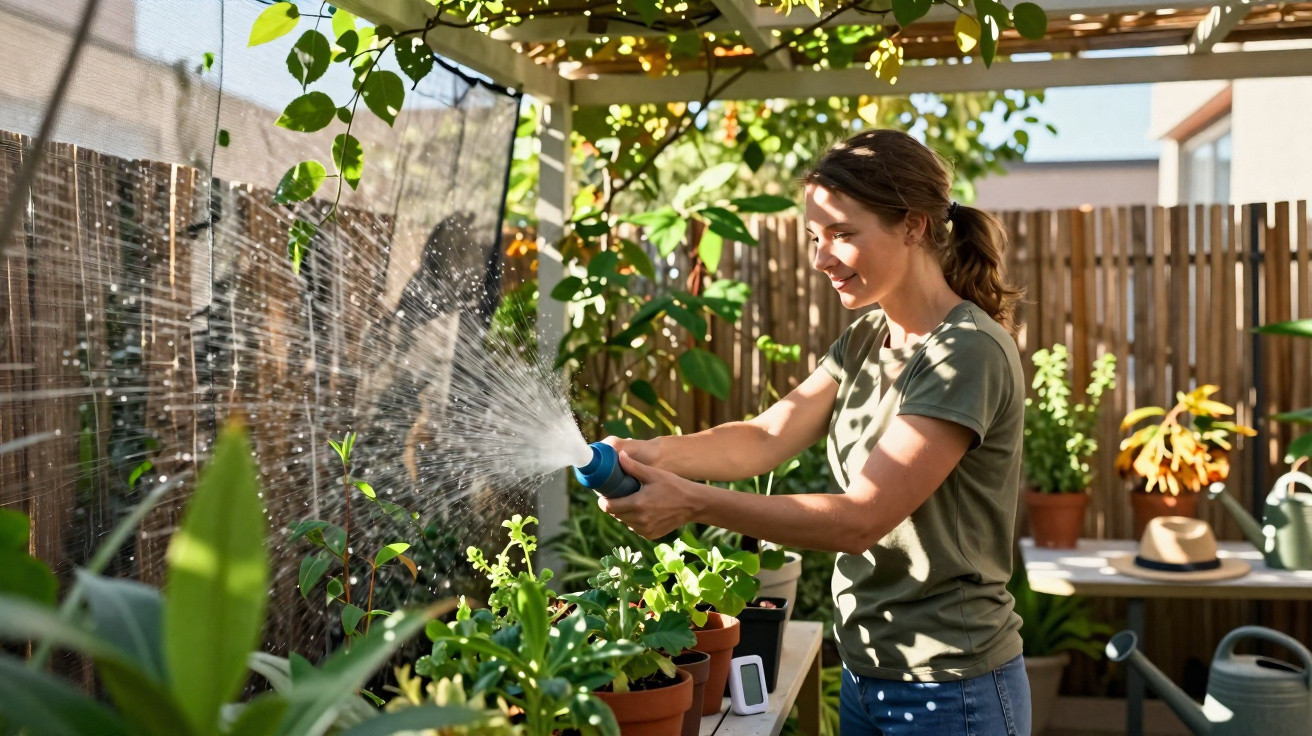
- Can a small city balcony even have “balance”? Yes. Combining different plant types, avoiding aggressive chemicals and not constantly repotting can allow even a small collection of containers to form its own micro-ecosystem.
- What’s one small change I can make this season? Pick one corner or a single bed, promise yourself you will observe first, then make only one change. Let the rest of the garden show you what truly requires your help.


Comments
No comments yet. Be the first to comment!
Leave a Comment