
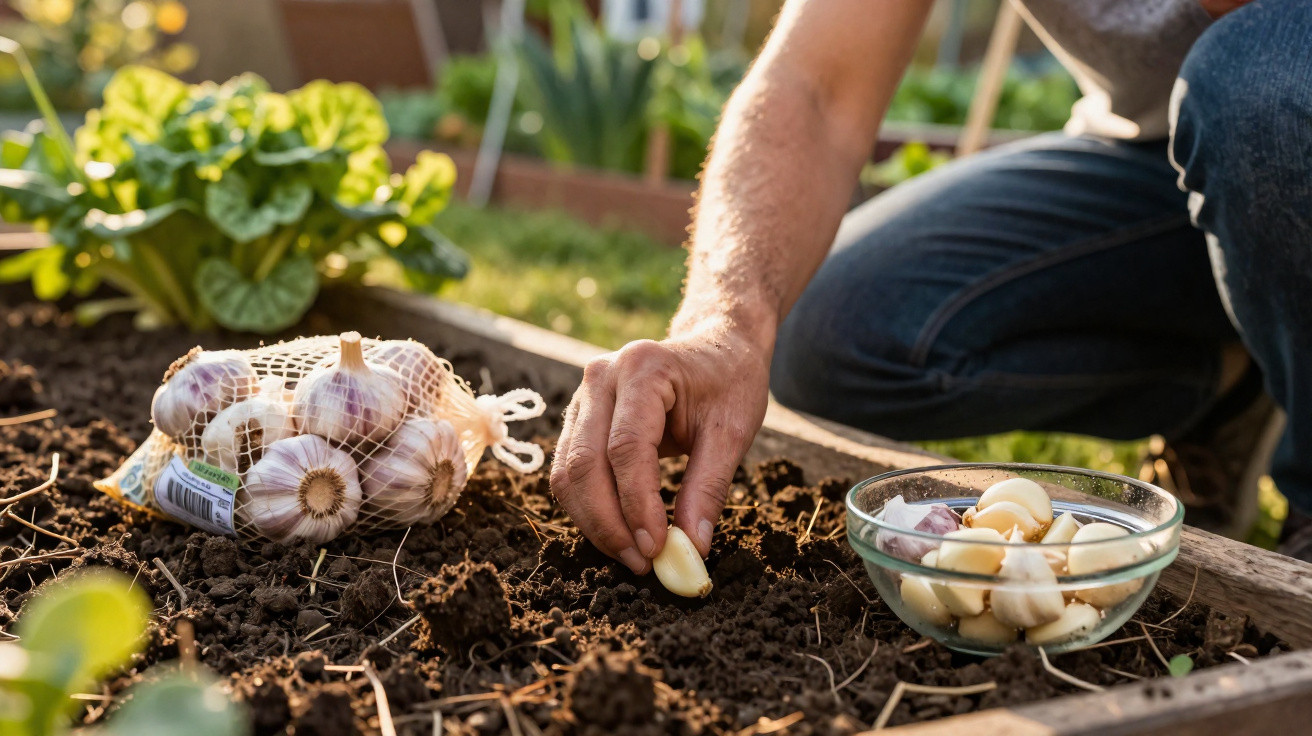
Many hobby gardeners buy costly planting bulbs, yet another method has long been circulating online: simply push supermarket garlic into the soil and harvest your own crop a few months later. It sounds like a miracle trick, but it works only if you pay close attention to what you plant, the condition of the soil and how you manage moisture.
Why supermarket garlic can make sense in the garden
Garlic is a kitchen staple, but it is often overlooked in the garden. Many people assume that only certified planting stock from a garden centre can produce a “proper” harvest. In fact, shop-bought cloves can perform surprisingly well and, in certain situations, make a free extra project for the vegetable patch.
“Every single garlic clove, handled correctly, can grow into a fully developed bulb – without high-tech methods or specialist fertiliser.”
One major benefit is that garlic has few demands. It copes with relatively poor soil provided it is loose, drains well and sits in full sun. Anyone with a sunny border, raised bed or even a deep container on a balcony can get started.
That is precisely what makes it appealing: rather than throwing away a slightly shrivelled net of garlic, part of it can go into the soil as an anti-waste measure with genuine harvest potential.
The one thing that can ruin your garlic harvest
The catch lies in the details: some commercially sold garlic is treated to delay sprouting. This is useful in the cupboard, but disastrous in the garden. Such cloves may sprout very late or not at all, remain weak and take up valuable space.
Anyone who fills an entire bed with treated bulbs may be frustrated by empty rows several months later. A quick check beforehand can prevent exactly that.
- Test first before planting on a large scale
- Never plant garlic in waterlogged, heavy soil
- Follow a sound crop rotation to avoid soil-borne diseases
“The cardinal mistake: planting entire beds with supermarket garlic in waterlogged soil – this is how you cultivate rot and diseases for years.”
How to select suitable supermarket garlic bulbs
Anyone intending to plant supermarket garlic should be selective. At this point, it is not about flavour but vigour.
What to look for when buying garlic
- Ideally choose organic garlic, as it is less often treated with sprout inhibitors
- Pick firm, plump bulbs with no soft patches
- Avoid any with mould or dark marks around the base
- White or pink varieties generally work well in a home garden
At home, carefully separate the bulbs into individual cloves without removing the skin. The skin protects each clove from rot and fungal problems in the soil.
The professional preparation: a cold spell in the fridge
A straightforward trick can markedly improve the odds: cold treatment. Many gardeners place their planting cloves in the fridge for one to two weeks.
- Split garlic bulbs into cloves and leave them unpeeled
- Put the cloves loosely in a paper bag or open bowl
- Store them in the vegetable drawer and do not seal them airtight
- Check after a few days: favour cloves showing a visible white or green shoot
Cloves with clear shoots should go into the bed, while the rest can go into the frying pan without hesitation. This means nothing is wasted and only the strongest candidates are planted.
Planting supermarket garlic correctly: spacing, depth and water
Planting is the stage that determines whether supermarket cloves become a full crop or rot away in wet soil.
The ideal position
- Choose full sun, with at least several hours of direct sunlight each day
- Use loose, sandy-loam soil that dries quickly after rain
- Avoid any spot where rainwater collects
For very heavy soil, there is an easy solution: make a slightly raised bed or small ridges about a hand-width high. This allows water to drain more effectively.
How to plant the cloves properly
| Step | Recommendation |
|---|---|
| Planting depth | 3–5 cm of soil above the clove |
| Spacing within the row | 10–15 cm between cloves |
| Row spacing | 25–30 cm |
| Orientation | The pointed end of the clove faces upwards |
A common mistake is planting cloves too deeply. They then take a very long time to emerge and often stay smaller. Planting too shallowly is also troublesome, as frost can lift them and they dry out more easily.
Water once immediately after planting so the soil settles around the cloves. After that, water sparingly: garlic prefers conditions on the dry side rather than swampy ground.
Low-effort care: garlic is an undemanding garden companion
Anyone familiar with labour-intensive crops will appreciate garlic. It grows slowly but needs very little constant attention.
Watering, weeding and loosening are almost all it needs
- Water only during extended dry spells
- Stop watering completely in the final weeks before harvest
- Remove weeds regularly and shallowly, as garlic has shallow roots
- Lightly hoe the soil from time to time to prevent compaction
“Anyone who waters garlic like tomatoes will harvest diseases rather than bulbs. It tolerates drought better than constant moisture.”
Garlic rarely needs fertiliser in ordinary garden soil. In very poor ground, a thin layer of mature compost in autumn or early spring is enough.
Harvesting, storing and planning the bed wisely
Getting the harvest timing right determines how long the bulbs will keep afterwards. Harvesting either too early or too late reduces both substance and storage life.
Signs that your garlic is ready to harvest
- Two thirds of the foliage is yellowish or has already dried down
- The leaves are partly bending over without being completely brown
- The bulbs feel plump and are clearly formed
A dry spell is ideal. Lift the bulbs carefully by hand or loosen them with a garden fork, taking care not to damage them. Then dry them in an airy, shaded place.
Braided strings or bunches hung up for several weeks are typical. Once drying is complete, trim the roots and dried leaves. The supply will then keep for months in a cool, well-ventilated room.
Crop rotation and companion plants keep the soil healthy
To give soil diseases and pests less opportunity, it pays to plan over several years:
- Do not plant garlic immediately after leeks, onions or Welsh onions
- Leave at least three to four years between two garlic crops on the same area
- Carrots, strawberries and roses make suitable neighbours
- Keep it away from peas and beans, as they are less compatible companions
The sulphur-containing compounds in garlic have a mildly deterrent effect on certain pests and fungi in the bed. Roses in particular benefit when a few garlic plants are grown nearby.
How to increase your yield deliberately
One small measure produces noticeably larger bulbs: sort your cloves before planting.
“The largest, healthiest cloves go into the bed. The small ones go into the frying pan – this steadily increases your yield.”
Those who repeat this approach every year gradually establish their own “home strain” of hardy, vigorous plants. A simple supermarket purchase can therefore become a remarkably stable crop that improves from season to season.
If space is limited, garlic can even be grown in a balcony planter or deep pot. The essential requirements are a highly free-draining growing medium containing some sand, and a position where rainwater can run off well. Containers allow moisture levels to be controlled precisely, which prevents rot.
The risks remain manageable as long as you avoid waterlogging and do not plant nothing but supermarket garlic across the whole area without rotating the plot in between. Anyone wanting to try new varieties can combine certified planting bulbs with strong shop-bought cloves, bringing greater security and variety to the bed.
Comments
No comments yet. Be the first to comment!
Leave a Comment