
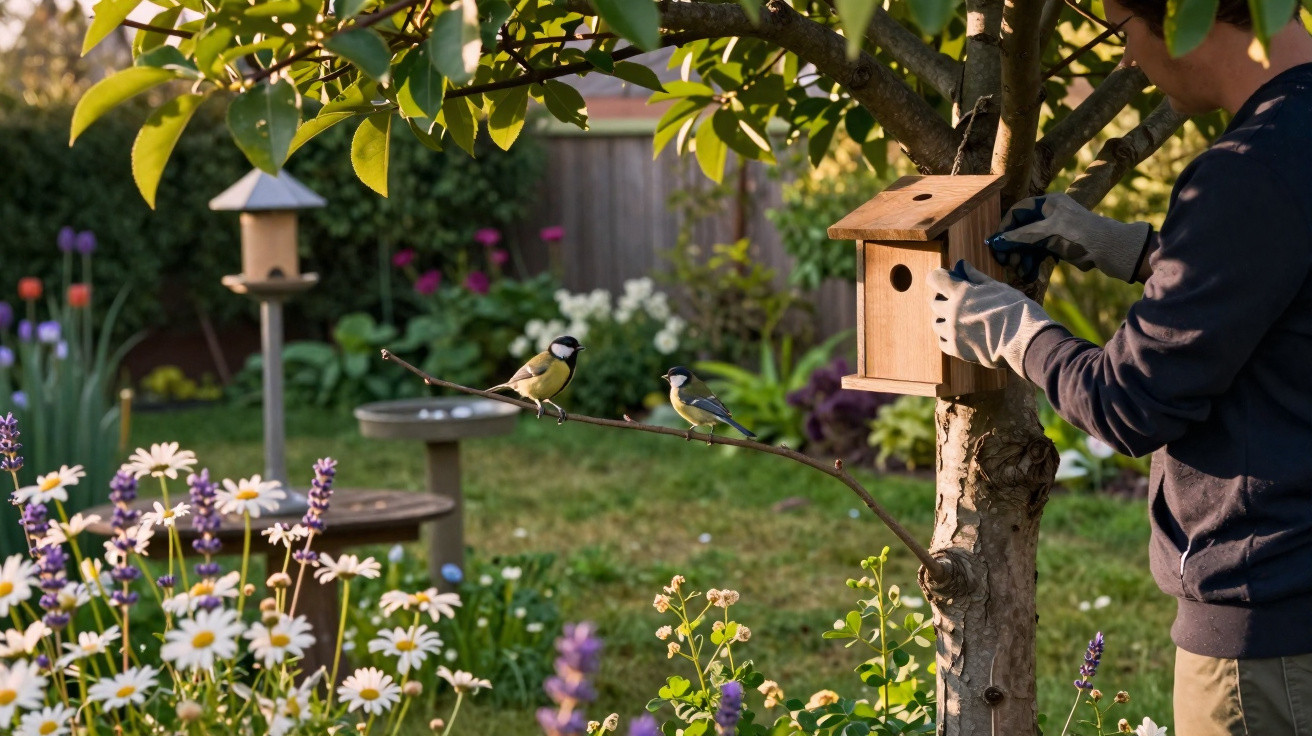
Plenty of people want more life in their own patch of green - birdsong instead of traffic noise. If you set out to attract tits in particular, you are not only doing yourself a favour, you are also helping nature along the way - and it takes surprisingly little effort.
Why tits in the garden are a real stroke of luck
At first glance, tits are simply charming: small bodies, inquisitive faces and distinctive plumage. But these birds are useful in very practical ways. They are tireless insect hunters, working through shrubs, trees and beds in search of caterpillars, aphids and other pests.
"If you have tits in the garden, you can often avoid expensive, problematic plant poisons - the birds do much of the work for you."
During the breeding season, a family of tits feeds their chicks thousands of insects. That takes noticeable pressure off fruit trees, roses and vegetable plants. In heavily built-up neighbourhoods where natural refuges are scarce, each garden becomes a small lifeline.
At the same time, tits support biodiversity as a whole. They make use of cavities, crevices and nest boxes, they are prey for birds of prey or martens, and they help spread seeds - an important cog in the ecological system. When their numbers fall, several natural processes can quickly slip out of balance.
The right nest box: small detail, big impact
If you want birds to stick around for more than a quick visit, food alone is not enough. A well-prepared breeding site acts like a magnet, and tits in particular readily accept suitable nest boxes.
Nest box materials and construction
Choose a box made from untreated, sturdy timber wherever possible. Wood stains, varnishes and strong chemical smells tend to deter birds, and can also harm them. Decent wall thickness helps insulate against heat, cold and damp, so chicks cope far better with temperature spikes and spells of rain.
The build matters as well. A slightly overhanging roof prevents water from running down towards the entrance hole. The inside should not be too large, otherwise it cools down. A small ladder-like roughening on the inside wall beneath the hole helps young birds climb out when they are ready.
The right entrance hole for different tit species
The diameter of the entrance hole is crucial. It determines who can get in - and who cannot.
- About 28 millimetres: ideal for blue tits and other smaller species.
- About 32 millimetres: suitable for great tits and slightly larger cavity nesters.
A few millimetres genuinely makes a difference. If the hole is too large, starlings or sparrows may push in, and nest raiders can reach the nest more easily. If it is too small, the birds you are hoping for simply will not fit.
Where to hang the nest box so it’s actually used
Even the best box is of limited value if it is placed poorly. Tits pay close attention to safety, quiet and the local microclimate.
Height, direction and a quiet area
A height of at least 2 metres is a good rule of thumb. That keeps cats, dogs and curious children’s hands at a distance. Some gardeners put boxes as high as 4 metres, for instance on mature fruit trees or on house walls - that can work well too, as long as the box remains reachable.
Ideally, the entrance should face east or south-east. Morning sun warms the box gently without turning it into an oven at midday. Avoiding a west- or north-facing position also offers better protection from wind and driving rain.
The surroundings matter too. Tits prefer calmer corners, away from the patio, swing or barbecue area. Often, just a few metres of separation is enough for them to feel secure.
"As a rule of thumb: the less human hustle directly in front of the box, the higher the chance of a successful brood."
The best time to put it up
Late winter or very early spring is ideal. That is when birds begin inspecting potential nesting sites. If you are later than that, you may still be in luck - some pairs raise a second brood in the year. Better still is to leave the box up all year round, as it can be used as a roosting spot in autumn and winter.
How to create a tit-friendly garden
A bare lawn with a gravel bed beside it is not especially appealing to birds. Make a few targeted changes, though, and even an average garden can become a lively mini-biotope.
Plants that attract plenty of insects
Tits mainly need insects - not just seeds. The more habitat you provide for crawling creatures, the more attractive your garden becomes.
- Native berry-bearing shrubs such as elder, privet or hawthorn.
- Flowering perennials such as knapweed, yarrow, stonecrop or viper’s bugloss.
- A small “wild” corner that you rarely mow or cut back.
If you leave deadwood, piles of leaves or old branches somewhere, beetle larvae and spiders will settle in. For tits, that is like a natural buffet - perfect for keeping hungry chicks well fed.
Don’t keep the lawn permanently short
A perfectly manicured “carpet lawn” may look tidy, but it offers very little in ecological terms. Mow less often and let part of the lawn grow, and wildflowers and grasses will return. Among them you will find grasshoppers, beetles and other prey.
If you only have a small garden, a mini wildflower strip can still make a big difference. A narrow band along the fence is often enough to create new structure.
Feeding: a help in hard times, a problem in summer
Many people tempt tits in winter with feeders or suet balls. That can help birds get through freezing spells when natural food is hard to find.
| Season | Recommended feeding approach |
|---|---|
| Winter | Suet/fat feed, sunflower seeds, high-energy mixes |
| Spring | Gradually phase out, focus on insects in the garden |
| Summer | No continuous feeding, increase insect supply through planting |
| Autumn | Start feeding again slowly, depending on the weather |
Ongoing feeding right in the middle of the breeding season can be an issue, because chicks need protein in the form of insects. If they are given too many seeds, their growth can suffer. A better approach is to cut back the feed bit by bit in spring and instead build up the garden as an insect haven.
What many underestimate: cleaning and safety of the nest box
Once the breeding season is over, the inside of the box is usually a mess: old nesting material, food remains and droppings. Parasites and pathogens can build up there. A thorough clean in late autumn sets things up for a healthy start next season.
Only open the box when you can be sure no birds are still sleeping in it. Wear gloves, remove the entire nest, and brush the interior out dry. Avoid harsh cleaners or disinfectant sprays - the smell can strongly disturb the birds.
While you are at it, check the hanging and the timber condition. Is the box still secure? Is the roof watertight? Are there gaps where water could get in? Small repairs now help prevent unpleasant surprises in spring.
Extra ideas for a lively bird garden
If you want to go a step further, add a small garden pond or put out a shallow water dish. Clean water draws birds in to drink and bathe. The key point is that the container should have a rough, shallow area so the birds do not slip.
Another important topic is pesticide use. Many chemicals reduce the insect supply or indirectly harm birds. If you want to support tits and other species, it is better to rely on mixed planting, resilient varieties and practical methods such as picking caterpillars off by hand.
With each of these steps, the chances increase that your garden will gradually become a small paradise: the quiet tapping at the nest box in the morning, acrobatic flights between shrubs and beds during the day, and soft chirping from the branches in the evening. It all begins with one simple move - a well-placed nest box and a garden that allows more nature back in.
Comments
No comments yet. Be the first to comment!
Leave a Comment