
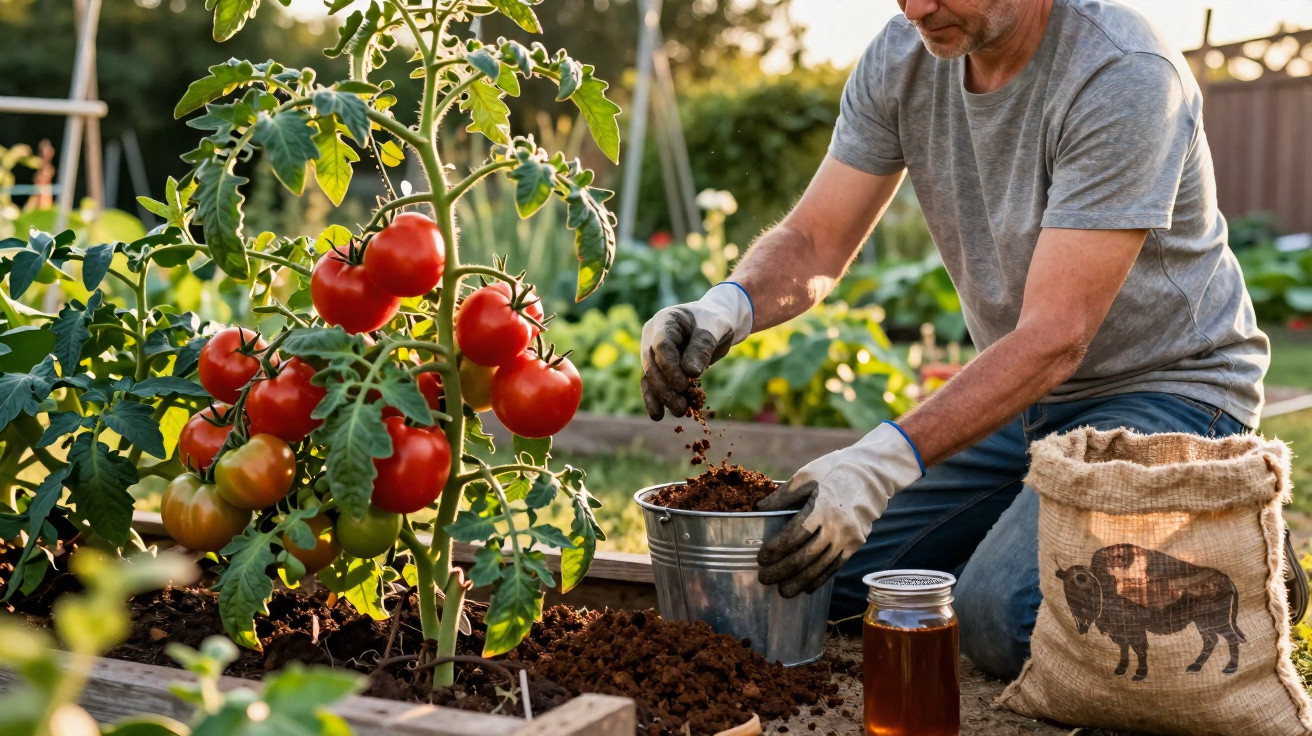
Often, the difference is made quietly in the background by one thing: the right fertiliser.
Anyone growing tomatoes in a garden or on a balcony will recognise the issue: the plants put on growth, yet stay spindly, look unwell, or produce only a modest crop. More often than not, it has less to do with the variety or the weather and far more to do with the soil failing to supply nutrients for long enough. One largely overlooked animal manure can be a genuine game-changer here - and can make chemical products unnecessary.
Why tomatoes are so hungry
Tomatoes are among the heaviest feeders in the vegetable patch. Over many weeks and months, they need a steady, reliable supply of the primary nutrients nitrogen, phosphorus and potassium, often shortened to NPK.
- Nitrogen supports the growth of leaves and shoots.
- Phosphorus strengthens root development and helps with flower formation.
- Potassium contributes to firm, juicy fruit and improved resilience.
If you only add a little compost at the start and then leave the soil to fend for itself, tomatoes quickly fall into a nutrient gap. Typical signs include yellowing leaves, stunted growth and very small fruit. That is exactly where a particular organic fertiliser comes in - one that has received very little attention in Europe so far: bison manure.
“Bison manure supplies tomatoes with nutrients over the long term - without the typical ‘fertiliser spike’ caused by many chemical products.”
Bison manure: what makes this “bison gold” so special?
Bison are strict herbivores and eat mainly grasses. That diet produces manure with a notably balanced mix of important nutrients. Compared with many standard fertilisers, it does not just contain NPK, but also a wider range of trace elements.
Typical components of well-aged bison manure include:
- nitrogen for steady, ongoing growth
- phosphorus for strong roots
- potassium for fruit set and flavour
- calcium for stable plant cells and to help prevent blossom end rot
- sulphur for protein formation
- magnesium as a building block of chlorophyll
These nutrients are present in organically bound forms. In practice, that means they are not released all at once, but gradually - depending on how active the soil life is. Tomato plants can draw on this supply over an extended period.
At the same time, bison manure feeds soil bacteria, fungi and beneficial insects. In the wild, bison droppings are considered tiny islands of life where dozens of species are active. These micro-worlds convert manure into humus - and it is precisely this process that later benefits the tomato bed.
Why fresh bison manure is off-limits
As valuable as bison manure can be, it does not belong straight from the animal enclosure into a tomato bed. Fresh manure contains:
- too much readily available nitrogen, which can scorch roots
- ammonia, which stresses plants and has an unpleasant smell
- pathogens such as E. coli or salmonella
- often also viable weed seeds
Spreading fresh material in beds risks burned roots, lush leafy growth with few fruits, and potential health concerns for salads or other raw-eaten crops growing nearby.
“The key is thorough composting: only once manure has turned into humus does it truly benefit tomatoes.”
Composting bison manure correctly: turning it into safe humus
To become a safe natural fertiliser, bison manure needs to break down for several months. In the core of a compost heap, temperatures of around 55 degrees Celsius can develop, which helps destroy many pathogens and weed seeds.
Step by step to bison compost
- Choose a site: Pick a well-drained spot that does not sit in water. A firm base is ideal so the heap does not sink.
- Build in layers: Alternate a layer of bison manure with a layer of dry, carbon-rich material such as straw, leaves or woodchip.
- Aerate: Turn the heap roughly once a week, or at least mix it through, so oxygen can get in.
- Allow time to mature: Depending on the weather, it takes about 3 to 4 months until the compost is dark, crumbly and almost odourless.
Once it reaches that stage, the material looks more like nutrient-rich soil than manure. You can then work the bison compost into the topsoil without problems - ideally a few weeks before planting the tomatoes.
How tomato growers use bison manure in beds
For robust tomato plants, a two-stage approach pays off: preparing the soil and then providing ongoing top-ups.
Preparing the soil before planting
About two to four weeks before planting out, loosen the tomato area and work in a layer of mature bison compost per square metre. Incorporate it into the top 10 to 20 centimetres of soil. This places nutrients within reach of the roots later on, without overwhelming them.
Important: when planting, tomato roots should not be pressed directly into concentrated compost. A buffering layer of ordinary garden soil helps prevent nutrient stress in young plants.
Follow the right order when planting
- Dig the planting hole and add a little normal soil.
- Set the tomato in place, backfill with soil and firm gently.
- Water thoroughly with plain water so the roots make good contact with the soil.
- Only after this first watering, apply organic fertiliser or bison compost around the plant.
Tomatoes that are already suffering from lack of water should never be heavily fertilised at the same time. That double stress weakens plants and can make them more prone to disease.
Bison compost tea: liquid feed for balcony and beds
Alongside the solid form, bison manure can also be used as the basis for a liquid feed known as compost tea. This is made by steeping mature bison compost in water and then diluting it.
Many hobby gardeners opt for ready-prepared concentrated products because they are easy to dose. The “tea” is mainly used at two points:
- directly when planting out tomatoes
- every two to three weeks during the main growth and cropping period
Apply the diluted bison tea to the root zone, but not right against the stem. Leaving a gap of a few centimetres helps avoid excessive moisture around the stem, which could encourage rot.
“Small, regular doses of bison tea encourage growth without ‘overfeeding’ the plants.”
Comparison with chemical fertilisers: where bison manure comes out ahead
In DIY shops and garden centres, bottles and bags of tomato feed are stacked high, many of them mineral-based. They provide fast nutrient bursts, but do little to improve soil structure. Bison manure works in a fundamentally different way.
| Aspect | Bison manure (composted) | Mineral fertiliser |
|---|---|---|
| Nutrient release | slow, steady | fast, in sudden bursts |
| Soil life | supports microorganisms and humus formation | often neutral or stressful |
| Risk of over-fertilising | low when properly matured | high, especially with liquid concentrates |
| Environmental footprint | organic cycle, low energy input | energy-intensive production, often involving raw material extraction |
For gardeners focused on sustainable care, bison compost therefore delivers a double benefit: stronger tomatoes and a more lively, healthier soil.
Where to get bison manure - and what to look for
Bison manure is not as readily available as cattle manure from the nearest farm. Typical sources include specialist organic farms that keep bison, some wildlife parks, or online retailers selling niche organic fertilisers.
When buying, it is worth checking:
- Is the manure already composted, or still fresh?
- Are there details on maturation time or recommended application rates?
- Is it pure bison material, or a mixed compost?
If you can only obtain fresh bison manure, you should definitely compost it yourself and allow enough time. For beginners, pre-composted products are much easier to manage.
Risks, mistakes and sensible combinations
Even a natural fertiliser like bison manure will not automatically work perfectly in every situation. Layers that are too thick can still damage tomato roots, particularly in pots where the soil volume is limited. In this case, less is often more: apply smaller amounts more frequently rather than one heavy dose.
Very sandy soils benefit when you combine bison compost with structure-building materials such as leaf mould or bark compost. Heavy clay soils tend to respond better if you mix bison compost with coarse sand or fine grit so water can drain more quickly.
Many gardeners have had good results by blending bison manure with classic garden compost or well-rotted leaf litter. The result is a balanced humus that not only feeds plants but also stabilises soil life over the long term.
Tomatoes are not the only heavy feeders that respond well to bison compost. Peppers, pumpkins, courgettes and cabbages can benefit too. So if you have a bag of this “bison gold” in the shed, you can feed a large part of the vegetable garden with it - while significantly reducing the use of synthetic fertiliser.



Comments
No comments yet. Be the first to comment!
Leave a Comment