
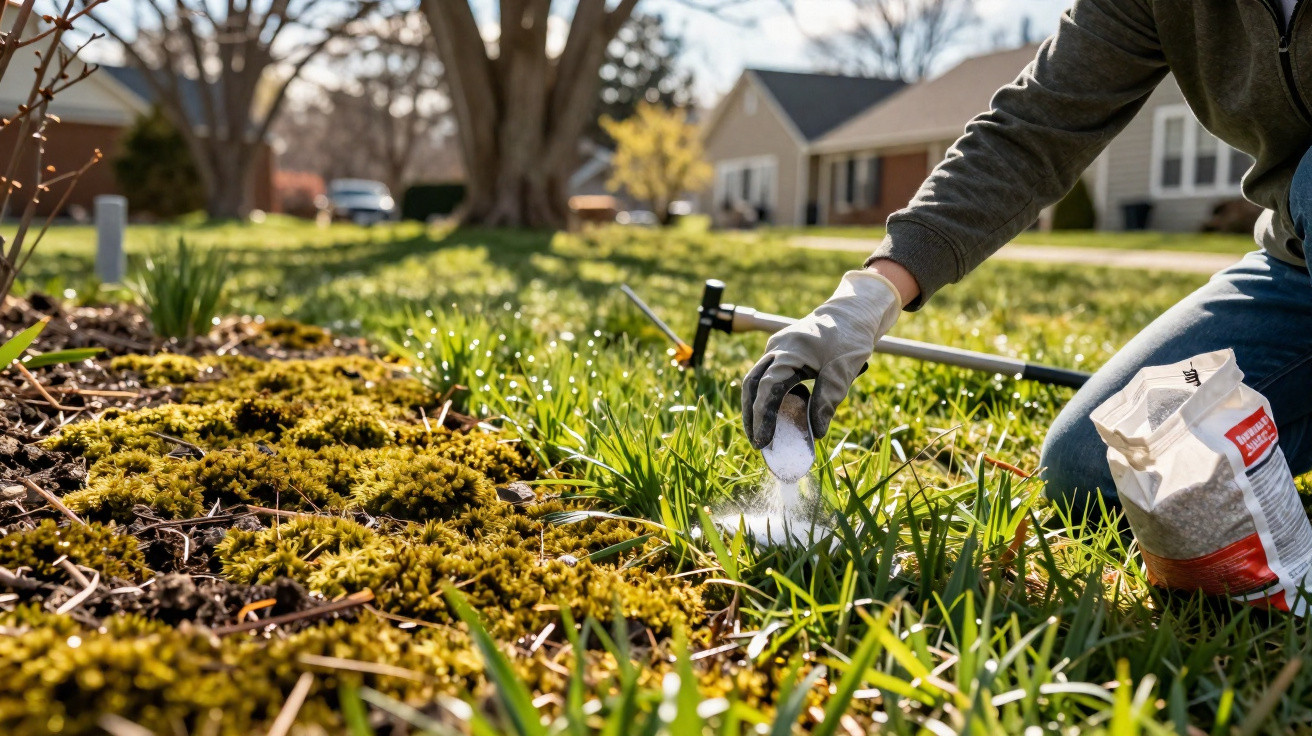
Many garden owners get frustrated in spring when the lawn shows yellow patches, bare areas and thick cushions of moss. Rather than reaching straight for fertiliser or fresh grass seed, professionals often start in March with an unassuming grey powder blend. Used correctly, it revitalises the turf and drives out moss before the gardening season really gets going.
Why the lawn looks so battered after winter
Winter takes a toll on every lawn. Weeks of wet weather, limited light and repeated frosts weaken the grass plants. Rain and snow compact the soil more and more, so air and water struggle to reach the roots. The result is predictable: the blades lose vigour, turn yellow and only grow slowly.
In this weakened state, moss spreads particularly easily. It colonises the gaps between blades, thrives on constant damp and gradually pushes the turf grasses aside. In March, when the sun sits higher again, the damage becomes obvious: lots of moss, little grass and a dull overall colour.
"This exact transition period in March is ideal for getting the lawn back on track with a targeted powder treatment."
As soon as temperatures consistently sit above about 8 to 10 °C, grass roots begin to wake from winter dormancy. Growth starts again, and the lawn responds well to nutrients and care measures-making it the perfect time to intervene before moss and weeds become firmly established.
The key ingredient: why iron perks up the lawn so quickly
In March, many specialist contractors rely on a long-standing staple from horticulture: iron in powder form, most commonly sold as iron sulphate. This mineral works in two ways at once-combating moss while also helping the lawn look greener and stronger.
Moss disappears, and the grass can breathe again
Iron sulphate targets moss directly. Treated patches typically turn dark brown to black within hours to a few days, then dry out. Gradually, the moss dies off and loosens from the turf.
"Where there was a soft carpet of moss, space opens up again for lawn grasses to spread and fill the gaps."
The change is usually very clear. Mossy areas can look unpleasantly dark at first, but they can then be removed with a rake or scarifier. Meanwhile, the grass tips are generally not harmed to the same degree and can benefit from the iron content in the soil.
Chlorophyll booster: how that rich spring green develops
Iron is an essential building block for producing chlorophyll-the green pigment in plants. If the lawn receives a targeted iron treatment in March, it can take better advantage of the start of the growth season. The blades create more leaf green, which is often visible to the naked eye after just a few days.
The effect is typical: a lawn that previously looked flat and tired can appear more even in colour, deeper green and visually denser in a short time, even before a standard lawn fertiliser has fully taken effect. For many hobby gardeners, that’s exactly the “wow effect” they want at the start of the season.
How to apply iron powder correctly in March
For good results, timing and careful dosing matter most. The best conditions are in early to mid-March, when:
- no severe night frosts are forecast,
- the soil is slightly damp but not waterlogged,
- daytime highs are clearly above freezing.
Many products can be mixed with water and applied using a watering can or sprayer. Typical rates are around 20 to 30 g of powder per 1 litre of water, but the precise instructions are always on the packaging.
"Less is more here: if you dose too high, you risk scorching the grass blades."
Step-by-step guide for your lawn treatment
- Mow the lawn short: Before treatment, cut the lawn to a moderate height and remove all clippings thoroughly.
- Mix the solution: Dissolve the powder in water at the recommended rate and stir well until no lumps remain.
- Apply evenly: Work as streak-free as possible, ideally in overlapping passes so no areas are missed.
- Allow a dry window: There should be no rain over the next 24 hours, otherwise the active ingredient may wash off straight away.
- Remove the moss: After about two weeks, rake out the blackened moss with a scarifier or leaf rake.
Proper personal protection also matters. Strictly speaking, it is a salt that can irritate skin and eyes. Garden gloves, sturdy shoes or wellington boots, and old clothing are sensible when applying it.
Common mistakes-and how to avoid them
Iron sulphate is effective, but it can cause issues if used carelessly. Keep these points in mind:
- Avoid splashes: Drops on paving slabs, cobbles or pool edges often leave stubborn rust stains.
- Keep pets away: Dogs and cats should not walk over the area during treatment and shortly afterwards.
- Use only on lawns: It is not suitable for beds, vegetable plots or ornamental plants.
- No blazing sunshine: Strong sun increases the risk of leaf scorch.
"An even application and a little patience are crucial if you want to end up with more grass and less moss."
What should happen in the lawn after the iron treatment
The job is not finished once the powder has been applied. The real transformation begins when the dead moss is removed-after which a surprising number of gaps in the turf often become visible.
The best time for follow-up work is around two weeks after application:
- Scarify thoroughly or rake hard.
- Overseed bare patches with a suitable lawn seed mix.
- Lightly rake in and, if needed, add a little lawn topsoil.
- Apply a gentle lawn feed, ideally an organic fertiliser.
This approach doesn’t just improve colour; it also helps build a denser turf. A well-closed sward gives moss far fewer opportunities to return over the coming months.
When iron powder makes sense-and when it doesn’t
This powder treatment is particularly well suited to shady or partly shaded gardens where moss keeps coming back. Heavily used lawns-such as play areas or dog lawns-can also benefit from the quick boost in March.
The method is less suitable on very dry, sandy soils that hold little moisture. In those conditions, removing moss is rarely the main issue; long-term soil improvement with compost or humus is usually more important.
It’s wise to combine the iron treatment with other maintenance steps:
| Measure | Best time | Benefit for the lawn |
|---|---|---|
| Iron treatment against moss | early to mid-March | moss reduction, stronger green |
| Scarifying | two weeks after the treatment | aeration, removal of thatch and remaining moss |
| Overseeding | directly after scarifying | closes gaps, denser turf |
| Organic fertiliser | March to April | more even growth, tougher blades |
Practical tips for hobby gardeners with limited time
If you only get to the garden at weekends, you can plan the treatment in two stages: apply the iron product on a Saturday in March, then two weeks later rake out the moss, overseed and fertilise. In many cases, that alone is enough to achieve a noticeably better-looking lawn for the months ahead.
For small city gardens or typical terraced-house plots, an inexpensive, shop-bought product and a basic watering can are usually sufficient. On larger properties, a pressure sprayer or a specialist spreader with a liquid function can make the job quicker and more consistent.
If it’s your first time working with iron salts, read the instructions on the pack carefully and trial a small, inconspicuous corner first. That way you can see how your own lawn responds before treating the whole area.
Used properly, this understated powder treatment in March can be a powerful starting signal for the lawn season-delivering far less moss and a spring green that stands out across the garden straight away.




Comments
No comments yet. Be the first to comment!
Leave a Comment