
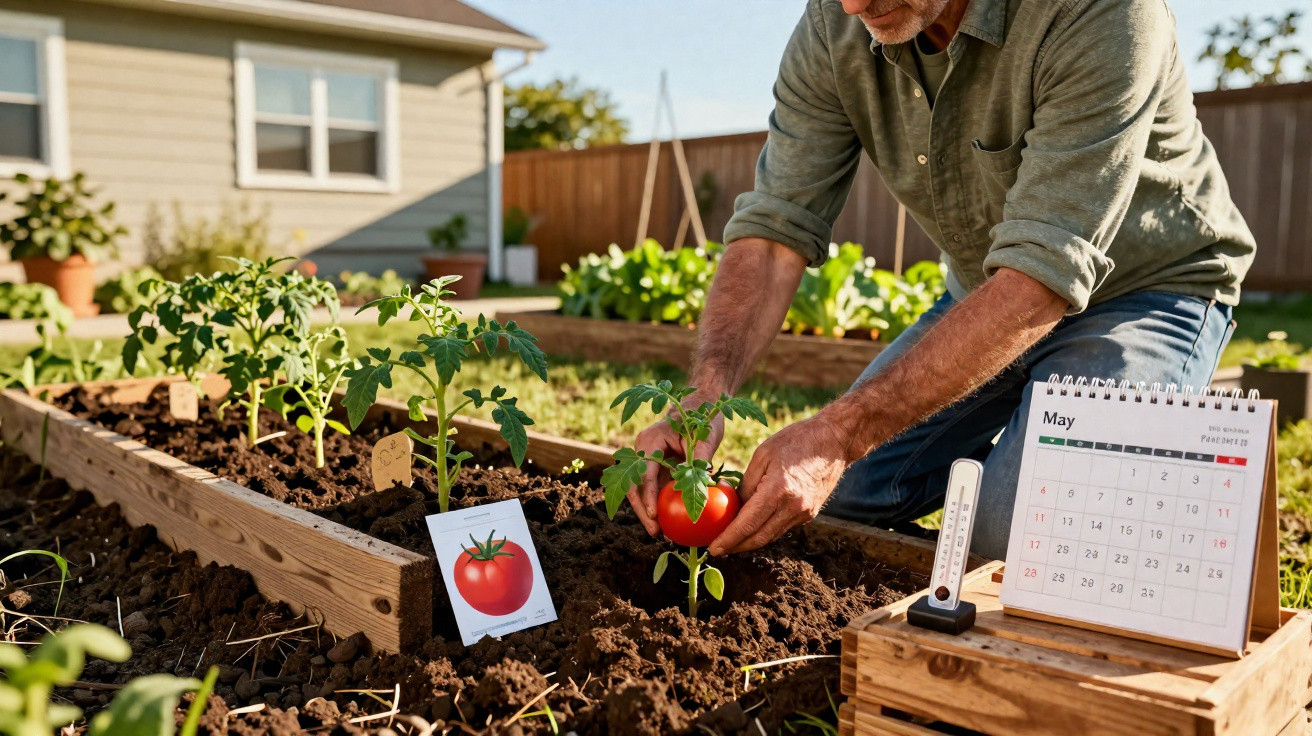
Home-grown tomatoes from your own garden taste more intense, sweeter, and simply like summer. But to make that happen, it is not enough to put young plants into a bed at some random point in spring. Timing determines whether the plants power on strongly or struggle for weeks and end up producing hardly any fruit.
Why getting the timing right for tomatoes makes all the difference
Tomatoes thrive on warmth. They need plenty of sun, yet they cope poorly with cold. Even temperatures just above freezing put the plants under stress. Late spring frosts can wipe out young tomatoes in a single night.
Planting too early is the classic vegetable-garden mistake: the plants may look fine at first, but then they stop growing, stay stunted, and become noticeably more vulnerable to fungal diseases and pests. The time lost early on is difficult for the plant to make up later.
"Tomatoes planted early often grow worse than those planted later, because they have to battle cold and stress for weeks."
Planting too late, on the other hand, costs you harvest time. The season becomes shorter, many fruits ripen late - or not at all if autumn turns cool early. The aim is to hit the window when nights are mild enough and daytime warmth has become reliably established.
The unwritten golden rule: no tomatoes before the Ice Saints
In German-speaking countries, many gardeners follow an old farming rule: tomatoes only go outside after the Ice Saints. This period falls in mid-May, usually between 11 and 15 May, depending on region and tradition.
Until then, cold snaps can still arrive. On clear nights, temperatures can suddenly drop to levels at which tomatoes suffer badly. If you put plants out earlier, you often have to improvise with horticultural fleece, pots, or plastic sheeting when the forecast warns of a “ground frost risk”.
Tomatoes only grow properly once temperatures stay around 12 °C on a consistent basis. If night-time temperatures regularly sit below that, development slows noticeably. That is why experienced growers would rather wait a few extra days than be tempted by the first warm weekend in April.
Region matters: south, north, and altitude
The familiar rule of thumb “after mid-May” does not suit every garden equally well. Depending on where you live, the ideal planting date can shift by weeks.
Warm regions: an earlier start can work
In very mild areas - for example around the Upper Rhine, the Lake Constance region, or sheltered urban spots - tomatoes can often go outside from late April to early May, provided the weather pattern is stable and nights remain frost-free.
With a protected position, such as against a south-facing wall or inside a polytunnel, you may be able to start slightly earlier. Checking the longer-range forecast is useful: if night-time temperatures no longer drop below 8 to 10 °C, the odds are in your favour.
Cooler areas: patience pays off
In northern regions, exposed windy sites, or upland areas, the whole schedule shifts later. Here, the period from mid-May to the end of May is often best, and at higher elevations it can even be early June.
| Region | Recommended planting time for tomatoes outdoors (in the open ground) |
|---|---|
| Very mild areas, sheltered urban locations | Late April to early May (with a frost-free forecast) |
| Large parts of Germany (lowland areas) | Mid-May to late May |
| Upland regions, harsh locations | Late May to early June |
If you are unsure, check your garden thermometer at night. If readings in May regularly fall below 8 °C, it is worth waiting a little longer. Tomatoes reward a warm start with vigorous growth.
How to plant out tomatoes successfully, step by step
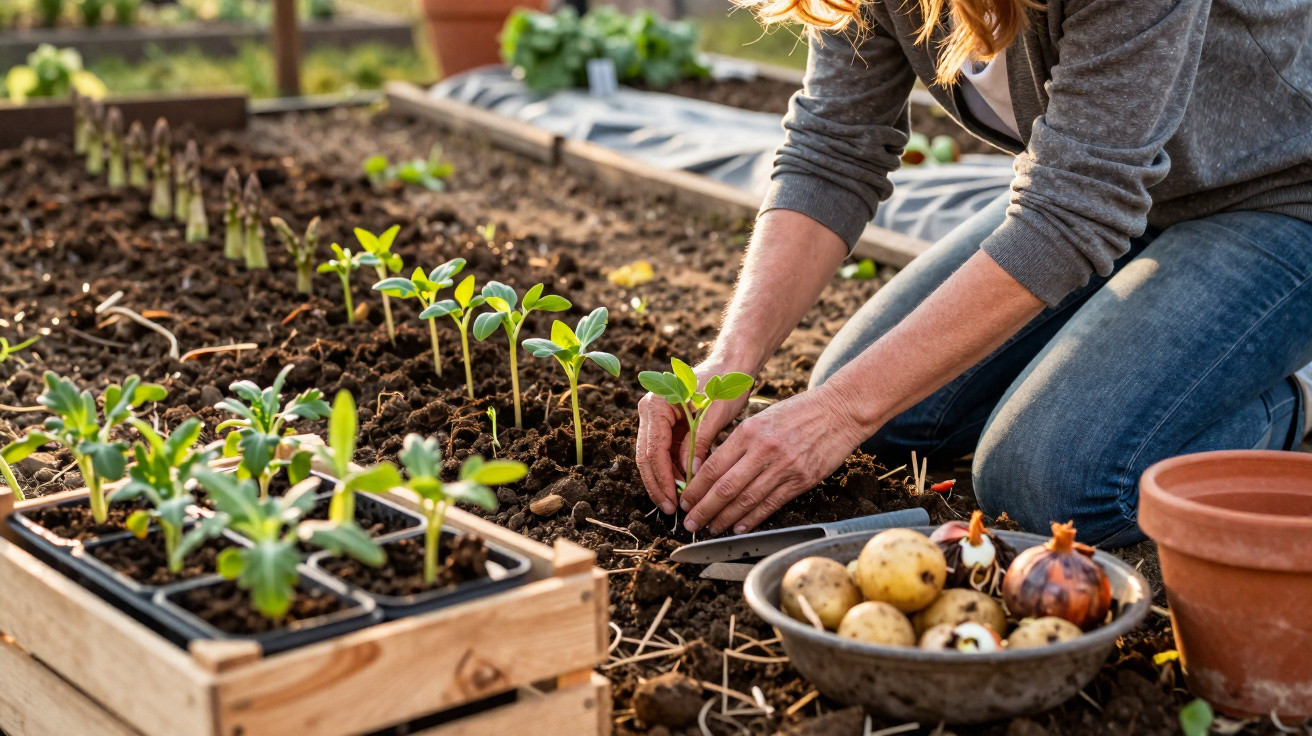
Even the perfect date will not help much if the soil is poorly prepared or the plants are set incorrectly. A few straightforward steps can greatly improve your chances of a generous harvest.
- Loosen the soil: Dig to at least a spade’s depth and remove stones. In heavy soils, work in sand or fine grit so water drains more easily.
- Add nutrients: Mix in mature compost or well-rotted farmyard manure. Fresh manure is too strong and can scorch roots.
- Keep enough space: Leave 60 to 70 cm between plants. This allows leaves to dry quickly, which helps slow fungal disease.
- Plant deeply: Position the tomato so part of the stem sits below the soil surface. The plant will form extra roots there and stand more securely.
- Water in thoroughly: Immediately after planting, water well so the soil settles around the roots.
- Apply mulch: A layer of straw, grass clippings, or leaves keeps the soil moist for longer and buffers temperature swings.
"If you plant tomatoes deeply and then mulch, you create a strong root system and even moisture - the basis for lots of fruit."
The right tomato variety for every garden
Not every tomato suits every garden. Some cope better with short, cool summers, while others need long, hot spells to develop their full flavour.
Short summers: choose early varieties
In cooler regions, or on a balcony with limited sunshine, early tomato varieties are a smart choice. They ripen more quickly and handle lower temperatures better. The fruits are typically smaller, but you can still expect plenty of them from July onwards.
If you live at altitude or garden in a windy spot, these varieties are especially helpful. They are more forgiving and can still produce well even when the summer does not go to plan.
Warm sites: large beefsteak tomatoes and a long season
In sunny gardens with a long season, you can opt for more demanding varieties: large beefsteak tomatoes, darker types with lots of aroma, or tomatoes with unusual shapes. They require more warmth, but repay it with intense taste and striking appearance.
A combination of early and late varieties is a sensible approach. That way, harvesting starts sooner and continues into autumn. At the same time, you reduce the risk of a single disease wiping out the entire crop.
What if you are “too late”?
If you do not manage to plant in May, you do not have to write off the tomato season. You can still catch up well until early June - particularly if you use strong, already-raised plants.
After mid-June it becomes tricky: plants need several weeks to establish roots and build leaf mass. If they start too late, the first cool nights arrive during the ripening phase. Many fruits then stay green or only finish ripening indoors.
"If you only plant in June, you should go for fast-growing varieties and choose plants from a nursery that are already well rooted."
Common mistakes when planting tomatoes - and how to avoid them
Many issues in a tomato bed come down to a handful of wrong choices. Keep these points in mind to avoid unnecessary frustration:
- Planting out too early: putting them in the bed in April out of impatience - the plants stall and become vulnerable.
- Constant wet conditions: tomatoes need regular watering, but they do not want “wet feet”. Waterlogging quickly leads to root rot.
- No rain protection: persistent moisture on leaves encourages fungal diseases such as blight. A simple cover made from plastic sheeting or a small overhang helps enormously.
- The wrong position: shade, draughts, or cold dips slow growth. Full sun and a sheltered spot are ideal.
Why tomatoes react so badly to cold
Tomatoes originally come from much warmer regions. Their entire metabolism is geared towards summer conditions. When temperatures drop, roots and leaves work more slowly. The plant takes up fewer nutrients, growth falters, and its defences weaken.
On top of that, the water inside leaf cells freezes during frost. Cells burst and the tissue dies back. Even a light frost can leave visible damage. For that reason, experienced gardeners watch not only for officially defined “frost”, but also for very chilly nights just above it.
Practical add-ons: balcony, containers, and greenhouse
If you do not have a garden, you can grow tomatoes perfectly well in large containers. The same basic rules apply, except the timing can be slightly earlier because pots warm up faster. At the same time, compost in containers dries out more quickly, making consistent watering more important.
In a greenhouse, the season begins significantly earlier. Tomatoes can often be planted there weeks before outdoor planting is safe, as long as harsh sub-zero temperatures are not expected at night. Ventilating on warm days prevents plants from “scorching” and stops humidity from becoming excessive.
In the end, success comes from combining the right timing, a suitable variety, and careful planting technique. If you wait until the last cold risks have passed, plant deeply, keep good spacing, and protect the soil, you greatly increase your chances of red, aromatic fruits in high summer.

Comments
No comments yet. Be the first to comment!
Leave a Comment