
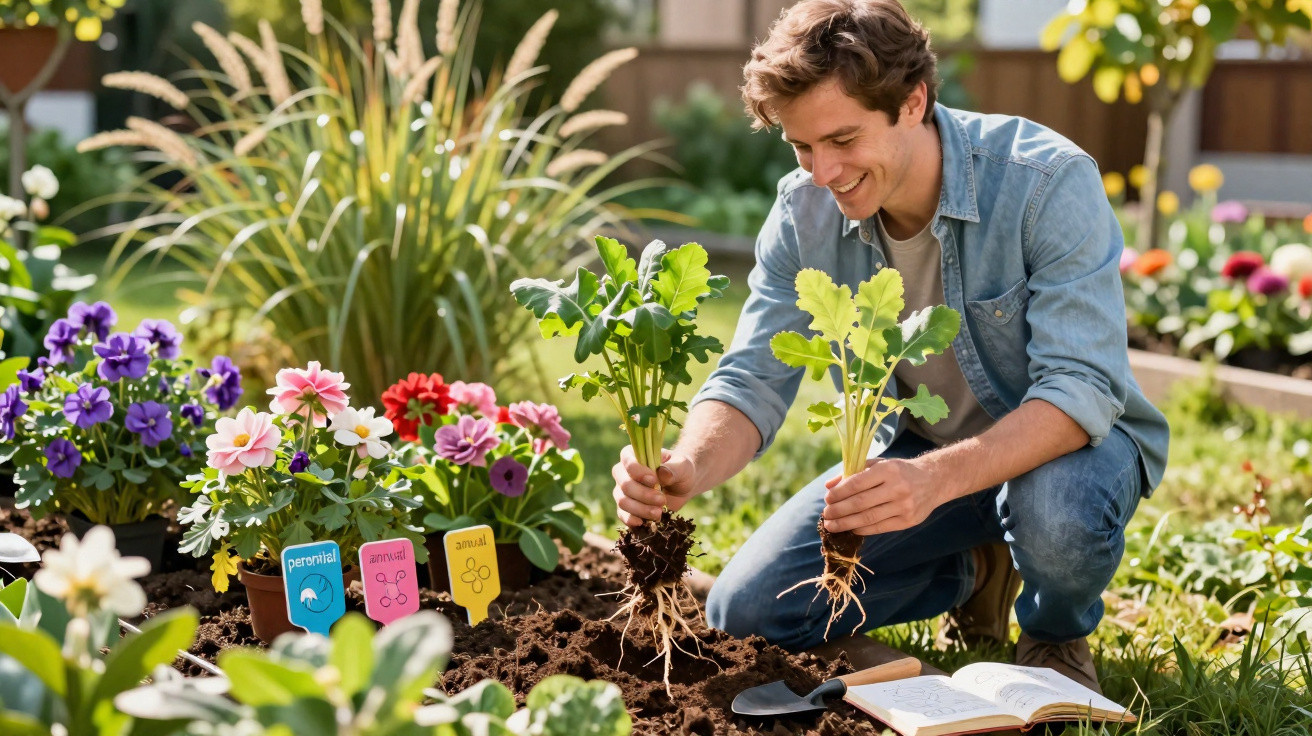
The difference between perennials, annual plants and all the grey areas in between isn’t nearly as baffling as it first appears. Once you grasp a few basics, you’ll save time and money - and you’ll have fewer nasty surprises in the border when spring arrives.
What perennials really are - and what gardeners mean by them
In strict botanical terms, any plant that lives for more than two years is considered perennial. By that definition, trees and shrubs would simply be perennials on a much larger scale. In everyday garden-centre language and among hobby gardeners, though, “perennial” is used in a more specific way.
"In garden jargon, perennials are long-lived plants whose above-ground parts die back in winter and then regrow in spring from roots, rhizomes, tubers or bulbs."
Typical examples include hostas, delphiniums, daylilies and coneflowers. When temperatures drop, they can seem to vanish entirely - but below the surface the plant’s real “core” stays alive, ready to restart when conditions improve.
Annual, biennial, perennial: a life-cycle check
Annual plants - everything happens in one season
Annuals begin life from seed in spring, grow quickly, flower, set seed and then die within the same year. Their whole life story fits into a single growing season.
- Start from seed in spring
- Grow, flower, produce new seed
- Die back completely in autumn - with no regrowth from roots
In most UK home gardens, favourites such as tomatoes, courgettes and basil are almost always grown as annuals. Bedding and cut-flower choices like zinnias, sunflowers and cosmos deliver a big splash of colour for one season, then disappear for good. Their stems do not become woody; instead they stay soft and sappy - a useful clue when you’re trying to identify what you’re looking at.
Biennial plants - build strength first, flower later
Biennials take the long view. In year one they mainly produce leaves and roots; in year two they put on their main show of flowers, and then they die.
Many traditional cottage-garden plants - as well as a handful of vegetables - fall into this category. In ornamental beds they often appear in seed mixes without gardeners realising what they are. If, in the second year, you suddenly find tall flowering stems in spots that previously held only low leaf rosettes, you’re very likely dealing with a biennial.
Herbaceous perennials - the long-term resident in the border
Non-woody perennials can persist for many years, sometimes for decades, returning reliably and forming the backbone of a settled garden.
Typical features include:
- Root clumps or rhizome mats remain in the soil long-term
- Above-ground growth dies back with the seasons
- The plant strengthens year on year - if the site and care are right
Woody or not: why stems and branches tell you so much
A key to recognising perennials lies in the idea of “woody” growth. Wood forms when a plant continues growing over multiple years, with older tissues becoming a structural framework.
"Any plant with true woody growth - whether a tiny shrub or a towering tree - is automatically perennial."
Annual rings in a tree trunk are the familiar example. Only the outer layer carries water and nutrients; the inner portion becomes firm support material. The same principle applies on a smaller scale too: even small blueberry bushes develop woody branches.
In practical terms, if you find thin, brown, hard shoots in the garden, you’re probably handling a woody shrub or subshrub - not a classic herbaceous perennial, but still definitely a long-lived plant.
The world of non-woody perennials
Many of the most popular garden plants belong to the soft-stemmed, long-lived group. Above ground they can die back completely, yet they survive underground.
Bulbs, tubers, rhizomes: storage built for a restart
Plants with storage organs put a great deal of energy into swollen underground structures. Those reserves help them get through winter and power a strong flush of growth in spring.
| Storage organ | Example | Characteristic |
|---|---|---|
| Bulb | Tulips, daffodils | Layers of bulb scales, with a clearly defined basal plate |
| Tuber | Dahlias | Thickened, sausage-like root sections |
| Rootstock / rhizome | Irises, many grasses | Thickened, creeping stems in the soil |
As a rule, all of these forms are associated with perennial plants. Annuals gain little by investing heavily in underground stores - they focus instead on producing seed.
Grasses - lawn makers on a long contract
Lawns are almost always made up of perennial grasses. If turf were annual, it would die each autumn and need to be resown from scratch every spring - a nightmare for any garden owner.
Many native steppe and prairie grasses are true stayers. They form dense clumps that re-sprout year after year, keeping whole areas stable over the long term.
When a “hardy perennial” fails to return
In real gardens, disappointment is common: a plant sold as a perennial at the garden centre seems to have vanished by the following spring. Most of the time, the cause is less about deception and more about unsuitable conditions and misunderstandings.
"Perennials rarely die ‘for no reason’, but because nutrients are lacking, water is sitting around the roots, winter wet is too severe, or the plant put too much energy into flowering in its first year."
Some bulb flowers in particular have a reputation for being temperamental. Tulips can be perennial, but in retail they’re often treated like seasonal items. Those huge first-year blooms can drain the bulb so much that the next year it produces only leaves - or doesn’t appear at all.
Some perennials also take a break: in the second year you may see only foliage, then in the third year they return with a full display of flowers. If you reach too quickly for the spade or hoe, you can unknowingly remove these “late starters”.
Hidden perennials: tomatoes, pansies & co.
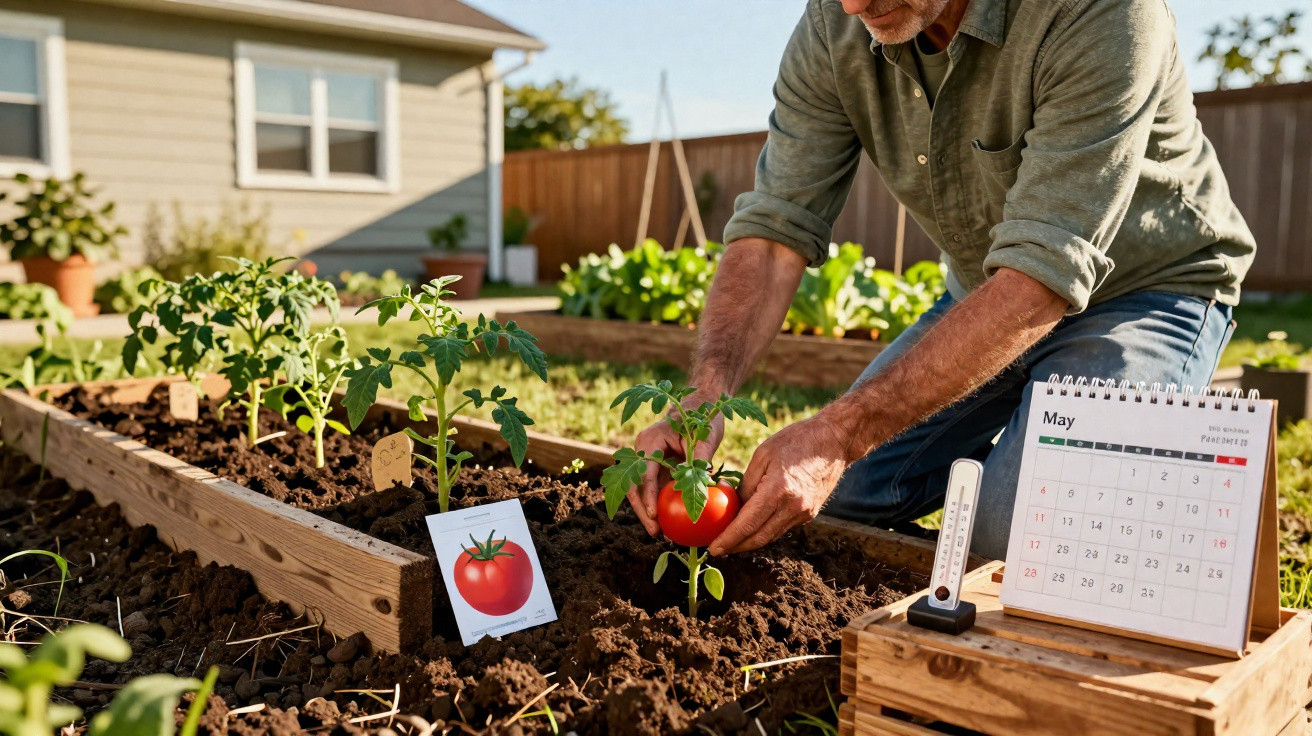
It gets interesting with crops that are perennial in their native climate, yet are almost always grown as annuals in everyday UK gardening. In frost-free regions, tomatoes can become genuine shrubs and fruit for several years in a row. In typical northern European winters, they reliably die outdoors - which is why they’re treated here as annual.
Pansies follow a similar pattern: botanically perennial, horticulturally a seasonal bedding plant. Many look tired and straggly in their second year, so they’re quickly replaced. Biologically they may still be alive, but for many gardeners they no longer look worth keeping.
“Volunteers” in the bed: why they aren’t perennials
Anyone who’s gardened for a while will recognise this: tomatoes, pumpkins or sunflowers suddenly pop up where nobody sowed anything. These self-seeded “volunteers” can feel like a small gift.
Even if they appear every year, they still aren’t perennials. Each plant grows anew from fresh seed. Often, an overripe fruit was left on the ground the previous season, its seeds stayed in the soil over winter, and then germinated when spring conditions were right.
- Tomato plants from forgotten fruits
- Pumpkin or courgette seedlings appearing by the edge of the compost heap
- Sunflowers sprouting beneath a bird feeder
The key distinction is simple: perennials regrow from established roots or rhizomes, while these “volunteers” start again from seed. That matters for planning borders - if you tolerate such guests, you should expect more surprises next year.
Practical check: how to spot perennials in your own garden
If, in spring, you’re unsure whether a leftover plant stump is still alive, a few straightforward checks help:
- Gently scratch the surface with a fingernail: if you reveal green tissue underneath, it’s still living.
- Look for surviving root material: firm, branched roots or rhizomes are a strong sign of a perennial.
- Assess the site: if the plant sits in winter-wet soil or a puddle-prone patch, losses become much more likely.
One more useful habit: don’t “tidy up” too early in the year. Many perennials emerge late and use dead stems as natural winter protection. If you cut everything down and dig over beds mercilessly in March, it’s easy to remove living plants without noticing.
Why understanding perennials pays off twice
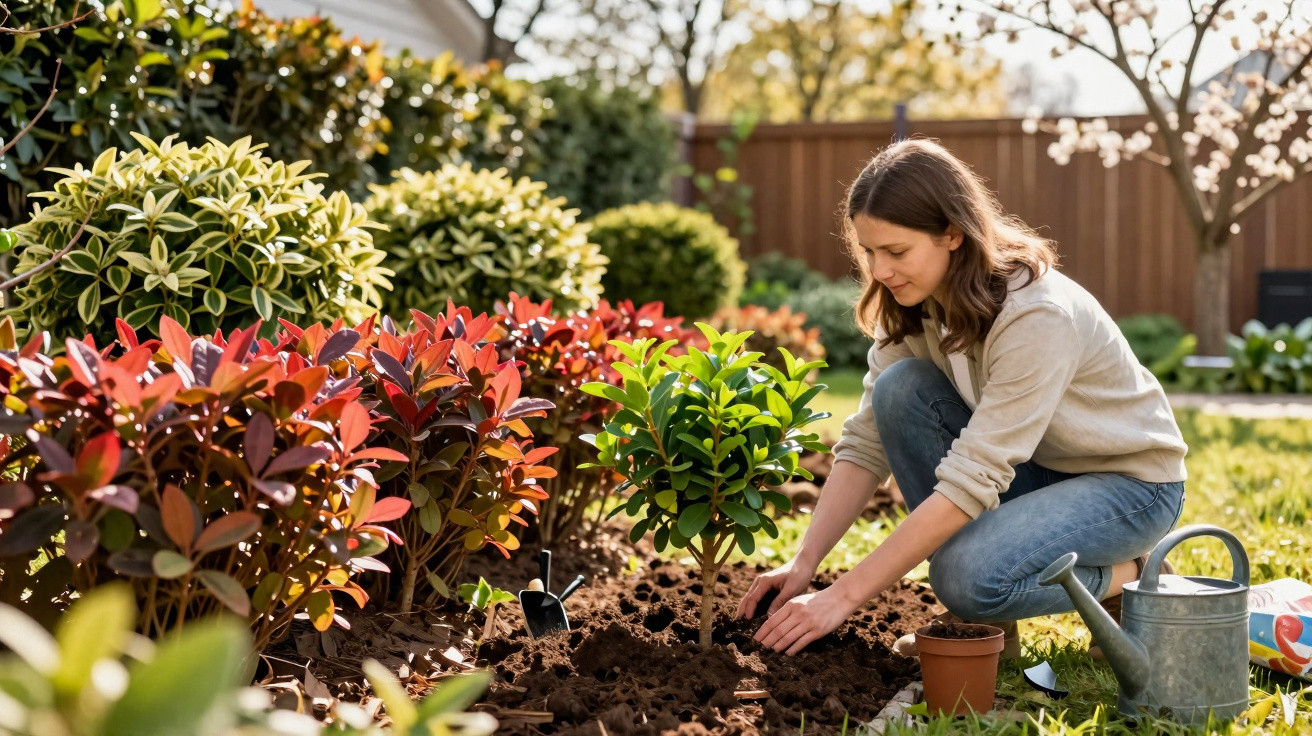
Once you can reliably tell annuals from perennials, you’ll design borders differently: perennials provide the framework, while annual flowers and vegetables slot in as colourful - or tasty - highlights. The result is a garden that returns dependably, yet still looks slightly different each year.
This knowledge also helps you spend less in the long run. Perennial plants often cost a bit more upfront, but they reduce the need to buy replacements every season. They also support insects, because many species provide nectar and pollen over longer periods and create stable habitat structure.
With a sharper eye on your next visit to the garden centre, you’ll quickly spot what’s a long-term resident, what’s just a summer guest - and what might quietly be a bit of both.
Comments
No comments yet. Be the first to comment!
Leave a Comment