
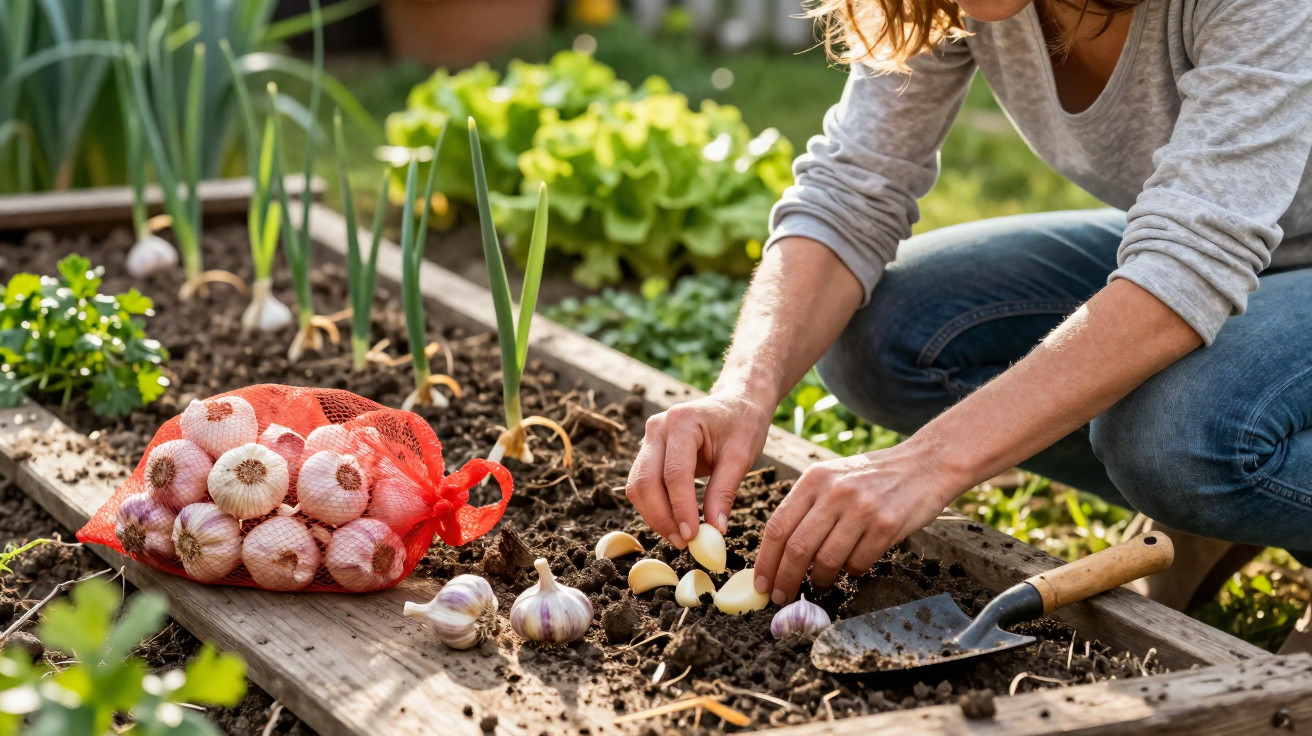
Garlic has long been a staple in the saucepan, yet in the veg patch it’s often treated as an afterthought. Plenty of people assume you need pricey planting stock from a garden centre for it to be worthwhile. In reality, humble supermarket garlic can become a quiet secret weapon in the garden - as long as you avoid one very common mistake.
Why supermarket garlic deserves a place in your garden
Shop-bought garlic doesn’t look like traditional planting material at first glance. It sits for weeks in a net, sometimes starts to sprout, and then often ends up binned or tossed on the compost heap. That’s exactly where the idea comes in: what no longer seems particularly appealing in the kitchen can still deliver a surprisingly decent crop in the soil.
"Each individual clove can - under the right conditions - grow into a complete garlic bulb."
The main upside is obvious: supermarket garlic is cheap, easy to find year-round, and perfect if you’re trying garlic growing for the first time. It’s a resilient plant, needs little attention, and can do well even where other crops struggle - provided the soil suits it.
The hidden trap: why not every bulb will sprout
Here’s what many people don’t realise: some commercially sold garlic is treated to keep it looking fresh for longer and to stop it sprouting too soon. In the garden, that same treatment can backfire. Those cloves may sprout poorly or not at all, remain weak, and produce very little.
For that reason, supermarket garlic is best used on small trial areas. If you want to plant out a full bed, it’s wiser to rely primarily on certified planting bulbs from a garden centre and test kitchen garlic separately in a short row. It reduces waste, keeps costs down, and stops you gambling the whole bed on something that might not grow.
How to choose suitable bulbs - a simple shopping trick
Not every bulb from the veg aisle is equally promising. You can improve your chances significantly by choosing carefully at the point of purchase.
- Opt for organic where possible: organic garlic is less likely to have been treated with sprout inhibitors.
- Go for firm cloves: avoid bulbs that feel soft or look shrivelled.
- Check for marks: dark spots or any sign of mould usually means rot.
- Smell matters: if it reeks in a sharp, rotten way, leave it behind.
At home, split the bulb into individual cloves but don’t peel them. The papery skin acts as protection against drying out and rotting. A practical extra tip: plant the biggest cloves and cook the smaller ones. Larger cloves typically produce stronger plants and, on average, bigger bulbs.
The most important step: cold as a wake-up call
A technique many experienced growers use is easy to copy: a short cold spell. Put the cloves in the fridge for one to two weeks. This artificial “winter pause” encourages them to push into active growth afterwards.
"Cloves with a visible white or slightly green sprout have the best chance of getting off to a strong start in the bed."
If a clove still looks dormant and shows no sign of a sprout, keep it for the kitchen instead. That way you don’t waste valuable space on cloves that may never break into growth.
Planting it properly: soil, depth and spacing
Garlic prefers bright, sunny, airy positions with free-draining soil. It does not cope well with waterlogged ground, especially through winter and early spring.
Preparing the bed properly
- Loosen the soil and remove larger stones.
- If the soil is heavy and clay-based, work in a little sand or fine grit.
- Avoid fresh, high-nitrogen feeding - garlic generally prefers leaner conditions.
If your soil is particularly wet or dense, it’s worth raising the planting area slightly. A low ridge about 10 centimetres high (or a gently mounded bed) helps water drain away so cloves don’t rot.
Getting the cloves into the ground
- Orientation: pointy end up, flatter end down.
- Depth: cover so there is about 3 to 5 centimetres of soil above the clove.
- Spacing: 10 to 15 centimetres between plants, and 20 to 25 centimetres between rows.
After planting, water only lightly. The soil should be moist, but never saturated.
"The biggest danger for supermarket garlic is consistently wet, heavy soil - that’s when rot and fungal diseases take hold."
The one thing you should never do
If you enjoy taking risks, you can ignore the warning - but it isn’t sensible. Filling a wet bed wall-to-wall with kitchen garlic, without testing first, can turn into a breeding ground for problems.
Common mistakes include:
- Pushing every clove from a net into damp, clay-heavy soil
- Planting in the same spot year after year
- Skipping crop rotation and never refreshing the soil
This allows fungi and bacteria to build up, weakening not only garlic but also onions and other alliums over time. In the worst case, you end up with little or no harvest - and soil that remains troublesome for several years.
Care: minimal effort with a big payoff
Compared with tomatoes or peppers, garlic is pleasantly low-maintenance. Many gardeners don’t water it at all, or only very occasionally.
- Watering: only during extended dry spells - never “just because”.
- Weeding: a light hoeing is enough, as the roots sit close to the surface.
- Feeding: if the soil is very poor, a small amount of organic feed in spring is sufficient.
Around three weeks before you intend to lift the crop, stop watering completely. This helps the bulbs dry down properly and improves storage life.
When garlic is ready - and how to store it
You can judge harvest timing by the foliage. When roughly two-thirds of the leaves have yellowed and collapsed, the bulbs are usually mature. Choose a dry, sunny day if you can.
- Carefully loosen the plants with a garden fork rather than levering directly under the bulbs.
- Pull the garlic out with the stems attached and let it dry briefly on the soil surface.
- Then hang or lay it out somewhere airy and shaded.
After a few weeks of drying, trim the roots and either shorten the foliage or plait it into braids. Kept somewhere cool, dry and dark, bulbs often stay usable for months.
Good neighbours, bad neighbours: garlic in mixed planting
In the garden, garlic isn’t just a crop - it can also act as a natural helper. Its scent can deter certain pests, particularly around vegetable beds and roses.
| Good neighbours | Better kept away from |
|---|---|
| Carrots | Peas |
| Strawberries | Beans |
| Roses | Other alliums in the same spot the following year |
If you weave garlic between other crops, you may benefit from its mildly repellent aroma. Even so, sensible rotation still matters: avoid planting garlic straight after onions, leeks or similar alliums, so diseases don’t become established.
Practical tips for balconies, raised beds and small gardens
Garlic doesn’t only work in a standard veg patch. Window boxes and raised beds can be just as effective, as long as excess water can drain freely. In pots, drainage holes are essential, and a drainage layer of expanded clay or gravel helps.
- Pot depth: at least 20 centimetres, so the bulb has room to develop.
- Compost: loose, slightly sandy and not overly rich.
- Position: full sun, sheltered from strong wind.
In tight spaces, it can be worth experimenting with particularly flavoursome supermarket types. If you find one that sprouts reliably and tastes good, you can keep it going year after year by replanting your own bulbs - without any specialist catalogues.
Risks, limits, and when you’re better off buying planting garlic
As tempting as kitchen garlic can be as planting stock, it remains something of a lucky dip. The origin, true variety and any treatments are usually unknown. If you want variety purity with clear descriptions, or you’re aiming specifically for size and storage performance, certified planting garlic from a specialist supplier is the safer choice.
Even so, cheap supermarket garlic still has a real role: as a small-scale trial, as a way to cut food waste, and as an easy entry point for anyone who wants to harvest their own cloves with minimal fuss. With free-draining soil, a short fridge chill, and careful avoidance of waterlogging, the chances are surprisingly good that an unassuming net from the veg aisle can turn into a sturdy row of home-grown garlic bulbs.

Comments
No comments yet. Be the first to comment!
Leave a Comment