
If you simply sit back in March and wait for spring to arrive, you may well be staring at a brown, scorched patch outside your home by July. Specialists point out that a tough, resilient lawn isn’t created in midsummer by frantic watering, but several weeks earlier - by making one deliberate intervention in the soil.
Why late March determines what your lawn looks like in summer
After winter, an inconspicuous but damaging layer often develops within the turf. Between the soil and the grass blades, moss, dead roots and small plant residues build up. This thatch layer is only 1–2 centimetres thick, yet it behaves like a raincoat over the ground: water and air can barely get through.
"Under a yellowish winter lawn there’s often an invisible ‘plug’ that seals the soil against water and oxygen - and sends the lawn into summer heat already weakened."
The result is that grass roots stay close to the surface because that’s where they can still find a little moisture. But this very top layer of soil is the first to dry out when the early warm days arrive in May. Even a brief spike in heat or drought is enough for the lawn to turn yellow.
The danger window is the end of winter and the start of spring. As soon as the ground consistently reaches around 10–12 °C, the grass starts growing strongly again. That point - depending on your area, usually up to 31 March or in early April - is the ideal time to remove the thatch. The plants cope well with the disturbance then, and quickly produce new, deeper roots.
The decisive step: scarifying the lawn properly in March
The key tool for preventing a “burnt” summer lawn is the scarifier. This is a machine with blades or knives that lightly scores the surface and pulls out the thatch layer. Getting this one job right gives your lawn a major head start for the hottest weeks of the year.
Preparation: mow and pick the right day
Before you use the scarifier, the lawn needs a close cut. Mow down to roughly 2–3 centimetres. The soil should be slightly damp, but never soggy. A day after rainfall is ideal, or after thorough watering with enough time for the surface to dry.
- Soil temperature: steady at about 10–12 °C
- Weather: no frost expected, no heatwave forecast
- Lawn: cut short, slightly damp, not waterlogged
If you start too early, you risk frost damage to fresh shoots. If you scarify too late, you expose young roots to the very first hot spells.
How deep the blades should really go
When setting the scarifier, the rule is simple: too shallow is better than too aggressive. The blades should only scratch the soil surface, not tear out the turf. A depth of about 2–4 millimetres is enough.
Work the lawn first lengthways, then go across it. Several passes in a cross pattern help lift moss and thatch evenly. Even after the first run, most people are surprised by how much material was hiding in the grass.
"If scarifying leaves brown furrows, you’ve set it too deep: the aim is scoring - not turning the soil."
One more critical point: if night frost is forecast, do not run a scarifier. Fresh damage to the turf combined with below-zero temperatures seriously slows recovery.
What must happen after scarifying
Once the job is done, the area often looks worryingly rough. This is exactly where many hobby gardeners make the next mistake - leaving the ripped-out material on the surface, or only removing some of it.
Remove thatch immediately and improve the soil on purpose
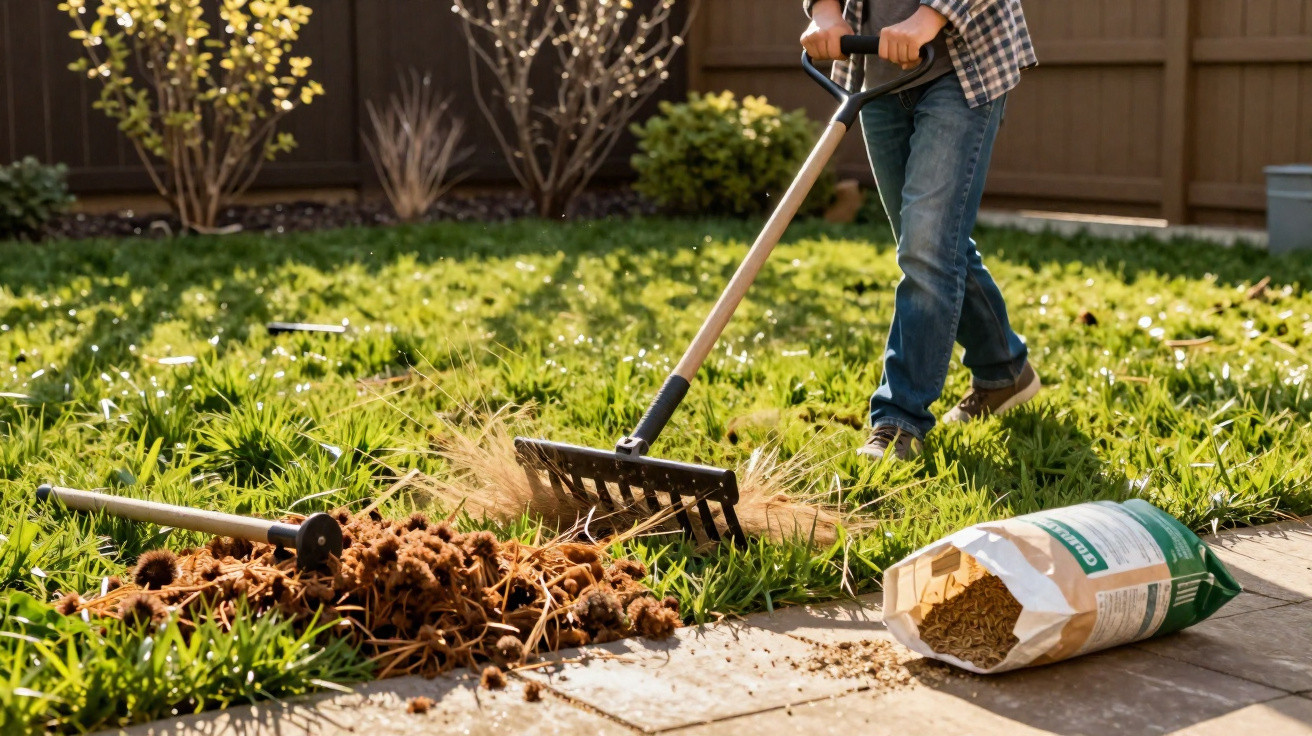
All remnants of moss and cuttings need to come off the lawn. Use a sturdy leaf rake, or go over the area with the lawnmower’s collection box. Only when everything is cleared can water soak in freely.
With the soil now opened up, you have the perfect moment for a targeted “treatment”:
- Fine topdressing: Spread an approximately 1 centimetre thin layer of mature compost or a specialist lawn topdressing mix so it settles into the scarifying grooves and improves structure.
- Sand for heavy soils: If your ground is clayey and compacted, add fine silica sand or river sand. This helps loosen the soil and reduces waterlogging later on.
- Follow-up feeding: A gentle, slow-release lawn fertiliser supports fresh growth and strengthens the root system.
At first glance, the result can be disheartening: bare patches, visible slits, slightly brown areas. Within a few weeks, the grass typically thickens up noticeably under the improved conditions.
How scarifying protects against heat and drought
The real benefit of scarifying doesn’t show in March, but in high summer. Without a thatch layer, rain can penetrate deeper into the soil. Nutrients reach the roots instead of getting trapped in moss. In response, the grass drives new roots deeper into the looser layers.
"A deeply rooted lawn can tap into water reserves in summer that shallow roots never reach - that’s exactly where its survival advantage lies."
On south-facing areas the difference is particularly obvious: lawns that were thoroughly scarified in spring and lightly sanded cope better with longer dry spells. Rain and irrigation water don’t linger at the surface; they sink down and build an underground reserve.
Aerate regularly instead of constantly watering
If you want to extend the effect of scarifying, focus on regular aeration from spring through to autumn. Every 4–6 weeks, you can use a garden fork, a hand aerator or a rolling aerator to punch small holes into the ground. This reduces compaction, improves oxygen exchange and lowers how much watering you need in warm periods.
From late spring onwards, it also pays to raise the mower height slightly. Slightly longer blades shade the soil so it dries out less quickly. A very short lawn may look neater, but in hot weather it burns far faster.
Missed the timing? What still makes sense after 31 March
If you’ve missed the best window, you don’t need to write the lawn off. Early April can still work - but with a more cautious approach. The soil temperature should still be around 10–12 °C, and any imminent heatwave is a clear deal-breaker.
Set the scarifier to a shallower setting and focus on areas with obvious moss. Straight afterwards, overseeding with lawn seed is worthwhile, especially on bare spots. That way gaps close more quickly before weeds move in.
Newer lawns that are only one or two years old usually won’t tolerate hard scarifying. In these cases, a gentle spring clean with a rake and light aeration is enough. Overly aggressive work would do more harm than good.
Problem areas: shady lawns and wet corners of the garden
Places with lots of shade and consistently damp conditions are especially prone to moss. Here, it’s not just about machinery - it’s also about reassessing the site. Heavy, acidic soils with a pH below 6 are an ideal environment for moss to thrive.
In gardens like these, scarifying should be done carefully. A lighter pass, combined with aeration, is more sustainable than a one-off heavy-handed assault. If you also trim back shrubs or overhanging branches a little, you’ll bring more light to the area. After that, targeted overseeding with shade-lawn mixtures and gentle watering in spring help build a more stable turf.
"The aim in every type of garden is the same: open the soil at the right time so it can store water and release it again on hot days."
What many people underestimate about lawn care
The biggest lever for a lawn that stays green is less about expensive specialist fertilisers or sophisticated irrigation systems, and more about soil structure. If you consistently break down moss and thatch layers, you stop a water-repellent mat forming directly beneath the blades.
Hands-on experience in many gardens shows the pattern clearly: scarify thoroughly once, add a light layer of sand, then aerate every few weeks the following year - and after just one season the lawn’s character shifts. The turf doesn’t only look denser; it also reacts far more calmly to temperature spikes.
If you’re considering how to combine measures effectively, the most reliable approach is: scarify by the end of March at the latest, improve the soil with compost and sand, fertilise appropriately, aerate regularly, and raise the cutting height in summer. This chain of steps ensures rain doesn’t bead on the surface but disappears into the soil - exactly where grass survives hot summers.


Comments
No comments yet. Be the first to comment!
Leave a Comment