
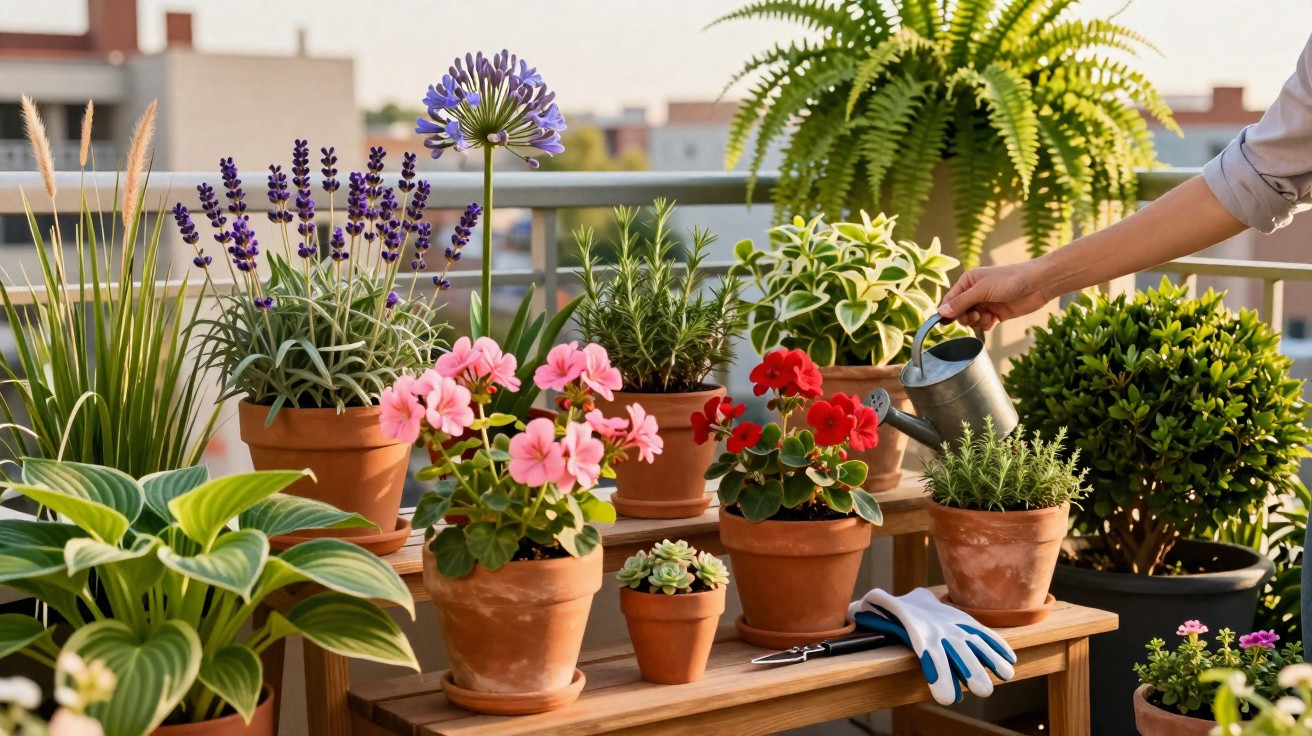
With the right plants, even a small outdoor corner can become your new green favourite spot.
Plenty of people abandon the idea of a blooming balcony early on because they assume it means constant watering, feeding and pruning. In reality, there are surprisingly many plants that thrive in pots, ask for very little attention, and still deliver months of colour, fragrance and structure. The 15 options below are ideal for anyone who wants things to look lovely without making it complicated.
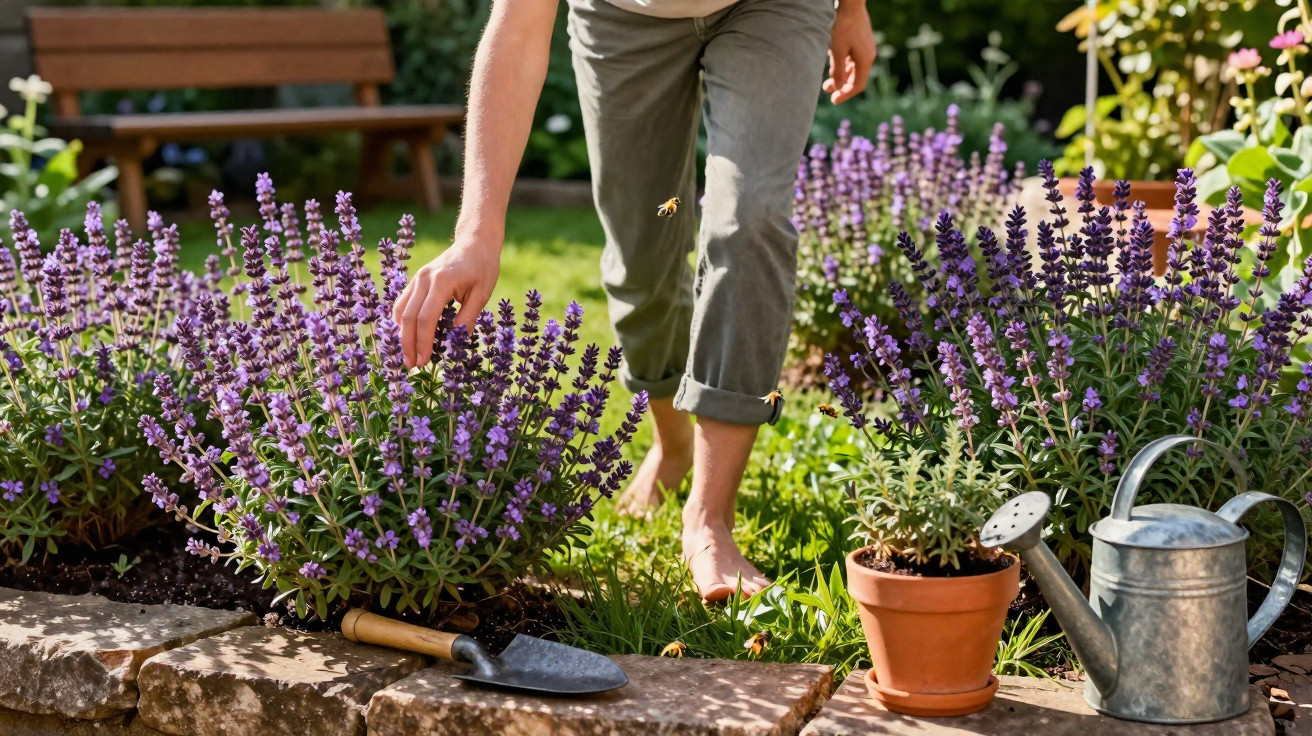
Lavender: a sun-lover with holiday scent
Lavender is a great match for city balconies and compact patios. It enjoys heat, copes well with wind, and does remarkably well even in poor soil. Give it a pot with free-draining compost, a spot in full sun, and water sparingly.
“Lavender rewards even the bare minimum of care with clouds of scent, soft lilac flowers and buzzing bees – while also helping to keep mosquitoes away.”
If you’d rather not water often, choose a deeper container and add a drainage layer of expanded clay or gravel. Lavender really dislikes waterlogged roots, but brief dry spells are absolutely fine. A trim in late summer helps it stay neat and compact.
Cranesbill ‘Rozanne’: flowers from June to the first frost
Hardy geranium ‘Rozanne’ is considered a long-flowering perennial for the hands-off gardener. From early summer right into autumn, it produces violet-blue blooms without needing constant intervention.
- works well in window boxes and larger pots
- prefers sun to light shade
- grows happily in standard potting compost
- only needs moderate watering
Feeding is, at most, a once-in-spring job. There’s no need to painstakingly deadhead either-the plant simply keeps on growing.
Box: year-round structure for balconies and patios
Box instantly makes even a tiny balcony feel more orderly. Its evergreen balls or cones create calm, structured accents among more colourful flowering plants.
Box tolerates both sun and shade, as long as the pot doesn’t dry out completely. Watering about once a week is usually enough, a bit more often in very hot weather. If you like, you can clip it once or twice a year to shape spheres, cubes or small topiary forms.
Oleander: Mediterranean flair in a container
Oleander adds holiday atmosphere to any patio with large flowers in white, pink or red and glossy leaves. It needs a warm, sunny position and prefers things on the drier side rather than too wet. Once it has established well in its pot, it can cope with irregular watering.
Important: the leaves and flowers are poisonous to pets and small children, so place the container where nobody can nibble it.
Carex: ornamental grasses that add movement in pots
Ornamental grasses such as Carex bring a sense of motion to balcony planters. Their fine blades sway with even the slightest breeze and soften rigid planting schemes.
The big advantage is flexibility: Carex grows in shade as well as sun. Water occasionally when the top layer of compost has dried out. It stays decorative all year, and in spring you only need to carefully cut back the old blades.
Hosta: dramatic foliage for shady corners
A north-facing balcony doesn’t mean you have to go without attractive plants. Hostas love shade and partial shade, and their main appeal is their large, often two-toned leaves.
Keep the compost slightly moist; the pot should never dry out fully. A saucer or water-retaining granules can help you manage that. In summer, delicate flower spikes appear too, which draw in insects.
Agapanthus: a stately container plant with globe-shaped blooms
Agapanthus, also known as African lily, looks like a designer plant thanks to its tall stems and rounded flower heads. The blooms-blue or white-sit above a tuft of green leaves.
It thrives in full sun and handles dryness far better than too much water. In a pot, standard compost that’s on the low-nutrient side is sufficient. In winter, a light layer of protection or a cool, bright spot indoors is enough, depending on your area.
Thyme: flavour in the pot, fragrance in the air
Thyme is useful in the kitchen and also pleasing to look at. Its tiny leaves form dense cushions that release a gentle scent when touched.
“Plant thyme in balcony boxes and you get a herb bed, a bee buffet and a scented cushion all in one.”
This herb likes sun, lean compost and very little water. A drainage hole and a drainage layer prevent waterlogging. It needs almost no feeding-too much fertiliser reduces its flavour.
Rosemary: an evergreen all-rounder
Rosemary is just as undemanding as thyme. It forms small, woody shrubs with needle-like leaves and stays green all year. Its delicate flowers usually appear in spring.
All it needs is a sunny site, free-draining compost and restrained watering. In mild areas, rosemary can stay outside without trouble; in very cold places, move the pot close to the house wall in winter or keep it in a stairwell.
Summer savoury: robust, aromatic and overlooked
Summer savoury is often overshadowed by better-known neighbours, yet it’s just as straightforward. It grows compactly, becomes slightly woody, and is therefore well suited to smaller pots.
It tolerates dry conditions, copes with windy balconies, and only needs minimal watering. A sunny position intensifies the aroma-ideal for barbecue dishes and stews.
Houseleek: a succulent for extreme conditions
Houseleek is perfect for anyone who tends to forget watering. This succulent tolerates drought, direct sun, wind, and even large temperature swings.
- needs water only very rarely
- prefers a very free-draining, sandy substrate
- produces many offsets and spreads quickly
In a pot, it gradually forms a small, living mosaic of rosettes-ideal for shallow bowls or wall tops.
Heather: colour when other plants have long paused
Heather plants keep a balcony looking lively when many summer flowers have already faded. Some varieties bloom in the colder months and bring pink, white or violet tones to grey winter days.
They like a bright, cool spot, and in pots the compost should be slightly acidic and evenly moist. Heather dislikes waterlogging, but it also doesn’t cope well with complete dryness. Even so, it remains low-effort overall.
Begonia: a long bloomer for sun and shade
Begonias are among the most straightforward balcony flowers. They produce countless blooms in white, yellow, orange, pink or red, and-depending on the variety-manage different light conditions from partial shade to full sun.
Evenly, lightly moist compost is enough; avoid soggy roots. If you occasionally add a liquid feed to the watering can, you’ll be rewarded with even more generous flower cushions.
Boston fern: a hanging green oasis
For darker balconies, the Boston fern is a strong choice. Its long, arching fronds look especially striking in hanging baskets and on shelves, quickly turning small spaces into a leafy nook.
It needs shade to partial shade and consistently, lightly moist compost. In summer, misting the fronds regularly helps, especially on hot days. If the pot dries out completely, the fern reacts badly-so water smaller amounts more often.
Pelargonium: a classic that copes with almost anything
Pelargoniums are classics for a reason. They flower for months, tolerate strong sun, and forgive surprisingly long dry spells.
If you want bold colour with minimal fuss, mix trailing and upright varieties in one window box. A standard flowering-plant fertiliser in the watering can every two weeks is enough to keep blooms coming.
How balcony sceptics choose the right plants
The key to success is the location. Before you buy anything, be clear on the basics: how many hours of sun does the balcony get, and how windy is it? In hot city settings, warmth-loving choices such as lavender, oleander or rosemary tend to thrive. Shadier courtyards benefit from hostas, ferns and begonias.
If you’re often away, prioritise plants that tolerate dryness well: houseleek, thyme, rosemary, Carex or pelargoniums are far more dependable than thirsty summer bedding. Larger pots hold moisture for longer, so you won’t need to water as frequently.
Practical combinations for every type of balcony
| Balcony type | Suitable plants |
|---|---|
| Hot and sunny | Lavender, Agapanthus, Oleander, Thyme, Rosemary, Summer savoury |
| Shady or north-facing | Hosta, Boston fern, Begonias, Carex, Heather |
| Little time for watering | Houseleek, Carex, Pelargoniums, Lavender, Rosemary |
| Year-round impact | Box, Heather, Houseleek, Rosemary, Carex |
Why “low-maintenance” doesn’t mean “no maintenance”
Even tough plants need the right start. Free-draining compost, a drainage hole, and a drainage layer prevent root damage. If you don’t cut corners when planting and use good-quality compost, you’ll have less to fix later.
Another simple rule: water less often, but thoroughly. Many of the plants listed cope with short dry spells, yet they’re sensitive to wet roots. Checking with a finger before watering saves water and can rescue many a plant.
More enjoyment with simple routines
Often, a fixed “balcony moment” once a week is enough: quickly pinch off anything withered, check the compost, and give everything a proper water. That way you’ll spot problems early, and the balcony stays vibrant with minimal effort.
Combine a few of the plants above thoughtfully and you’ll see how even a tiny outdoor space can turn into a green backdrop-without hours of gardening and with far less frustration than before.
Comments
No comments yet. Be the first to comment!
Leave a Comment