
It sounds a bit odd - but it can give your soil a head start that you’ll really notice in spring.
In January the garden looks as though it’s sleeping, yet time is quietly slipping away. If you only reach for a spade and a rotary tiller in March, you’re working against nature. There’s a little-known approach that does the opposite: it uses cold weather, rain and soil life to turn tired turf or heavy clay into a loose, deep, tomato-and-squash-friendly growing bed within a few months - without digging.
Lasagne garden: what the strange name actually means
The term “lasagne garden” may sound like a hip trend, but it’s simply describing the method: layers, layers, layers. Instead of laboriously turning the soil, you build a low, flat compost bed directly on top of the existing ground - one layer at a time, using different organic materials.
“At its heart, a lasagne garden is a compost heap laid flat - exactly where your vegetables will grow later.”
Unlike a traditional composter tucked away at the edge of the garden, everything breaks down here right where the roots will be. Nutrients stay on site, soil life moves upward and does the work for you. The idea mirrors what happens on woodland floors: nobody digs there; leaves, twigs and plant debris simply form new layers each year, which gradually turn into nutrient-rich humus.
Starting in winter gives earthworms, fungi and bacteria several months to convert those layers into a dark, crumbly soil. By spring, an ordinary patch of garden can become remarkably alive.
First step: cardboard instead of a spade
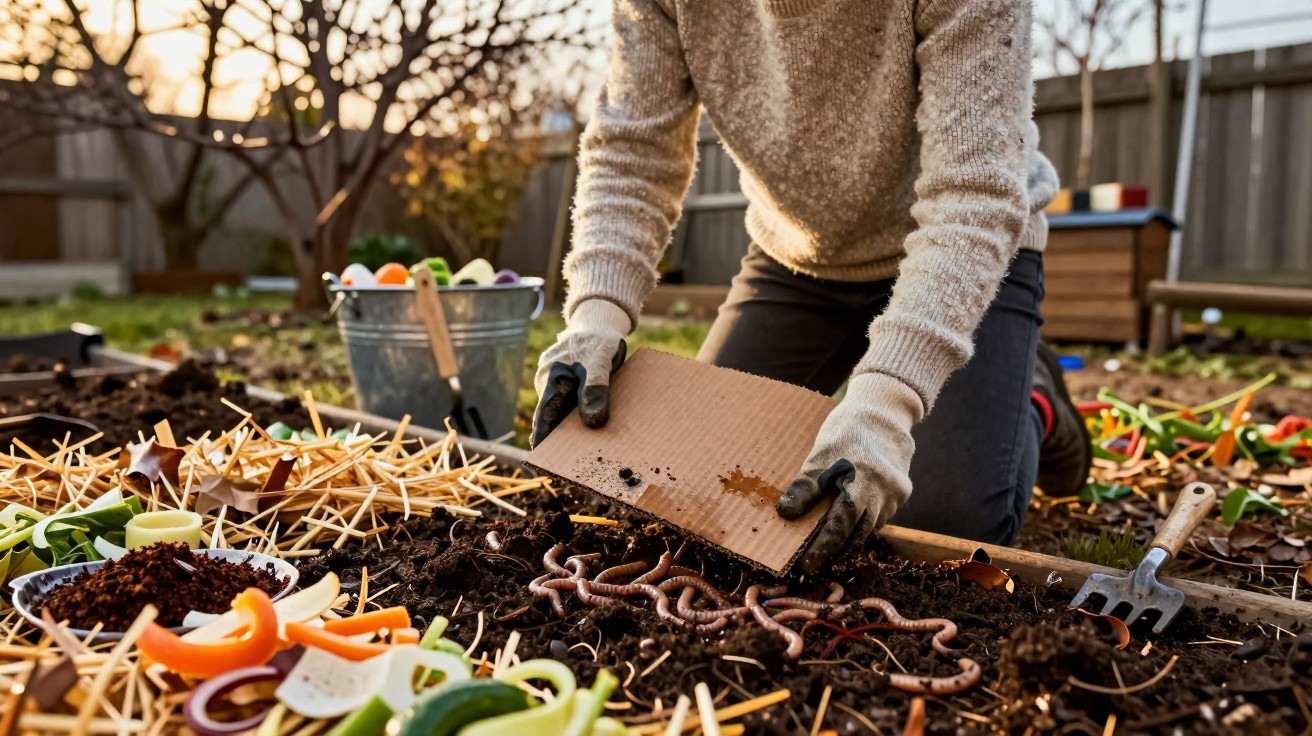
The most unexpected part comes right at the beginning: you don’t start with soil - you start with brown cardboard. Plain packing boxes without coatings or plastic film work best.
“In a lasagne garden, cardboard is the foundation: it smothers unwanted plants while feeding soil life at the same time.”
Why cardboard matters so much
- Light barrier for weeds: Cardboard blocks sun and air. Lawn, couch grass and other persistent weeds die back underneath, without you having to dig them out.
- A source of nutrients: Cardboard provides plenty of carbon. Once soaked, it’s broken down by earthworms and micro-organisms.
- A gentle transition layer: When fully wet, cardboard becomes permeable. Worms travel through it and knit the old soil to the new layers above.
Before you lay anything down, remove tape, plastic labels and metal staples. Then overlap the cardboard tightly so there are no gaps where light can reach the ground. After that, water thoroughly - in winter a good soaking is often enough and the rain does the rest.
The basic principle: balancing carbon and nitrogen
Once the cardboard is in place, the real “lasagne” building begins. The core of the method is alternating “brown” and “green” materials.
| Material type | Examples | Function |
|---|---|---|
| “Brown” (carbon-rich) | Straw, hay, dry leaves, woodchip, cardboard, newspaper | Structure, water retention, air in the soil |
| “Green” (nitrogen-rich) | Vegetable scraps, coffee grounds, tea bags, grass clippings, manure | Fuel for bacteria, fast decomposition |
“A good rule of thumb is: two layers of ‘brown’ to one layer of ‘green’ - that keeps the rot stable and free of bad smells.”
How to build the layers properly
On top of the soaked cardboard, start with an airy, fairly coarse layer - for example thin twigs, straw or rough woodchip. This keeps oxygen in the system and stops the pile turning into a dense, wet mat.
Then add alternating layers of:
- Green layer: kitchen scraps, coffee grounds, fresh manure or leftover grass clippings.
- Brown layer: a noticeably thicker layer of leaves, straw, shredded twigs or paper.
Repeat the pattern until the mound is about 30 to 50 centimetres high. It will look tall at first, but it quickly sinks over a few weeks as the materials break down.
Winter as an opportunity: your kitchen and garden become a supply yard
Putting together a lasagne garden in January or February solves several issues at once. Instead of feeding the food-waste bin and making trips to the recycling centre, you let your own soil do the processing.
“If you use lasagne gardening, you turn your kitchen into a soil filling station - every vegetable scrap flows straight into tomorrow’s harvest.”
What you can add to the layers in winter
- Peelings and leftovers from winter vegetables such as cabbage, squash and carrots
- Coffee grounds and tea bags (with no plastic components in the bag)
- Dry leaves still sitting around in sacks
- Cut-back perennial stems and dried plants from autumn
- Old, depleted potting compost or balcony planter compost
- Animal manure from rabbits, chickens or horses (fresh or partly rotted)
If you collect materials consistently, you soon notice how much “waste” becomes a valuable resource. It can often significantly reduce how many bags of compost or fertiliser you need to buy.
Earthworms as free labour
Once the heap is built and kept moist enough, soil life takes over. Earthworms, woodlice, springtails, fungi and bacteria move into the layers and get to work.
“In a lasagne garden, an army of soil organisms replaces the spade, the rotary tiller and synthetic fertiliser.”
Earthworms mix old and new material, pull organic scraps downwards and leave behind root-friendly channels. Their castings are among the most nutrient-rich components of soil. Bacteria and fungi even tackle tougher items such as woody bits or thick leaf stems, turning them step by step into humus.
Decomposition also generates a little heat. In particularly cold winters, that gentle warmth helps keep soil life active. Come spring, the bed dries out faster and is ready for planting sooner than bare, compacted ground.
Plant straight into it in spring - without digging
When temperatures rise and the lasagne garden has had a few months, many gardeners are surprised by what they see: shells, leaves and straw that were once obvious have largely become a dark, loose mass that smells distinctly like woodland soil.
“In a mature lasagne garden, your hand is often enough to shape a planting hole - the spade can stay in the shed.”
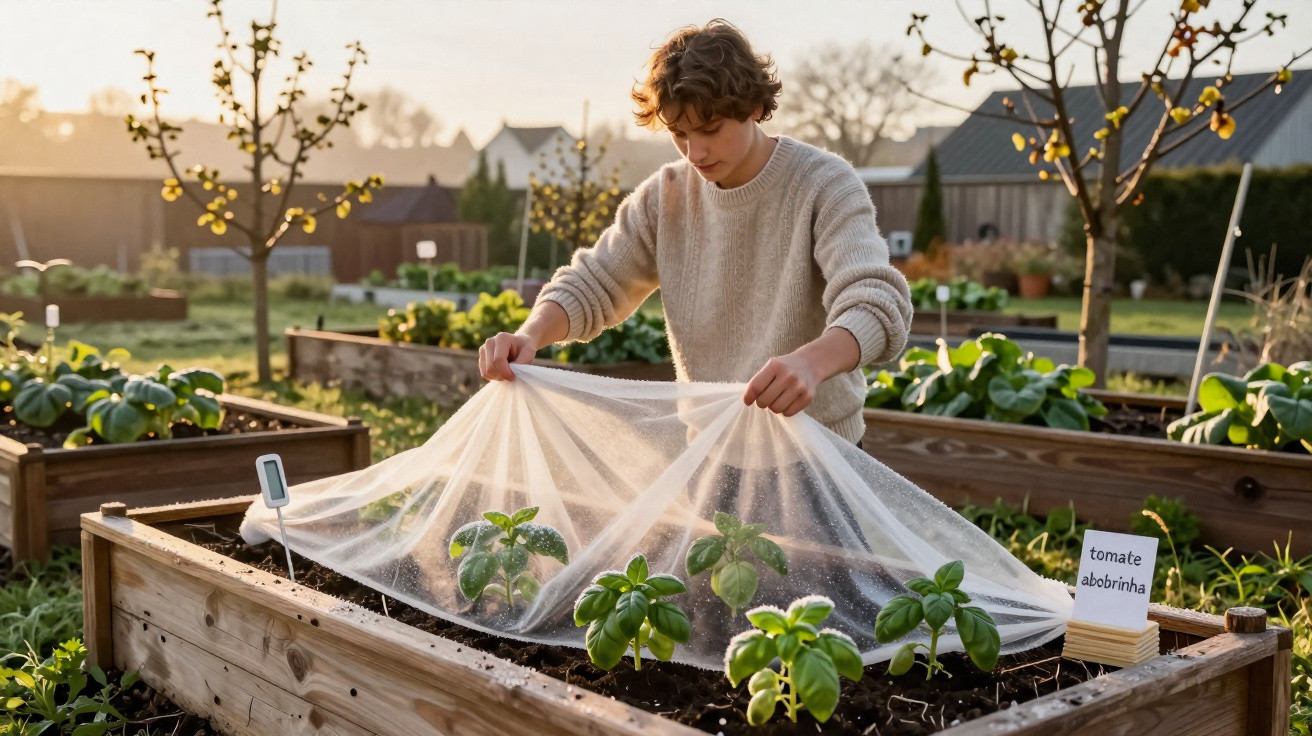
There’s no need to turn the bed. Simply pull the top layer slightly aside, set young plants of tomatoes, courgettes, peppers or lettuce into small planting holes, add a handful of fine planting compost or potting compost if needed, and firm in lightly. The remaining layered cover keeps working as mulch: it reduces drying out, suppresses new weeds and steadily releases more nutrients.
A useful side benefit is that, because the area was light-proof from day one, far fewer weed seeds germinate. The handful of weeds that do appear can be pinched out with two fingers in the soft soil.
Common mistakes - and how to avoid them
Too much “green” at once
If you spread thick layers of fresh grass clippings or dump large quantities of kitchen waste without enough “brown” material, you risk smelly, soggy layers. Stick as closely as you can to the rough ratio of two parts “brown” to one part “green”. If the heap starts to smell strong, make the next layer a dry one.
A heap that’s too dry
Under eaves or during dry spells, layers can dry out quickly - and then decomposition stalls. If the material feels dusty and hard, a thorough watering gets things moving again. The ideal moisture level is like a wrung-out sponge: not dripping wet, but clearly damp.
Who benefits most from a lasagne garden
This method is especially effective in tricky spots:
- Compacted clay soils: Instead of digging and breaking your back, you build a loose, humus-rich layer from above, which gradually improves the subsoil.
- Lawns you want to convert into a veg patch: No turf-cutting required - the cardboard does the job.
- Gardeners with back problems: Far less physical strain because digging is removed.
- Small urban gardens: Kitchen scraps stay in the cycle and you produce less food waste.
It’s also a good option for anyone who only starts gardening later in the year. If winter is too busy, you can still begin layering in spring and then use the bed in summer for robust crops such as squash or courgettes.
Practical add-ons and variations
If you want to, you can fine-tune a lasagne garden with a few simple tweaks. A thin mulch layer - for instance grass clippings or straw - over the top helps reduce evaporation in summer. In drier areas, a permeable irrigation hose left in place on the bed can be worthwhile.
Hybrid approaches can work well too. Some gardeners combine the lasagne build with raised beds, filling the frame in the same layered way. Others create only one or two strips in the veg patch using this method, for heavy feeders such as tomatoes or cabbage.
Once you’ve seen how loose and crumbly the soil becomes after a winter under an organic cover, you’ll look at kitchen scraps, autumn leaves and cardboard differently. They’re no longer rubbish - they’re raw materials for strong plants, healthy harvests and far less work in spring.
Comments
No comments yet. Be the first to comment!
Leave a Comment