

With a few well-chosen changes, your balcony can become a cosy outdoor lounge that is enjoyable even on frosty days.
Many city dwellers will recognise the pattern: during summer, the balcony briefly serves as a spot for grilling or sunbathing, but by October it becomes storage for clothes airers, crates of drinks and bicycles. Yet this small outdoor area can work like an extra room when it is planned thoughtfully and prepared for cold, wind and darkness. Interior and garden-design professionals rely on six elements that work even in just a few square metres.
Comfortable furniture that withstands wind and weather
Furniture is always the starting point for a usable balcony. Anyone relying on unstable plastic chairs or hard folding stools is unlikely to venture outside voluntarily in winter. The key is to balance comfort, appearance and durability.
- Chairs and armchairs with well-padded seats
- A wooden bench with thick cushions
- A pallet topped with a mattress for lounging
On compact balconies, stackable stools or folding chairs are worthwhile, as they can be moved against the wall after use. This keeps room clear for moving around, which matters when you are carrying blankets and a tray outside in winter.
For materials, professionals recommend weather-resistant options:
- Synthetic rattan for a homely appearance and strong moisture resistance
- Teak or acacia, as both woods are naturally hard-wearing
- Aluminium or powder-coated steel for a modern look
For more of a holiday feel, add a hanging chair or a small swing bench. It is important to check that ceiling or wall fixings are secure, particularly in older buildings.
“The more comfortable the seating, the more likely you are to use the balcony even in low temperatures.”
Textiles turn a cold area into a cosy retreat
Even the most attractive outdoor sofa will remain unused without fabrics. Cushions, throws and rugs soften the harshness of concrete while retaining a little warmth.
For a welcoming balcony, particularly useful choices include:
- Soft cushions in a range of sizes and colours
- Thick throws or woollen blankets for shoulders and legs
- An outdoor rug that makes the floor feel less cold
In winter, many people choose heavier fabrics such as wool, corduroy, velvet or densely woven cotton. They feel warm and visually extend the living room outdoors. In summer, covers can be swapped for lighter linen or cotton fabrics: the overall concept stays the same, while the look changes.
A practical storage solution is essential: a chest that also functions as a bench keeps cushions and blankets dry and prevents the balcony from becoming cluttered.
More greenery: a mini garden instead of a grey back courtyard
Plants can completely transform the atmosphere. Even a very small balcony feels noticeably friendlier and more sheltered with a few pots, and far less bleak in winter.
Evergreen varieties are especially suitable throughout the year:
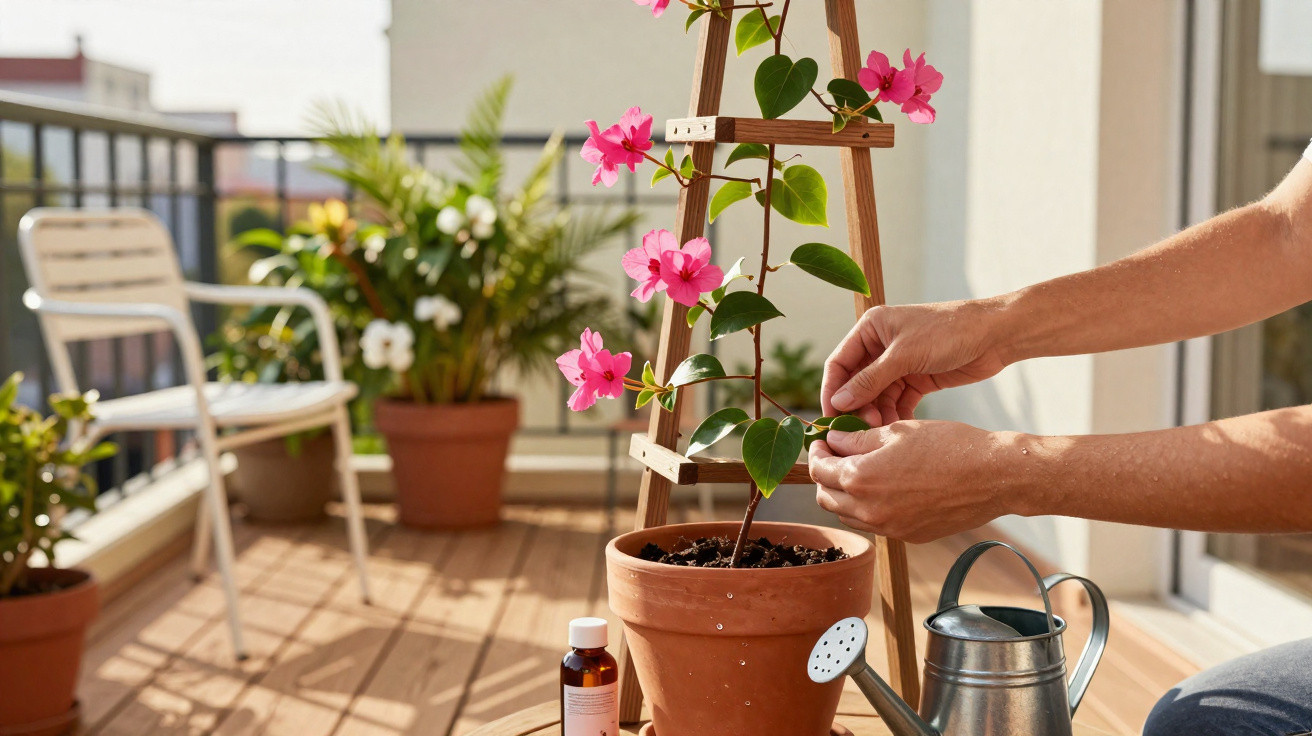
- Ivy climbing up a trellis, ideal as a green privacy screen
- Bamboo in containers, which also helps block curious views
- Japanese spindle, which retains its foliage even in cold weather
Anyone who enjoys cooking can also place herb planters on the balcony rail: rosemary, thyme and sage tolerate light frost and give the balcony a Mediterranean touch even in January. Frost-proof pots and saucers are important so that neither roots nor flooring are damaged.
“A green balcony still feels alive when the trees along the street have long since lost their leaves.”
Soft lighting rather than floodlights from the living room
In winter, whether a balcony gets used often depends on the lighting. Without atmospheric lamps, the outdoor space can quickly feel gloomy or uncomfortably bright.
Suitable options include:
- LED fairy lights along the railing or across the ceiling
- Solar lanterns that charge during the day and switch on automatically in the evening
- Portable battery-powered outdoor lamps with adjustable brightness
- LED candles for the table that imitate real candlelight
One technical detail makes a considerable difference: warm-white light of around 2700–3000 Kelvin feels inviting and resembles living-room lighting. Cool-white light recalls an office or building site, stripping the balcony of its cosy atmosphere.
Clever storage ideas instead of a cluttered corner
Many balconies are not limited by their size but by how they are used. One corner is for tools, another for empty bottles, then there is the barbecue, and suddenly there is no room left for a chair. Organising systems help make the outdoor area feel like a proper room.
Useful solutions include:
- A storage box that also serves as a bench
- Wall shelves for plants, lanterns and smaller accessories
- Rattan baskets or metal boxes for blankets, cushions and odds and ends
- A folding balcony tabletop that hangs from the railing
Those who enjoy DIY can use the narrow area beneath the ceiling for hook rails. Lanterns, a watering can and even a small herb dryer can hang there. This leaves the floor clear and makes the balcony look less crowded.
Protection from cold, wind and curious neighbours
For the balcony to remain more than a decorative space in January, it needs protection from draughts, rain and overlooking neighbours. Many options can be installed in rented homes, provided they do not alter the building structure.
Common choices include:
- An awning or shade sail, which provides summer shade but also forms a roof against drizzle in winter
- A wooden or woven room divider that breaks the wind and creates some privacy
- Heavy outdoor curtains that run along side rails or wire cables
Thick curtains in particular offer two benefits: they provide screening and hold back some of the cold without making the space feel cave-like. If you still feel chilly, electric infrared heaters or heated seat pads can help, although it is worth considering electricity use and fire safety.
The balcony as a year-round mini living room
When all six areas-furniture, textiles, plants, lighting, storage and protection-are considered, the effect quickly becomes clear: the balcony is no longer seen simply as a place to put things, but as a space designed with intention. Many people find that an upgraded balcony encourages them to get fresh air more often, sit outside later in the evening or take their first coffee of the day outdoors.
“With a well-planned concept, the balcony changes from a storage area into a retreat-summer and winter alike.”
Practical everyday examples
A typical city balcony measuring just under two square metres could be arranged like this: fit a folding table to the railing, with a narrow outdoor rug beneath it. Place a slim shelf for herbs and decorations along the side wall, then position two folding armchairs with seat cushions in front. Add a small string of lights to the railing and a fabric windbreak, and there is already space for two people with mulled wine and a book.
With more room available, separate zones can be created: a reading corner with a hanging chair at the back, a low table beside it, and a mini garden with a raised planter and a row of bamboo at the front. This makes the balcony feel less like a narrow passage and more like a small terrace.
Risks, rules and sensible additions
For all these ideas, it is worth checking the building rules: open flames from real candles or fire bowls are prohibited on many balconies. Heaters must also be fixed securely and kept a sufficient distance from textiles. Heavy plant containers should be secured so they cannot topple over or fall during high winds.
If neighbours live directly above or below, be mindful of dripping water from window boxes and of noise, as conversations and music can carry into flats particularly easily in winter. Thick rugs and rubber feet beneath furniture reduce footfall noise, while felt pads stop chairs scraping loudly.
Combining the balcony with other leisure uses can also be appealing: a small folding table can be a home-working station by day and a drinks bar in the evening. Fairy lights create atmosphere for tablet film nights, while a thick seat cushion can temporarily turn the bench into a meditation or yoga corner.
Planning the balcony to fulfil several functions makes the few extra minutes needed to spread out blankets or switch on the lights feel much more worthwhile-and, eventually, you may wonder how you ever got through winter without this small personal outdoor space.





Comments
No comments yet. Be the first to comment!
Leave a Comment