
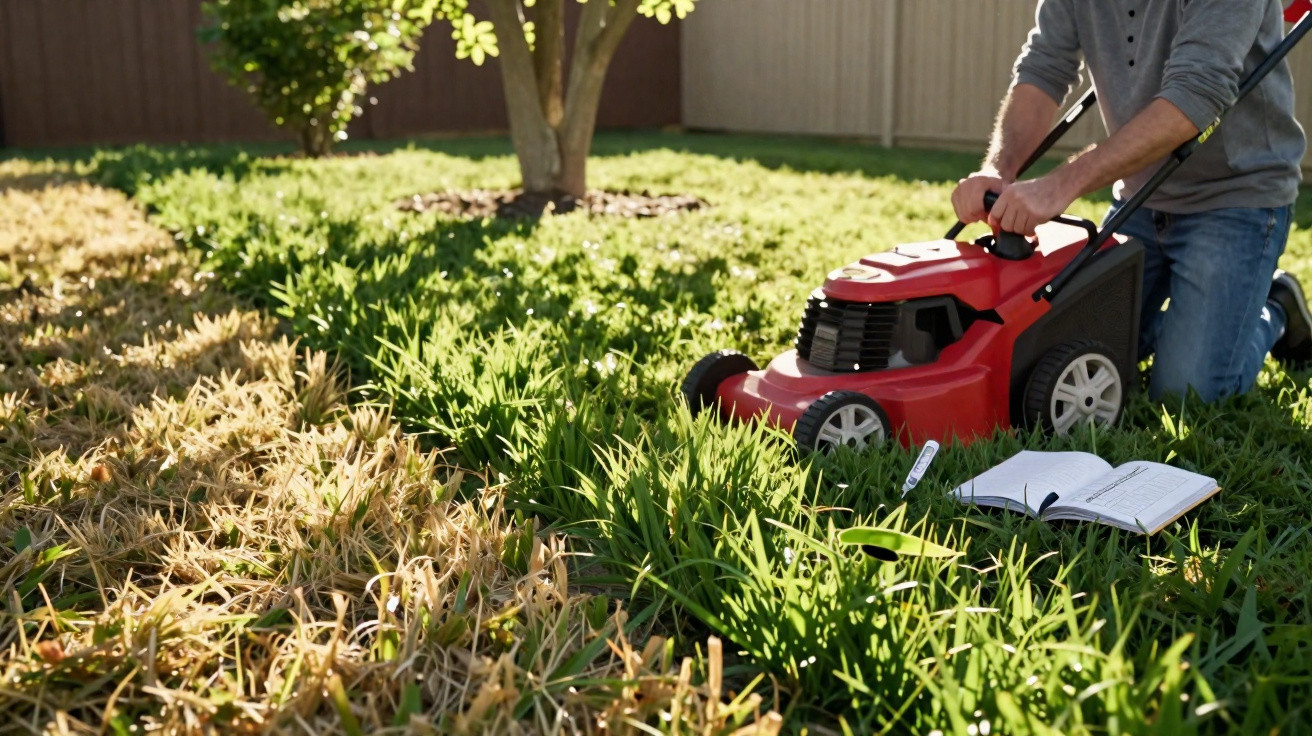
At the end of every July, the same pattern played out in this small housing-estate garden: the lawn looked yellow and dry, even though the hose ran on most evenings. The owner had tried fertiliser, switched sprinklers, watched the forecast and even scattered a few handfuls of ‘drought-resistant’ grass seed. Nothing made much difference. Then one day, a neighbour looked at his lawn mower and asked a very simple question: “What cutting height do you use?” The answer lay beneath the machine’s wheels. A blade set too low can weaken a lawn far faster than a spell of hot weather. Sometimes, just a few centimetres can transform the whole view.
This lawn did not lack water; it lacked shade
We all know that slightly discouraging moment when we look out of the window and the grass seems to have lost all will to live. It turns yellow in patches, feels rough beneath bare feet and takes on that straw-like shade that makes summer look as though it has won. In this case, watering was not really the problem. The mower was cutting too close to the ground, below 4 centimetres, leaving the blades exposed to scorching sunshine by late morning. A closely cut lawn looks tidy for two days. Then it begins to suffer quietly.
For Marc, near Orléans, the mower had been set to its lowest position for years. He liked the neat, even ‘football pitch’ look, particularly before meals on the terrace. Yet every time he mowed, he removed a huge amount of leaf growth, sometimes more than half the height of each blade. During hot weather, this severe cut forced the grass to draw on its reserves to grow back, while its roots were already searching deeper for moisture. He watered three times a week, without realising that the lawn was weakened after every mow.
The process is fairly straightforward: leaves capture light and shield the ground like a small plant parasol. When they are cut too short, the soil heats up quickly, more water evaporates and the roots remain shallow. The lawn then becomes dependent on watering, as if it were constantly asking for a drink without ever being able to cope alone. A slightly longer lawn is not neglected; it is often better equipped to cope. Yellowing that is blamed on a lack of water may therefore be the sign of scalped grass exhausted by overly aggressive mowing.
The right lawn mower setting makes all the difference, especially before hot weather
To create a more resilient lawn, the most useful step is to raise the cutting height before summer arrives. At between 6 and 8 centimetres, grass retains enough leaf growth to shade the soil and develop deeper roots. Very sunny areas often benefit from a cut of around 7 centimetres, while a cooler corner can be kept slightly shorter. This does not mean letting a meadow grow in front of the house. It simply gives the lawn a better chance of survival when temperatures rise and the sun beats down relentlessly.
The easiest rule can be summed up in one sentence: never remove more than one third of the grass height in a single mow. If the lawn has grown during a holiday or after a wet week, it is better to mow it fairly high first, wait a few days, then lower the height gradually. Let us be honest: nobody really does this every time. However, avoiding one or two harsh cuts during the summer can already reduce the damage. A mower with a properly sharpened blade also helps, as it makes a clean cut instead of tearing the tips, which then turn brown.
The instinct to water more is not unreasonable, particularly during a heatwave, but it will not solve the problem of cutting too low. A properly mown lawn retains the moisture it receives more effectively and needs fewer interventions during the week. The right setting is often worth more than daily watering. One gardener sums up the situation in very simple terms:
“When you cut too short, you give the sun direct access to the soil. Then you spend the summer trying to repair what the mower did in ten minutes.”
- Raise the cut to 6 or 7 centimetres as soon as the first hot weather arrives;
- Mow preferably towards the end of the day, never when the grass is parched;
- Leave very fine grass clippings in place when they do not form clumps;
- Space out mowing during periods of drought.
A greener garden can sometimes require less effort, not more
Raising the mower will not turn a lawn into an English lawn overnight. Areas that have already turned yellow may take several weeks to become green again, particularly where the soil is compacted or poor. Even so, the change is often quickly noticeable to the touch: the ground stays cool for longer, the blades stand upright and tired patches stop spreading. It means accepting grass that is slightly less closely cropped, and therefore less ‘perfect’ in photographs. In return, the garden looks alive and softer, while bare feet find a little more coolness.
This story also shows that garden maintenance often relies on inherited habits that are rarely questioned. We mow because the neighbours mow, water because the lawn turns yellow, then repeat the same routine the following week. Yet every plot has its own exposure, soil, shady spots and small imperfections. Observing before acting prevents many litres of wasted water. A blade set too low, mowing too often or cutting the grass at midday can be enough to turn a robust lawn into a fragile one.
There is something reassuring about this solution, because it needs neither costly equipment nor a miracle product. A simple lever adjustment on the mower, a few days of patience and a more forgiving view of growing grass can change the whole summer for a garden. Children will still run outside, meals will still be held on the terrace, and the lawn does not need to be cut to the millimetre to feel welcoming. Perhaps the finest green is not the one that looks perfectly controlled, but the one that withstands summer without being exhausted.
| Key point | Detail | Benefit for the reader |
|---|---|---|
| Cutting height | Allow around 6 to 8 cm during hot weather | The soil remains better protected from the sun |
| Mowing frequency | Leave longer intervals between mowing during droughts | The lawn retains its reserves and roots |
| Watering | Water less often but more deeply | Less waste and a more self-sufficient lawn |




Comments
No comments yet. Be the first to comment!
Leave a Comment