
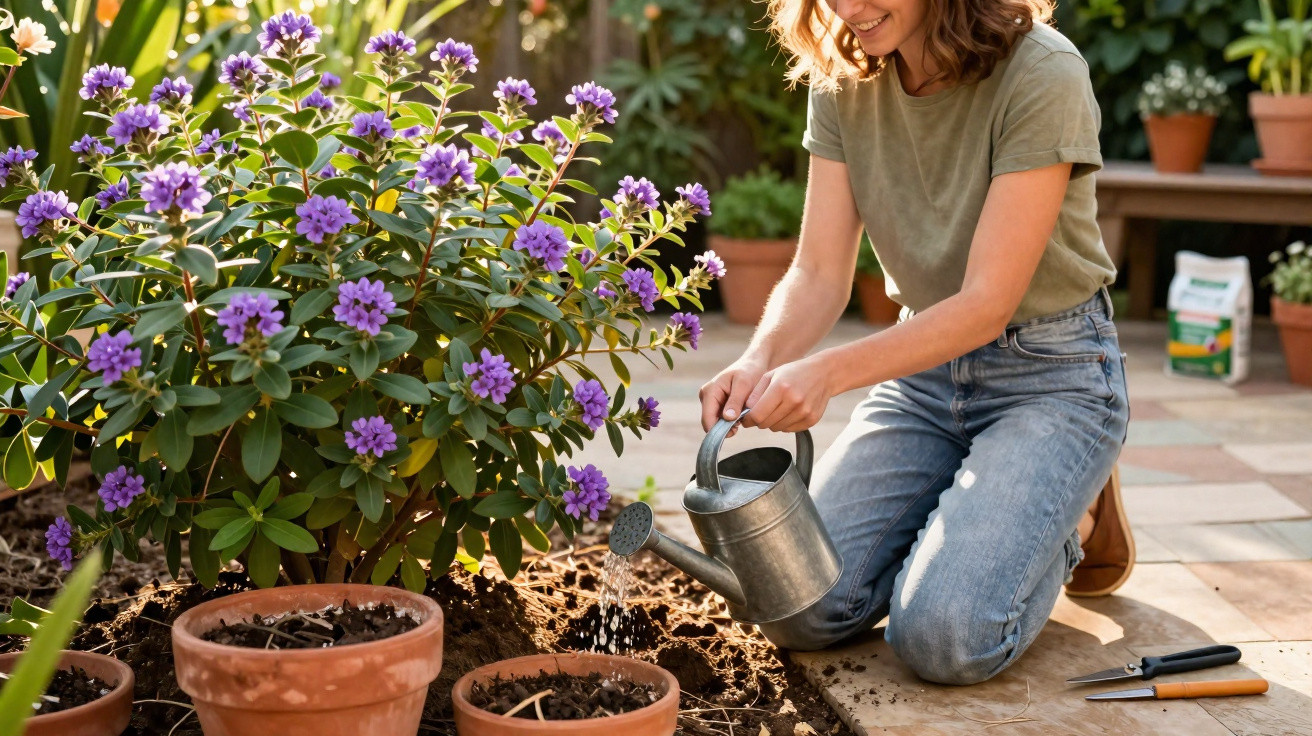
Anyone who has stared in disbelief at scorched borders and drooping blooms in midsummer will know the problem: many traditional summer flowers struggle when heatwaves coincide with watering restrictions. In warmer parts of Europe, gardeners increasingly turn to a shrub that flowers for much of the year, copes surprisingly well with dry spells and also performs in a pot on a balcony or patio - Polygala myrtifolia, often known as myrtle-leaved milkwort.
A shrub that can flower for up to ten months of the year
Polygala myrtifolia originates from South Africa, where it grows in sun-baked, relatively lean conditions. That background is exactly why it is becoming interesting for gardens that are facing more heat and less water. The plant is evergreen, carrying glossy green leaves with a look that subtly recalls myrtle.
From spring onwards, this prolific bloomer gets going: depending on the local climate, the first distinctive flowers open from April or May in shades ranging from pink to violet. Their shape is often compared to small butterflies, giving borders and containers a noticeably livelier feel. In mild areas, flowering can continue into October, and in very sheltered spots even into November.
"In suitable locations, Polygala myrtifolia can produce fresh flowers almost continuously for up to ten months - a rarity among ornamental shrubs."
Its habit stays compact to bushy. In warmer regions, the shrub typically reaches around 1.5 to 3 metres in height. That makes it well suited as a low flowering hedge, a structural specimen in a border, or a statement plant in a large container by the front door.
Why this shrub is ideal for dry summers
As hot summers become more common, many hobby gardeners are looking for plants that do not demand daily watering. This is where Polygala myrtifolia benefits from its origins: once established, it tolerates periods of drought far better than many classic garden perennials.
- Built for dry spells: planted in the ground, it can cope with longer dry periods in a mild climate.
- Low maintenance: one prune a year is enough; labour-intensive shaping is not required.
- A magnet for bees: nectar-rich flowers attract solitary bees, honeybees and butterflies.
- Year-round presence: evergreen foliage provides structure in winter too, even when it is not in flower.
For wildlife-friendly gardens, this means two clear advantages at once: it provides colour for a large part of the year while also supporting insects.
Where this long-flowering plant grows best
There are limits, however. The key issue is winter hardiness: Polygala myrtifolia only tolerates short cold snaps of around -5 to -6 °C. In mild, sheltered areas it can be planted outdoors, while further inland and in colder districts it is generally safer to grow it in a pot.
In the ground: best in mild regions
In climatically favourable locations - such as coastal areas, wine-growing regions, or protected city gardens - the shrub can be planted out successfully. The essentials are:
- a position in full sun to light partial shade,
- free-draining, sandy or gritty soil,
- no consistently wet ground.
Heavy clay soils can be problematic because waterlogging forms quickly. In that case, mixing the soil with sand or fine grit helps excess water drain away more readily.
In a container: the safer option in harsher areas
Where winters are more severe, the shrub comes into its own in a pot. Choose a container with at least 40 centimetres diameter to provide enough space for roots and compost. The mix should be free-draining, for example:
- a proportion of good-quality compost for container plants,
- combined with sand,
- plus mineral components such as expanded clay pellets or lava granules.
Important: the drainage hole must remain clear, and any saucer should not be left full of water after rainfall. In summer, the plant prefers a sunny, sheltered spot on a balcony or patio. Over winter, it should be moved to a bright, cool place such as an unheated conservatory or a frost-free stairwell.
Watering, feeding, pruning: how to keep the shrub looking good
In the first few months after planting, Polygala myrtifolia needs regular watering so it can build a strong root system. Later on, you can allow the soil to dry slightly between waterings. Once established in the ground, it requires markedly less water than many other flowering shrubs.
In containers, it reacts more sensitively to persistent moisture. Let the top layer of compost dry before watering again. During very hot spells, watering may briefly be needed twice a day if the pot sits in strong sun.
"Two simple rules for long-lasting success: no sitting in water in the saucer, and avoid prolonged frost at the plant’s location."
For feeding, an ordinary flowering-plant fertiliser is sufficient, applied in spring and, if needed, a second time in early summer. The plant responds well to this extra boost without producing soft, unstable growth.
When it comes to pruning, a light cut-back once a year is enough. Reduce shoots by no more than one third, either after the main flush of flowers or towards the end of winter. This keeps the shrub compact, prevents it thinning in the centre and encourages fresh, flower-bearing growth.
Take care with pathogens and around pets
In some Mediterranean areas, Polygala myrtifolia is considered a potential host for the feared bacterium Xylella fastidiosa, which can damage various crops and ornamental plants. For that reason, parts of southern Europe have restrictions and reporting requirements when such plants are traded or planted.
If you live near borders where plants are frequently moved, or you deal often in Mediterranean species, it is sensible to check with your local garden centre or the relevant authority before buying in case any rules apply. Doing so can prevent hassle - and, in the worst case, costly compulsory removal.
For people and pets, the shrub is not regarded as highly toxic. Even so, children and animals should not put plant material in their mouths. Many ornamental garden plants can cause stomach upset in sensitive pets or small children if chewed, and that caution applies here as well.
Practical examples for using it in the garden
If you want to start with this shrub, it helps to plan plantings that suit its character. Proven ideas include:
- Mediterranean container mix: Polygala myrtifolia in a large pot, paired with lavender, rosemary and citrus plants on the patio.
- Sunny front garden: planted as a single specimen or in a loose line, set off with gravel, grasses and low cushion plants.
- Bee-friendly border: alongside catmint, sage and coneflower to extend the flowering season through much of the year.
If you have limited time for maintenance, position the shrub where watering is convenient without becoming a daily chore - for instance near the patio or close to a house wall. Combined with other drought-tolerant plants, it can form a planting area that stays resilient even in dry periods.
What hobby gardeners should consider before buying
Before purchasing, it is worth quickly checking whether your conditions fit. Key questions include:
| Question | What to check |
|---|---|
| How harsh are the winters? | Below -5 °C for extended periods? If so, choose a container rather than planting out. |
| What is the soil like? | Heavy and clay-rich? Improve with sand and grit, or grow it in a pot instead. |
| Is there a bright winter location? | Needed for container growing: a bright, cool, frost-free space. |
| How much time is available for watering? | More work in a pot on very hot days; far less in a border once established. |
With these points in mind, Polygala myrtifolia becomes a robust, unusually free-flowering shrub that really shows its strengths during hot, dry summers. As watering restrictions become more common and water costs rise, a low-effort flowering shrub like this can quickly become a quiet standout in the garden - or on a balcony.

Comments
No comments yet. Be the first to comment!
Leave a Comment