
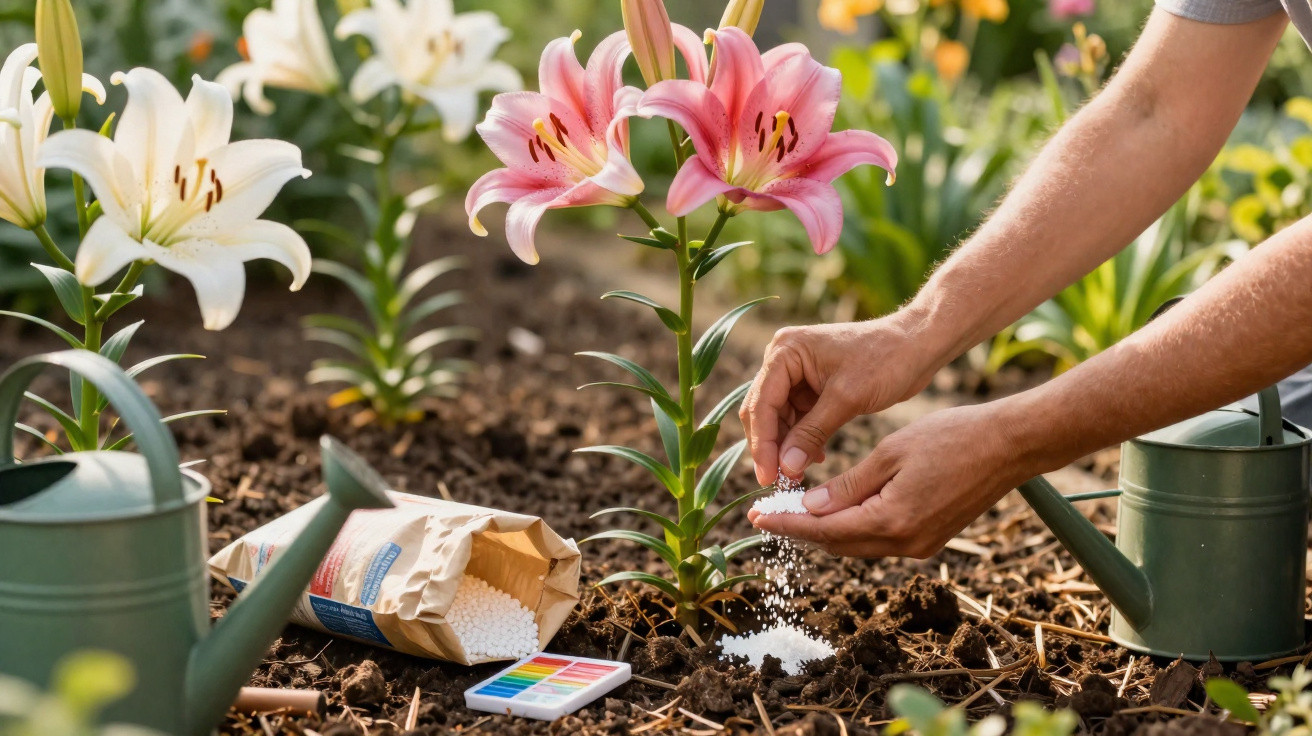
With the right approach, it works.
Plenty of hobby gardeners plant pricey bulbs, enjoy a handful of flowers in year one - and feel let down in year two. In most cases the problem isn’t the position in the garden, but how the plants are fed. Oriental lilies need handling that’s different from roses or tomatoes; otherwise, they never reach their potential.
What Oriental lilies really need
Oriental lilies are among the most spectacular flowering plants you can grow: large blooms that are often powerfully scented, strong stems, and rich colours. To put on that show, they draw heavily on the energy stored in the bulb - which is exactly why the right fertiliser matters.
"Oriental lilies love plenty of phosphorus and potassium - and only a moderate supply of nitrogen."
While many garden plants respond mainly to nitrogen by producing lots of leaf growth, Oriental lilies do best with a more balanced nutrient mix. Depending on your soil and the stage of growth, formulas around 5-10-10 or 10-10-10 (N-P-K) are ideal.
- Phosphorus (P): supports strong roots and the development of large flower buds
- Potassium (K): strengthens plant tissue, boosts flowering and colour intensity, and improves resilience
- Nitrogen (N): keeps foliage healthy, but must not dominate - otherwise you get lots of green and fewer flowers
So it’s not only a case of fertilising, but choosing the right product - and applying it at the right time of year.
The right schedule: when Oriental lilies want feeding
Many gardeners fertilise "by feel". Oriental lilies reward a more structured routine with noticeably better results.
| Growth stage | Recommended NPK ratio | Frequency | Main benefit |
|---|---|---|---|
| Early shoot growth | 5-10-10 | every 2 weeks | stronger roots, stem development |
| Vigorous growth | 10-10-10 | every 2–3 weeks | balanced nutrition, healthy foliage |
| Bud formation | 5-10-10 | every 2 weeks | flower development, intense colours |
| After flowering | 0-10-10 | monthly | bulb renewal, strength for next year |
Start once the shoots in spring are about 10–15 centimetres tall. From then on, feed regularly until the buds begin to show colour. As soon as the flowers are open, stop the main feeding - this helps energy go into the blooms rather than more new green growth.
Slow-release fertiliser, liquid feed or organic - what suits whom?
Slow-release fertiliser for borders and larger plantings
If your Oriental lilies are growing in a perennial bed or in rows, granular slow-release fertilisers are often the simplest option. Products with temperature-controlled release deliver nutrients gradually and reduce the risk of root damage caused by salt spikes.
"Slow-release fertiliser goes into the soil at planting time - and the rest of the season almost runs itself."
Work the granules lightly into the top layer of soil, or scatter them in a ring around each plant. During the strongest growth phase, an occasional liquid feed can also help when the plants visibly "step on the gas".
Liquid feed for container lilies
Oriental lilies in pots are far more demanding when it comes to nutrition. Nutrients are washed out more quickly with watering, and the limited volume of compost doesn’t forgive big fluctuations.
Water-soluble flowering-plant feeds work well here because they mix easily into the watering can. Two practical approaches are:
- fertilise weekly at half strength, or
- apply a full dose every two weeks
During heatwaves, it’s worth reducing the amount slightly, as stressed plants take up nutrients less efficiently.
Organic fertilisers: gentler, but slower
If you want to keep things as natural as possible, you can also feed Oriental lilies with organic materials. Well-rotted compost, bone meal and fish fertiliser are particularly suitable.
- Bone meal: phosphorus-rich, ideal for strong roots and bud formation
- Fish fertiliser: provides readily available nitrogen and trace elements
- Mature compost: improves soil structure and supplies a basic level of nutrients
Organic feeds act more slowly, but they build the soil over time - a real advantage on light, sandy soils. If you’re feeding newly planted bulbs, reduce the amount in the first year by about one third so the roots aren’t overwhelmed.
How to apply fertiliser correctly
Even the best fertiliser won’t deliver results if it’s applied badly. A few straightforward rules help prevent damage and keep plants properly supplied.
- Never tip granules directly against the stem; instead, spread them in a circle with about 15 centimetres of clearance.
- Water thoroughly after each application so nutrients move down into the root zone.
- During intense heat or dry spells, it’s better to pause - weakened plants make poorer use of fertiliser.
- Watch the leaves: pale green or stunted growth suggests underfeeding; dark green, lush shoots point to too much nitrogen.
"If you train your eye on leaf colour and growth, you can adjust feeding flexibly and avoid nutrient imbalances."
Soil, pH and mulch: the often overlooked trio
Oriental lilies prefer slightly acidic to neutral soil, with a pH around 6.0 to 6.5. In very chalky soils, certain nutrients can become unavailable even when you’ve applied enough fertiliser. A simple soil test from a garden centre will show whether any correction is needed.
A loose layer of bark mulch or compost around the plants brings several benefits at once:
- the soil stays moist for longer
- temperature swings are moderated
- humus gradually forms and continues to release nutrients
Soil life such as earthworms and microorganisms break down the organic material and slowly make nutrients available - a kind of all-season buffet for lilies that complements mineral feeding.
After flowering: now it’s time to "refuel" for next year
A common mistake is cutting the stems right back after flowering, stopping all feeding, and expecting the plant to "rest". For Oriental lilies, that approach is damaging. This is the period when the bulb rebuilds reserves for the coming season.
"As long as the foliage is green, the plant is working - and needs food."
At this point, use a phosphorus- and potassium-heavy fertiliser with little or no nitrogen. Leave the leaves on the plant until they yellow naturally; only then should you cut back. This is how you end up with robust bulbs that flower far more generously the following year.
Practical examples and common mistakes
If you garden on heavy, loamy soil that holds nutrients well, a moderate base feed plus the occasional liquid fertiliser is often enough. On sandy soils it’s different: rain leaches nutrients quickly, so feeding needs to be more frequent but at lower doses.
Typical issues and their most likely causes:
- Tall plants, few flowers: too much nitrogen; the balance of N versus P and K is off
- Small, pale flowers: lack of phosphorus and potassium; the wrong fertiliser ratio or applications too infrequent
- Weak, leaning stems that topple: insufficient potassium, or an overall nutrient shortage during the main growth phase
If you’re new to Oriental lilies, try an experiment with two beds: a standard all-purpose fertiliser on one side, and a phosphorus- and potassium-focused flowering feed on the other. The difference in sturdiness and flower size is often obvious even in the first year.
One more thing people often overlook: fertiliser can’t replace good basic care. Waterlogging, poor aeration and permanently dry soil can’t be "fixed" by feeding. Only when the site, moisture balance and soil are reasonably right can the correct fertiliser deliver its full effect.


Comments
No comments yet. Be the first to comment!
Leave a Comment