
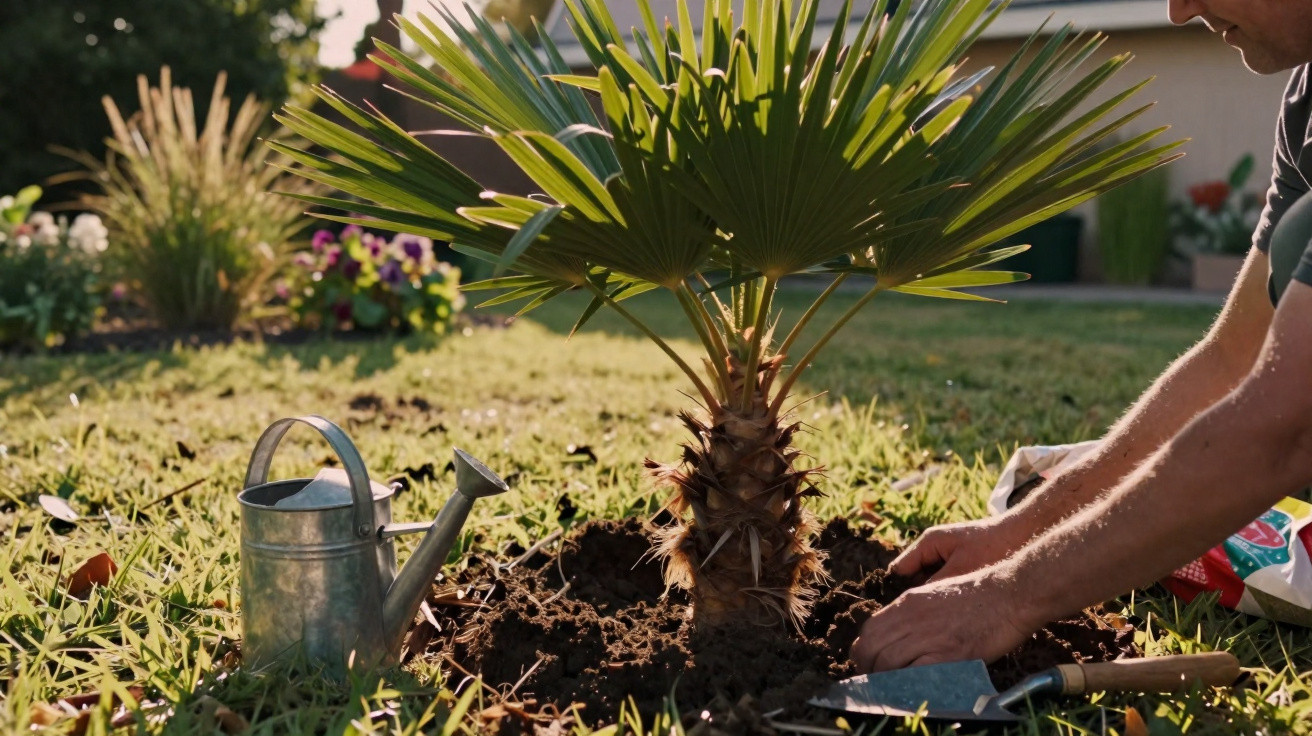
Many amateur gardeners start thinking about winter protection as late summer approaches. Yet that is precisely the moment when you can give your plot a completely new feel. One particular, surprisingly tough palm delivers instant holiday atmosphere, tolerates sharp frost, and needs far less attention than a traditional lawn or delicate flowering plants.
The frost-hardy fan palm: exotic looks that can handle sub-zero temperatures
Why this tree outshines the standard garden “wow factor”
We are talking about the Chinese windmill palm, botanically Trachycarpus fortunei. It grows upright with a slim profile, forms a sturdy trunk, and carries large, fan-shaped leaves. Even a single specimen can visually transform an ordinary terraced-house garden.
"With its striking silhouette, the windmill palm feels like a natural sculpture that instantly draws the eye."
Those wide fans cast light shade without making the bed beneath gloomy. The result is an airy, pleasant mood reminiscent of Mediterranean courtyards. In gardens that are otherwise quite formal, the palm look adds a playful touch without tipping into messiness.
Its biggest advantage: this palm is considered one of the hardiest of its kind in Europe. When healthy and planted in the right spot, it can cope with temperatures down to around -18 degrees Celsius. For many areas, that is more than sufficient.
Low thirst, low stress: an ideal plant for hot summers
While lawns can scorch quickly in summer and demand constant watering, the windmill palm manages with much less. Once established, typical conditions usually mean rainfall is enough, with the occasional top-up during prolonged dry spells.
- high tolerance of heat and full sun
- comparatively low water needs after the establishment phase
- minimal pruning - simply remove old, dried leaves
- suitable for front gardens, courtyards, roof terraces and large containers
If you want a plant that looks like it belongs at a “luxury hotel resort” but is as easy-going day to day as a shrub, you will keep coming back to this palm.
The perfect spot: where the windmill palm becomes the main character
Light, wind, neighbours: what matters most when choosing a position
This frost-hardy palm thrives in full sun to bright partial shade. A position by a south- or south-west-facing house wall is ideal. The wall stores warmth and also offers protection from cold easterly winds.
Good positions include, for example:
- at the edge of a patio, slightly raised within a border
- at the end of a straight garden axis as a natural focal point
- on a boundary line as a living “screen” feature
- in a sheltered corner framed by walls or hedging
In exposed, windy sites the fans can whip back and forth. This rarely causes lasting damage, but it can look restless. A more protected spot usually produces a calmer, more balanced form.
Which plants pair especially well with the palm
Things get truly interesting when you combine the windmill palm deliberately. It provides the vertical headline act, while other plants fill the stage at its base.
Popular planting partners include:
- ornamental grasses such as fountain grass or switchgrass that move with the breeze
- lavender and rosemary for fragrance and Mediterranean character
- agaves and succulent spurges for a gravel-garden look
- roses as a romantic counterpoint to the palm’s graphic fans
If you prefer a calmer, Asia-inspired scheme, pair the palm with pale gravel surfaces, stepping stones, bamboo (choose non-invasive types), and a small number of clearly placed structural shrubs.
Late-summer planting: why starting now is such a smart move
The best window for years of enjoyment
The ideal planting period runs from late August to around mid-October. The soil is still warm, nights are cooler, and many areas return to more reliable rainfall. Root growth then accelerates, without the palm simultaneously battling heat and drought stress.
If you plant much later, you risk the roots failing to establish properly. The palm then goes into winter weakened, which can be an issue in harsher locations.
How to prepare the soil properly
The root zone needs space and air. A planting hole of around 60 × 60 × 60 centimetres is a solid rule of thumb; larger specimens may need more. Good drainage is essential, because the windmill palm really does not like waterlogging in winter.
Recommended soil mix:
- garden soil as the base
- a little coarse sand or grit to open the structure
- a portion of mature compost for nutrients
Heavy, clay-rich soils can be improved significantly with sand and gravel. If your spot is especially wet, you can also plant the palm slightly raised on a mound so excess water drains away more easily.
Step by step to a successful palm start
- Water the root ball thoroughly before it goes into the ground.
- Gently loosen compacted outer roots, without tearing them apart.
- Place the palm so the root ball sits level with the surrounding soil, not deeper.
- Backfill with the prepared mix and firm lightly.
- Water generously so soil and roots settle together.
- Spread a mulch layer of five to ten centimetres around the trunk.
"Mulch protects against frost in winter, keeps moisture in the soil during summer, and reduces weeds around the palm."
Day-to-day care: less work than many people expect
Watering, feeding, protecting - simple routines that work
In the first year after planting, the palm needs regular watering during dry spells. The soil should be moist, but never permanently wet. After that, it is usually enough to water only during prolonged heat.
Once a year in spring or early summer, a slow-release fertiliser for container and ornamental plants can be useful, particularly on very poor soils. Many hobby gardeners manage perfectly well without additional feeding if the soil contains enough compost.
In very cold winters, light protection is worthwhile:
- renew or increase the mulch layer over the root area
- in exposed sites, wrap the crown with a lightweight horticultural fleece
- for container-grown palms, insulate the pot with hessian, coir mats or bubble wrap
This is typically limited to just a few days each year. When planted well and in good health, problems are rare. A quick occasional check of the trunk and leaves is enough to spot issues early.
Removing old leaves - when and how
After a few years, dry brown fronds appear around the lower section. Some gardeners leave them in place because they wrap the trunk like natural armour. If you prefer a tidier look, cut them off close to the trunk with a sharp, clean saw or loppers.
Important: only remove fully dried leaves, as greenish fronds still supply nutrients. Gloves and sturdy footwear are sensible, because the fibres and leaf stalks can be rough and sometimes sharp.
How the windmill palm changes the sense of space in your garden
Using light, shade and sightlines intelligently
Positioned well, the palm behaves like a natural lighthouse. It organises areas that used to be nothing but lawn and adds height where everything felt flat. If you aim an uplighter or LED at the trunk in the evening, you gain an extra effect: the fans throw dramatic shadows onto a wall or fence.
A few examples of how the feel of the space shifts:
| Before | After with palm |
|---|---|
| Dull, rectangular lawn | Central palm sculpture, borders around it, a clear focal point |
| Overlooked patio with no structure | Palm as a semi-transparent screen with dappled shade |
| Shady front entrance with no accent | Palm as a strong welcome feature with pots and lighting |
Where the palm still delivers surprises
Small city gardens and roof terraces also benefit greatly from this plant. It can thrive for a long time in large containers, provided the pot is deep enough and water can drain freely. That way, a holiday mood can reach even a fourth-floor terrace.
The windmill palm is also intriguing as a substitute for thirsty lawn. If you give up part of the grass and instead work with gravel, perennials, grasses and one or two palms, you save water, reduce mowing, and gain a far more individual overall look.
Many garden owners say the palm almost becomes a “person” in everyday life: you notice how it responds to seasons, sun, wind and water, and you develop a sense of what helps it thrive. That is exactly what makes this tough exotic so appealing - it brings holiday vibes to the garden without constantly demanding special treatment.


Comments
No comments yet. Be the first to comment!
Leave a Comment