
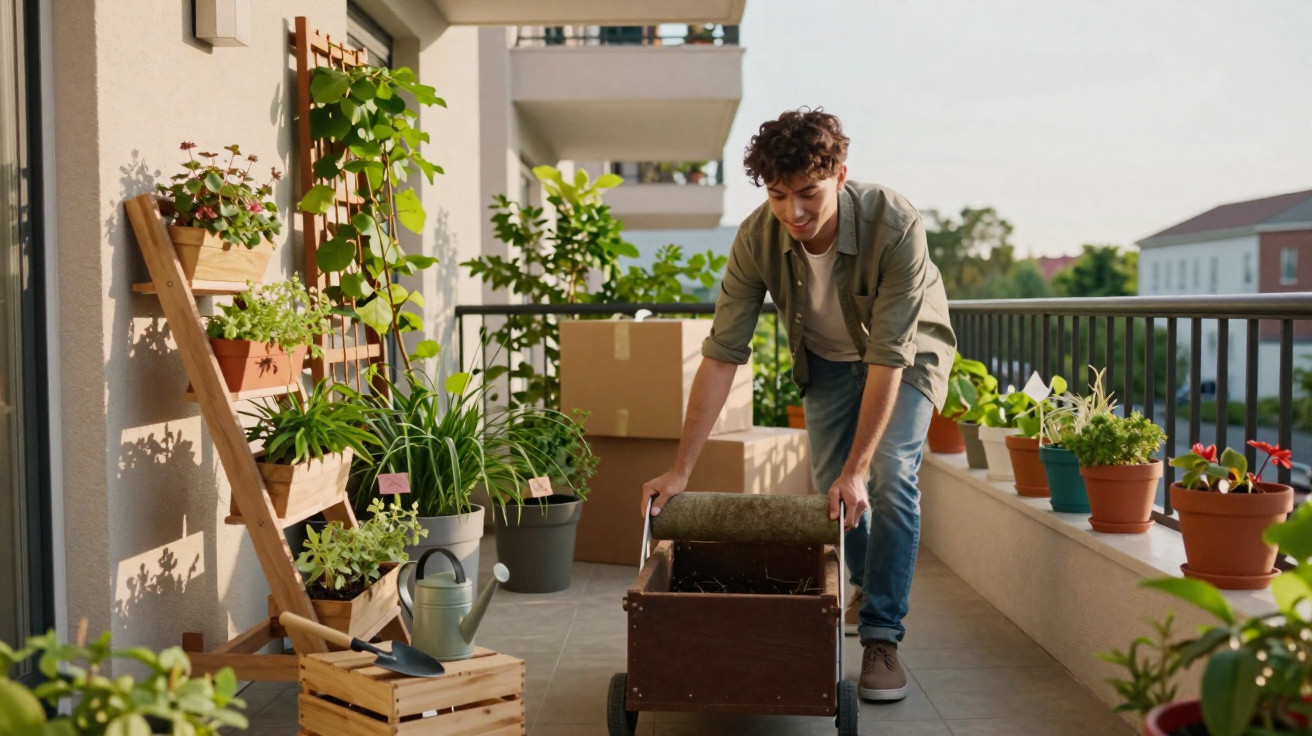
You don’t have to leave it behind: with a few smart tricks, your garden can simply come with you.
Anyone who rents knows the problem: the balcony is bursting with plants, the back yard is bare - and when you move out, pots, planters and herbs you’ve nurtured for years often get left behind. There’s a better option than creating a ‘plant graveyard’ every time you change address: design a garden that’s mobile from day one, living in crates, pots and lightweight structures, so it can travel with you when you move.
Mobile rental garden: what it actually means
The principle is straightforward: nothing goes permanently into the ground and nothing gets screwed into walls or fences. Your whole garden is built from:
- pots and planters in a range of sizes
- lightweight or wheeled planting boxes
- free-standing trellises and shelving
- raised beds that can be lifted, emptied or moved
Everything is placed, not fixed. That way, the rented outdoor space stays intact when you hand the property back - and you can recreate your green set-up almost exactly in your next home.
“A mobile garden treats every pot, every shelf and every bed as ‘furnished greenery’ from the start - something that goes into the removal van just like your sofa and wardrobe.”
Before the first pot: legal and practical checks
Before you fill your first planter, it’s worth spending a few minutes being methodical:
- Check your tenancy agreement: Are alterations to the garden or balcony prohibited? Does it mention planters or privacy screens?
- Confirm load limits: Especially for balconies - ask the managing agent or check the property details for the maximum permitted load.
- Take photos: Record the current condition of the garden, terrace or balcony. It can prevent arguments later about alleged “damage”.
For the design, lightweight materials and self-supporting structures work best: planting ladders, free-standing trellis panels, small plastic greenhouses, and wooden or metal shelving. Reusing existing crates, wine boxes or buckets saves both money and waste.
Five mobile planting ideas that can move house with you
With a few well-planned set-ups, an outdoor area can still feel like a ‘proper’ garden - even when everything is moveable. Here are five easy-to-copy examples.
1. Nomadic row of pots along a fence or terrace
A tried-and-tested approach for narrow spaces: arrange a dense line of containers along an edge - the balcony rail, a wall, or the border of a rented lawn.
- At the back: taller plants such as ornamental grasses, lavender or a small olive tree
- In the middle: medium-height perennials such as sage, hardy geraniums or small roses
- At the front: trailing varieties like verbena, ivy or dichondra that spill over the rim
Heavier containers are best placed on sturdy wheeled plant caddies. That makes it easy to rotate or shift them even when they’re full of compost - handy when the sun moves or high winds are forecast.
2. Green privacy screen using a free-standing trellis
If you’re not allowed to screw in a privacy screen, create a living plant wall that simply stands on the ground. A trellis or espalier frame with feet is enough.
The trick is the base: place two long planters to the left and right of the trellis so their weight keeps it steady. Fill them with fast-growing climbers such as nasturtiums, sweet peas or morning glory. Within a season, you can get a thick green curtain.
There’s still room at the front of the planters for low growers like strawberries or thyme. When it’s time to move, lift the trellis out, lay it flat in the van, and take the planters with you as they are.
3. A mobile herb ladder for small balconies
A simple wooden or metal ladder can double as a vertical herb shelf. Set a row of small pots on each rung.
A practical layout:
- Top: sun-lovers like basil, thyme and rosemary
- Middle: chives, parsley and oregano
- Bottom: thirstier plants like mint (best kept in its own pot so it doesn’t take over) and cut-and-come-again salads
Lean the ladder against a wall, and use a thin rug or rubber mat beneath to protect the floor from water marks. On moving day, lift the whole thing like a piece of furniture and secure it in the van.
4. Small slot-together greenhouses you can take with you
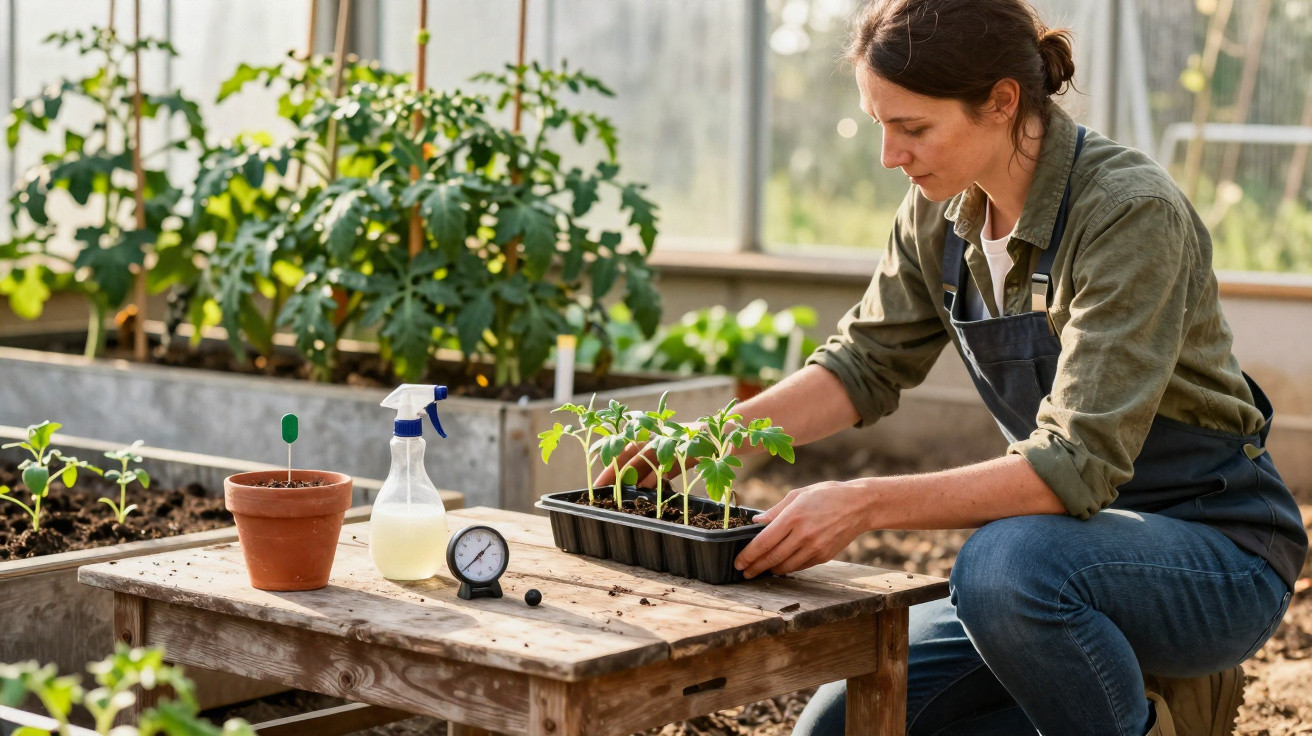
Mini greenhouses made from flexible plastic are lightweight, inexpensive and designed to come apart completely. They stand on metal poles on soil or a patio and offer multiple shelves for young plants.
They’re ideal for starting tomatoes, peppers, chillies, summer flowers or delicate seedlings. The cover creates a mild microclimate and reduces damage from gusts. When your tenancy ends, the connectors release in minutes, the cover folds down, and the shelves stack separately.
5. A raised bed to go on wheels or a pallet
A rectangular raised bed that isn’t too heavy can act as the centrepiece of a mobile garden. Ideally, it sits on a pallet with castors, or directly on wide rolling rails.
Fill it with a lightweight mix of compost, soil and an airy structural component (for example, coconut fibre or expanded clay). A useful option is to divide it into four sections:
- Section 1: herbs - such as thyme, marjoram and parsley
- Section 2: leafy salads and radishes
- Section 3: compact tomato varieties with a bit of basil tucked in between
- Section 4: bee-friendly flowers like marigolds, cosmos or borage
Before moving, you can scoop out some of the compost to reduce weight. With strong helpers and a solid trolley, it’s also possible to take the bed with the contents still inside.
How to keep a mobile garden thriving
Even if almost everything grows in containers, a rental garden needs the same care as a traditional garden - just with more attention to weight and water management.
Compost, weight and watering: getting the balance right
Using straight garden soil quickly turns containers into extremely heavy lumps. A looser blend works better:
- quality potting compost as the base
- well-rotted compost as a nutrient source
- lightweight additives such as coconut coir or wood fibre
- a bottom drainage layer of expanded clay or broken terracotta shards
Light mixes dry out faster, so water a little more often but avoid overdoing it. If you plan to shift plants around, it helps to water the day before just enough that the compost holds together - without excess water draining out.
Getting organised before you move: helping your plants relocate with minimal stress
Once your moving date is confirmed, a simple schedule makes the process smoother:
- avoid major repotting in the final weeks before the move
- group pots by size so they pack efficiently in the van
- tie back long or brittle shoots to canes with soft string
- arrange a sack trolley or robust dolly for the heaviest items
Free-standing trellises, mini greenhouses, planting ladders and raised beds are chosen specifically because they can be lifted or separated in a few quick steps. At the new place, position them somewhere similar; then the plants mainly need time to adjust to different light and draughts.
Design tricks so a mobile garden doesn’t look “temporary”
For a cohesive look, limit both materials and colours. Two main materials - for example terracotta and pale timber - are often enough. Add a repeating colour palette across flowers or pots and you’ll create calm rather than a jumble of mismatched items.
Useful finishing touches:
- castors under large boxes, ideally with brakes
- screwed-on handles on wooden crates to make carrying easier
- lightweight plastic saucers instead of heavy stone
This way you get a garden that looks intentional, yet still breaks down into parts that fit into a removal van.
How a mobile garden performs in everyday life
Particularly in cities where the rental market is tight, this style of gardening has clear benefits: you can invest in better-quality plants and containers without worrying that a change of landlord will force you to abandon them. Over time, you build a set of pots, structures and plants that works like a flexible, modular ‘furniture system’, moving with you from one address to the next.
If you have to relocate often - students, for example, or people on fixed-term contracts - mobile beds still allow for long-term projects: perennial plants, small fruit shrubs in containers, and a lasting herb collection. The plants come along and adapt to the new spot instead of being left to languish by the old fence.
With a bit of planning, the downsides stay manageable: secure positioning for windy weather, no overloaded balconies, and hardy varieties for unheated areas. Combined with lightweight builds and well-chosen compost mixes, you end up with a garden that not only looks good, but reliably climbs into the removal van every time you move.
Comments
No comments yet. Be the first to comment!
Leave a Comment