
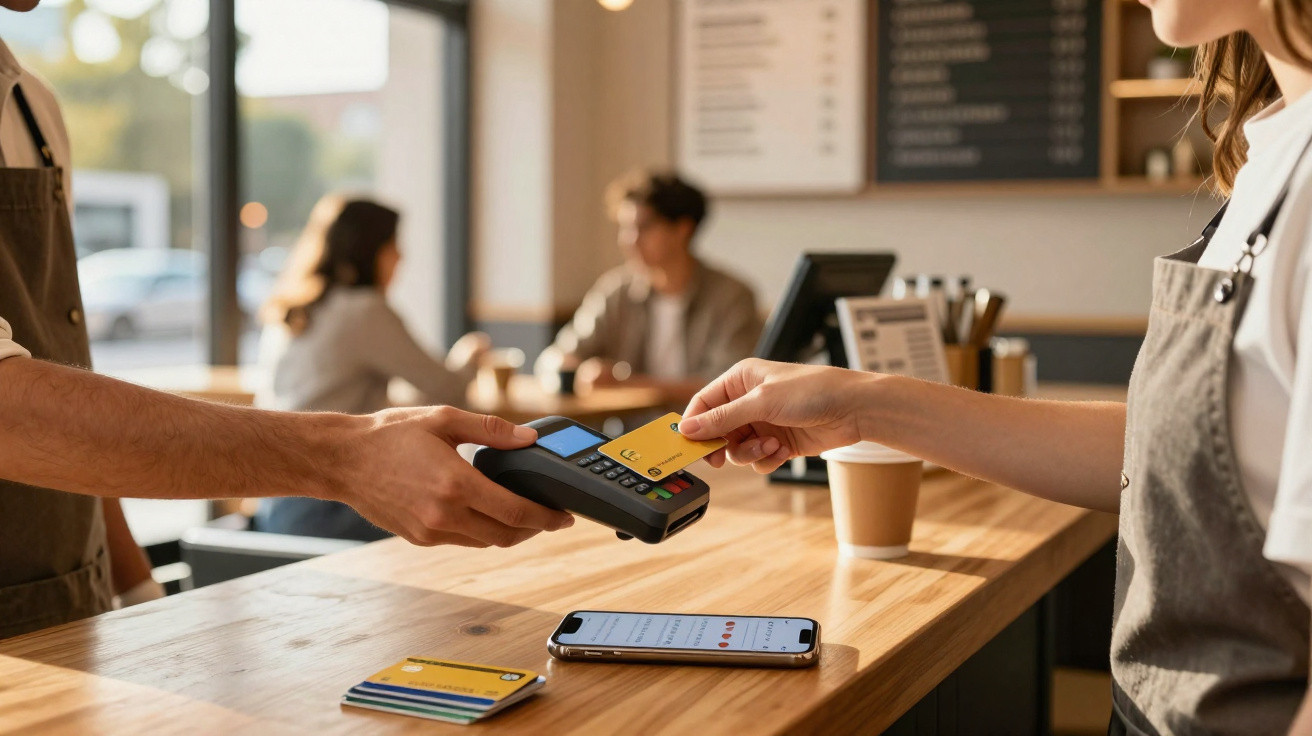
Paying contactlessly at the supermarket till, on the bus or in a café has long been routine. From Thursday, new rules in Great Britain could alter these payment habits even further. The Financial Conduct Authority (FCA) will allow banks and payment providers to set contactless card payment caps largely for themselves, provided they maintain effective fraud controls.
What is changing under the rules
Until now, the official cap for contactless card payments in Great Britain has been £100. That threshold has been raised several times over recent years. Under the FCA’s new requirements, however, this fixed regulatory limit will be removed.
Institutions will be able to decide for themselves how high single-payment and cumulative limits for contactless card payments should be – including amounts above £100.
There is one condition: a bank must be able to demonstrate that its fraud detection and prevention systems are robust enough to manage the additional risk. The regulator aims to encourage providers to keep improving their security measures.
No immediate revolution – but considerable scope
The major UK banks are initially taking a cautious approach. Almost all have indicated that the £100 limit will remain in place for now. Many institutions say they will monitor developments and consider any changes carefully.
In practice, this means that almost nobody at the till will notice a difference on the first day after the rules change. Over the medium term, though, the situation could shift significantly: some banks may use higher limits as a competitive advantage, while others may promote especially low limits as a security feature.
Why the FCA is allowing greater freedom
The FCA is pursuing several objectives with the reform. First, it should give the sector more flexibility to respond to economic developments. Rising prices mean that the existing £100 framework is reached more quickly during larger weekly shops or restaurant visits.
It should also allow the market to adopt new technologies more rapidly. Mobile wallets such as Apple Pay and Google Pay already demonstrate that larger sums can be paid contactlessly and securely when a phone or smartwatch clearly verifies the user, for example through a fingerprint or facial recognition.
- Adapting to inflation: Higher prices mean a greater need for higher payment limits.
- Using technology: Strong authentication through smartphones and similar devices.
- Encouraging competition: Banks can stand out through individual offers.
- Improving security: More freedom in exchange for stronger fraud prevention.
How widespread contactless payments already are
Contactless payment has long been standard across the UK. Data from major providers paints a clear picture:
- More than 94% of all eligible in-person card payments were made contactlessly in 2024.
- The number of contactless transactions each month is around ten times higher than it was in 2015.
- Around two-thirds of all credit card payments and three-quarters of debit card payments are made by tapping.
- The average value of a contactless payment is just under £18.
The trend is clear: for many people, the card carrying the contactless symbol has become the new norm, while cash is playing an ever-smaller role in everyday life.
What banks already offer customers
It is notable how differently institutions use the flexibility already available to them. Many UK banks already let customers set their own limits or switch off the contactless function altogether.
| Bank | Current position on the limit | Are personal settings available? |
|---|---|---|
| NatWest | Limit remains at £100 | Yes, lower the limit or disable contactless in the app |
| Santander UK | No increase planned | Yes, set personal limits in £5 increments |
| Lloyds / Halifax / Bank of Scotland | £100 remains the maximum limit | Yes, individual limits up to £100 via the app |
| Barclays | Retaining the £100 limit | Yes, personal limit up to £100 |
| HSBC UK / First Direct | £100 | No, lower limits cannot be set |
| Nationwide / Virgin Money | No short-term increase planned | Yes, set a limit below £100 in the app |
| TSB | Staying at £100 | Yes, lower the limit or turn off contactless |
| Starling Bank | Reviewing the new rules, with no decision yet | Yes, app slider ranging from £100 to £0 |
| Monzo | No direct change to limits | Yes, adjust limits or disable contactless |
| Revolut | No increase planned | No lower contactless limit, but a monthly budget for total card spending |
For customers, this means that many control options are already in place – they simply need to be used. Anyone uncomfortable with £100 can already set substantially lower amounts with many banks.
Security: how high is the risk really?
Greater freedom over limits naturally raises concerns: what happens if a card is lost or stolen? An important protection remains in place.
Existing consumer rights remain unchanged: in most cases, banks must reimburse their customers for unauthorised payments – particularly where a card has been stolen or lost.
There are also so-called background limits. After a certain number of contactless payments, or once a specified total amount has been reached, the terminal will require the PIN again. Banks will also be able to recalibrate these cumulative thresholds in future.
There is another benefit: larger amounts can already be paid mainly through mobile wallets, where the device actively verifies the user. The payment will not work without a fingerprint, PIN, facial scan or similar proof. Traditional plastic cards are more commonly used for smaller amounts.
What this change could mean for Germany
The new UK rules do not apply directly to the euro area, but they offer an indication of the direction of travel. In Germany, too, the pandemic significantly accelerated the rise of contactless payments. Many German banks have already increased limits and eased PIN requirements, while also strengthening fraud filters.
If very high limits become established in Great Britain without an increase in fraud, German institutions are likely to take close notice. Experience from London and Manchester often reaches Munich, Frankfurt or Berlin with a delay, whether through new card features, dynamic limits or app-based controls.
Practical tips for cardholders
Anyone who pays contactlessly on a regular basis can follow a few simple rules to balance convenience and security:
- Check the app: Look in the banking app to see whether the personal limit can be adjusted.
- Use a mix of methods: Pay contactlessly for small amounts, and insert the card and use a PIN for larger sums.
- Block the card: Keep the emergency phone number or app option for blocking the card readily available.
- Use mobile wallets: Use a smartphone or smartwatch for higher amounts, as they often use stronger security procedures.
- Monitor transactions: Check statements or push notifications regularly to spot unfamiliar payments early.
Terms worth knowing
Contactless limit: The maximum amount that can be paid per transaction without entering a PIN. In Great Britain it has been £100 until now, but banks will be able to define it freely in future.
Cumulative limit: A background threshold at which a PIN is required after several consecutive contactless payments or once a total amount has been reached, even if each individual payment is below the limit.
Strong customer authentication: A security process combining at least two factors, such as a card and fingerprint or a phone and PIN. This technology makes high-value digital payments significantly safer.
Ultimately, everything comes down to one central question: how much convenience do consumers want, and how much control do they wish to retain? The new rules in Great Britain move the answer further towards individual choice. Anyone who understands and uses their card and app settings can already control very precisely how contactless everyday life should be.




Comments
No comments yet. Be the first to comment!
Leave a Comment