
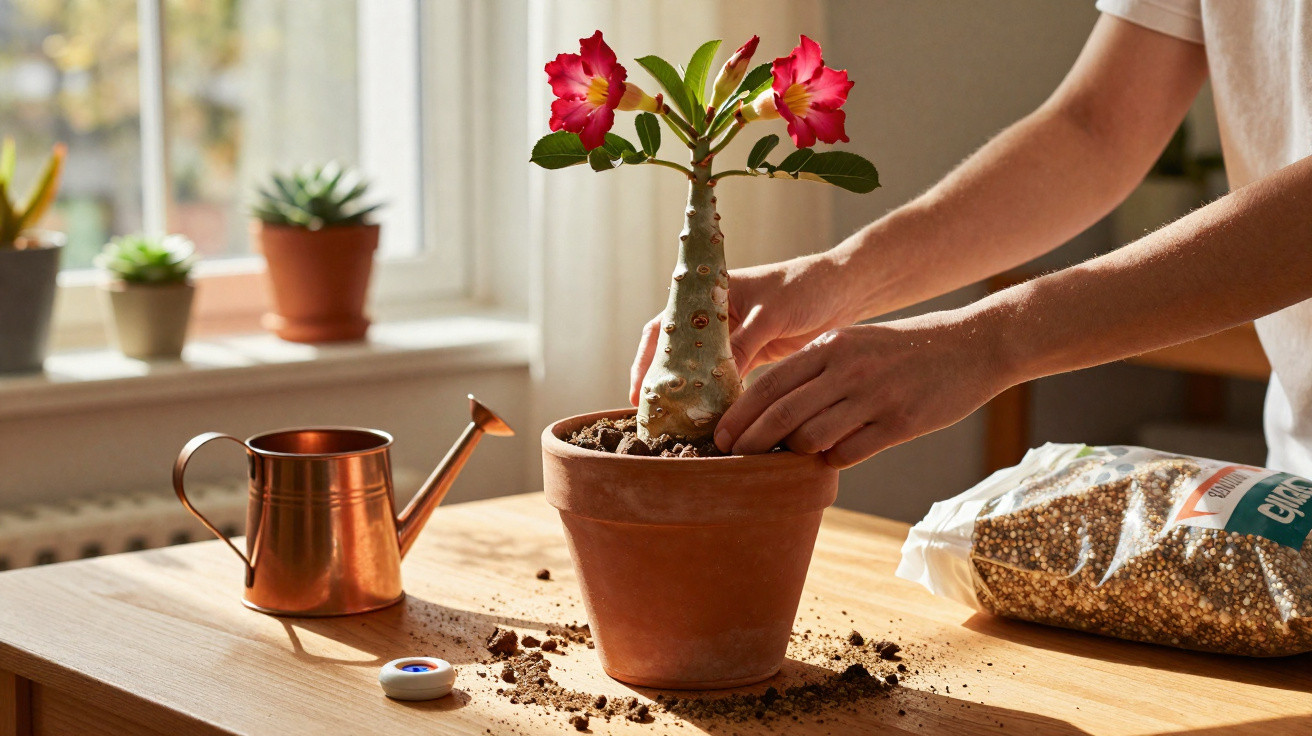
The desert rose has become a popular choice for balconies, gardens and brightly lit living rooms because it combines showy blooms, a substantial caudex and care that appears straightforward but demands precision. For households that enjoy plant cultivation, it calls for close attention to light, growing medium and watering, as these factors determine both root health and bud development.
Why does this species react so badly to too much water?
Because the desert rose stores water in its swollen stem, it struggles if its pot stays damp for several days. In indoor gardening routines, the most common mistake is treating it like tropical foliage, with fixed watering schedules and heavy compost, which encourages rot and yellowing leaves.
Plant care becomes safer when the household checks the pot before reaching for the watering can. Feeling the growing medium, lifting the container to assess its weight and checking drainage through the holes provide more reliable guidance than a timetable. On cold or rainy days, the compost dries more slowly, so the desert rose needs longer gaps between waterings.
How should you prepare a pot for strong roots and flowering?
The pot must drain water quickly while allowing air to reach the root system. In the cultivation of ornamental plants, this matters even more for caudex species, which require an open mix to prevent fungal problems and support balanced growth.
Before planting, it is worth checking several practical gardening details to minimise losses in the first few weeks:
- Choose containers with large drainage holes and no saucer holding standing water.
- Use a light growing medium containing mineral components such as coarse sand, perlite or potting grit.
- Avoid compacted garden soil, as it holds moisture for too long.
- Set the caudex slightly above the surface of the growing medium to improve air circulation.
What is the best place in the home for a desert rose?
The desert rose performs best where it receives direct sunshine for several hours. A heavily shaded window is likely to produce elongated branches, fewer flower buds and weaker leaf colour. In flats, the sunniest aspect generally gives the most consistent results for those committed to the care of flowering plants.
When introducing it to stronger sun, make the move gradually, especially after a recent purchase or a change of setting. A sudden transition can scorch the leaves. Among the tasks involved in plant cultivation, monitoring how sunlight falls during the morning and afternoon helps identify the spot where the canopy flowers without excessive stress.
Which signs show that the plant needs a quick correction?
Certain symptoms appear early, allowing changes to be made before the roots deteriorate. In homes with busy routines, recognising these warning signs prevents losses that may seem sudden but began days earlier through watering, feeding or sun exposure.
In practice, these warnings require immediate action during plant care:
- Soft, yellow leaves after frequent watering suggest excess moisture.
- Long, widely spaced stems indicate insufficient direct sunlight.
- A wrinkled caudex for many days may point to prolonged dehydration or damaged roots.
- Buds that dry out before opening are often linked to an abrupt environmental change or irregular watering.
How can you keep the plant attractive for longer indoors?
Consistent gardening does not mean disturbing the pot every week. The desert rose prefers a stable routine, strong sun, balanced fertiliser during growth periods and occasional pruning to shape the canopy. Once the household understands this rhythm, plant cultivation becomes more predictable and flowering occurs more regularly.
Plant care for this type of specimen relies less on extra interventions and more on consistency. The desert rose grows best with intense light, free-draining growing medium and watering adjusted to the season. In any area of the home, this combination remains the basis for firm leaves, healthy roots and well-formed buds.




Comments
No comments yet. Be the first to comment!
Leave a Comment