
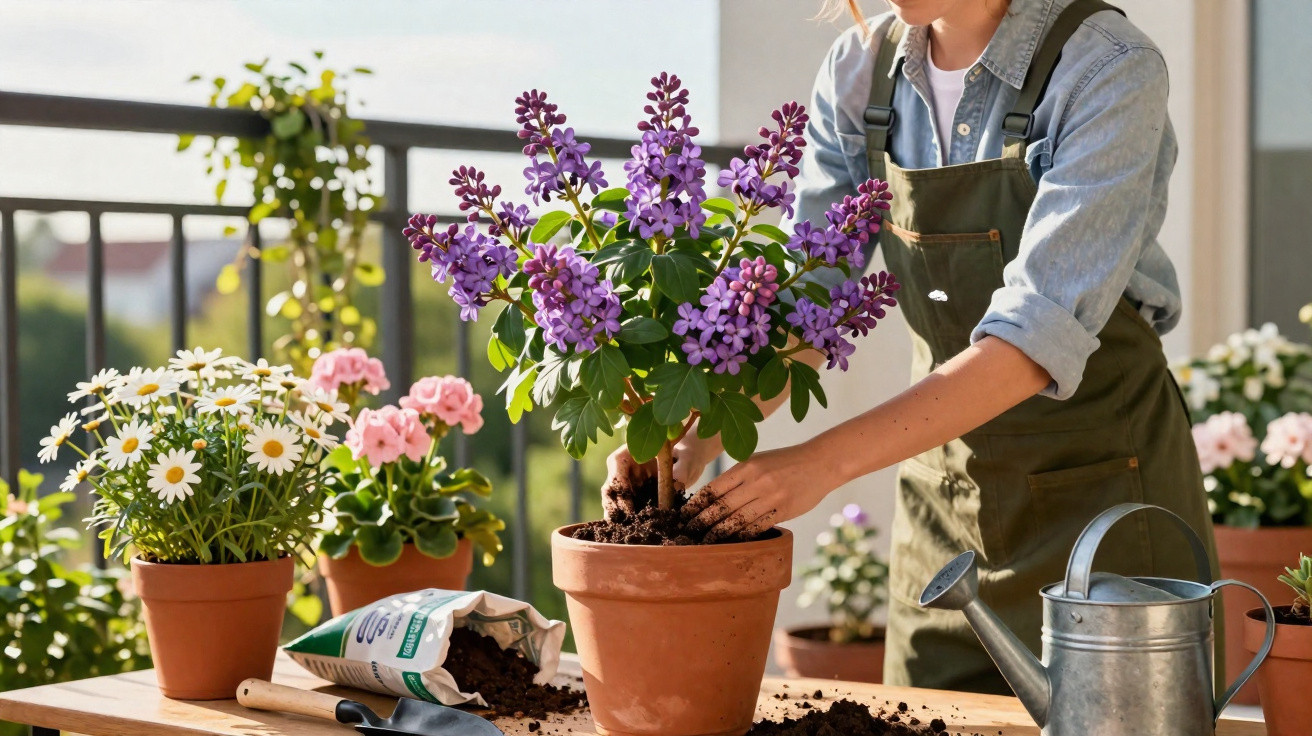
Once mainly grown by knowledgeable enthusiasts, heliotrope is now becoming more popular with home gardeners. Its appeal lies as much in its appearance as in its highly distinctive fragrance. Its small florets, gathered into clusters, give containers a lavish look, while its dark foliage adds depth to summer displays.
A fragrant flowering shrub
Heliotrope, also called Heliotropium arborescens, originates from South America. In the UK climate, it develops into a small, rounded plant, usually reaching 30 to 50 centimetres in height. Its compact habit is particularly useful for brightening a windowsill, a large container or the edge of a flower bed.
Its greatest attraction is its sweet scent, often compared with sugary almond notes and sometimes with the aroma of desserts. The fragrance is most noticeable during the warmest part of the day. Positioning a pot beside a patio, bench or open window is enough to create a pleasant presence without it becoming overpowering.
Heliotrope combines colourful flowers, ornamental foliage and sweetly scented blooms over a long season, while requiring fairly straightforward care.
Common varieties produce deep violet flowers, close to plum in colour. Others offer mauve or white blooms. The darkest shade remains the most sought-after, as it creates an attractive contrast with silver foliage, pink geraniums or pale petunias.
Generous flowering for six months
Once planted out after the risk of frost has passed, heliotrope generally flowers through May, June, July, August, September and October. Its flowering period depends on the weather, its position and how consistently it is cared for. In a bright spot sheltered from cold draughts, it retains its full, bushy appearance for a long time.
The flower clusters form at the tips of the stems. When a cluster has dried out, simply remove it using clean secateurs or your fingers. This small task prevents unnecessary seed production and encourages new buds to develop.
Features that set it apart
- A modest size, well suited to a balcony or beside a patio.
- Dark green, lightly puckered leaves that remain decorative outside the flowering season.
- Well suited to flowering containers, even where space is limited.
- Nectar valued by bees, bumblebees and butterflies.
- Easy to combine with a range of summer flowers.
The presence of pollinating insects is worth highlighting. Heliotrope can contribute to the diversity of a planted area, especially when grown alongside lavender, salvias, cosmos or verbenas. It is best to avoid insecticide treatments near the flowers, as these may deter the winged visitors you want to attract.
The right way to plant heliotrope
This plant enjoys direct light and warmth. A very bright position with several hours of sunshine each day is ideal. In particularly hot areas, light shade late in the afternoon helps prevent the compost from drying out, especially in a dark-coloured container.
The growing medium needs to be rich, loose and free-draining. Heavy soil holds too much moisture around the roots, which can quickly weaken the plant. In a pot, a mix of multipurpose compost, drainage material and well-rotted compost often gives good results.
Fresh compost that is never waterlogged helps heliotrope maintain dense foliage and regular flowering.
Watering mainly requires observation. During hot weather, check the surface of the compost. If it feels dry a few centimetres down, water around the base of the plant. Avoid leaving excess water permanently in the saucer, as the roots do not tolerate standing water well.
Three useful tasks during the growing season
- Remove faded flower clusters to encourage further blooms.
- Apply a fertiliser for flowering plants at a moderate dose twice a month during the active growing period.
- Turn the pot regularly if the light mainly comes from one direction.
Feeding with too much nitrogen produces plenty of leaves but fewer flower clusters. It is better to choose a fertiliser formulated for flowering, with a high potash content. This also supports flower colour and prevents the stems from becoming soft and weak.
How to keep heliotrope after summer
Heliotrope copes very poorly with prolonged cold. As soon as temperatures approach 5 °C, a potted plant should be moved to a bright, cool, frost-free place. A lightly heated conservatory, cold greenhouse or bright room may be suitable. Watering should then become infrequent: the root ball must not dry out completely, but too much moisture becomes risky.
In mild-climate areas, a plant growing in a border may survive beneath a thick protective layer of dead leaves or mulch. However, the outcome remains uncertain after a wet winter or a hard frost. Growing it in a pot therefore offers more control, as it can be moved as soon as the first cold weather arrives.
Simple combinations for purple flowers
On a patio, purple heliotrope can be paired with yellow bidens, blue lobelias or white petunias. In a flower bed, its dark foliage enhances grey-leaved plants such as dusty miller. A container with three plants can sometimes create a very dense display around an outdoor dining area.
Watch the young shoots, as aphids and whiteflies sometimes feed on their sap. A quick check beneath the leaves makes it easier to act early. A gentle spray of water, diluted soft soap or the natural arrival of ladybirds will often control the issue without upsetting the balance around the flowers.
With its compact shape, sweet fragrance and long flowering presence, heliotrope readily finds a place near the areas where people like to linger on mild evenings.


Comments
No comments yet. Be the first to comment!
Leave a Comment