
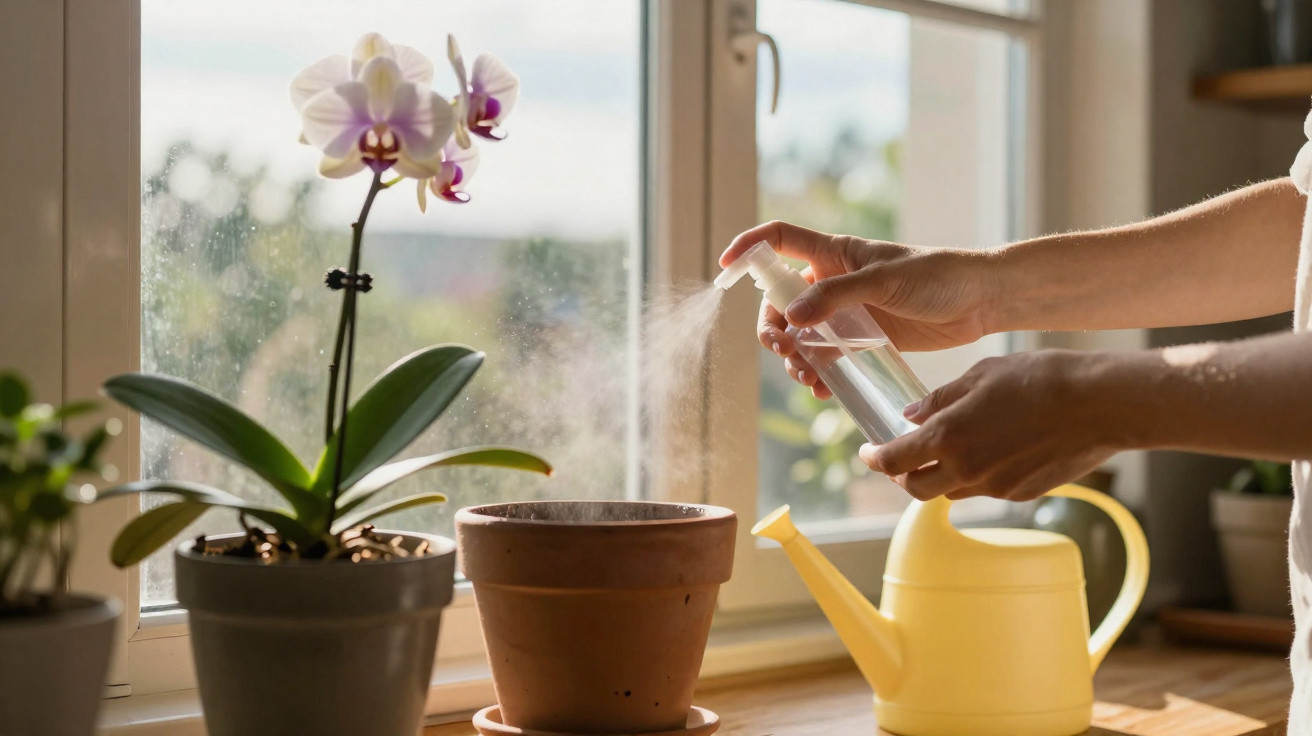
When you buy an orchid in bloom, it is easy to focus only on how striking the flowers look and overlook the basic care the plant needs in its first few days at home. That initial window is crucial for settling into a new environment and, if you act too quickly, the orchid may become stressed, drop its flowers sooner than expected and even affect how well it grows later on.
What is the biggest mistake with an orchid in bloom in the first week?
The most common mistake in the first week is assuming the orchid needs to be “rescued” straight after purchase, which often leads to an impulsive repot into a larger or more decorative container. This usually harms the roots, disturbs the growing medium and disrupts the plant’s natural rhythm at exactly the moment it is most vulnerable.
If an orchid in bloom is repotted immediately, the roots-already accustomed to the original pot-can be cut, snapped or left less secure. The plant then diverts energy into recovering from that shock instead of sustaining flowering, so blooms can wilt and fall within days, creating the misleading impression that the orchid “hasn’t adapted”.
How should you care for an orchid in bloom in the first few days?
During the first week, it is best to keep the orchid in bloom in the pot it came in, without disturbing the growing medium and without roughly pulling away decorative mosses. Choose a bright spot, but keep direct sun off the leaves and flowers; filtered or indirect light near a bright window or on a covered balcony is ideal.
It also helps to remember that orchids prefer airy roots and do not need daily watering, doing better with short drying intervals between waterings. Rather than watering on autopilot, check the growing medium with your fingers: if it still feels damp, wait longer; if it is almost dry, that is the right time to water moderately.
Why avoid immediate repotting, overwatering and sudden changes of location?
Three habits regularly undermine the health of a newly bought orchid in bloom: repotting immediately, watering too much and moving it around abruptly. Repotting causes direct root shock, excess water saturates the growing medium and reduces available oxygen, and constant relocation stops the plant acclimatising to light levels and air humidity.
These actions tend to produce clear warning signs that you can spot with everyday observation. The list below helps you recognise frequent issues and adjust care quickly to prevent more serious damage.
- Leaves with dark or yellowing patches can point to too much water or direct sun.
- Roots that look dark, hollow or smell unpleasant may indicate early root rot.
- Fast bud and flower drop may be linked to sudden moves, a cold draught or very dry air.
- Growing medium that stays waterlogged shows the gap between waterings is too short and needs increasing.
When and how should you help an orchid in bloom settle into its new home?
Once the initial period has passed and the orchid in bloom appears stable, you can plan a more thorough transition to its new home. If the original pot is very small, overly heavy or starting to degrade, repotting can be scheduled for after the flowers have finished, when the plant is naturally directing more energy into leaf and root growth.
This adjustment works best in stages: first choose the long-term spot with strong light, good airflow and protection from rain falling directly on the plant. Then fine-tune the stake or support, the pot type, the growing medium mix suited to the species and the watering routine, always watching how the plant responds; with this gradual approach, the chances of flowering again in future cycles increase greatly, and it is far easier to keep the orchid healthy for many years.

Comments
No comments yet. Be the first to comment!
Leave a Comment