
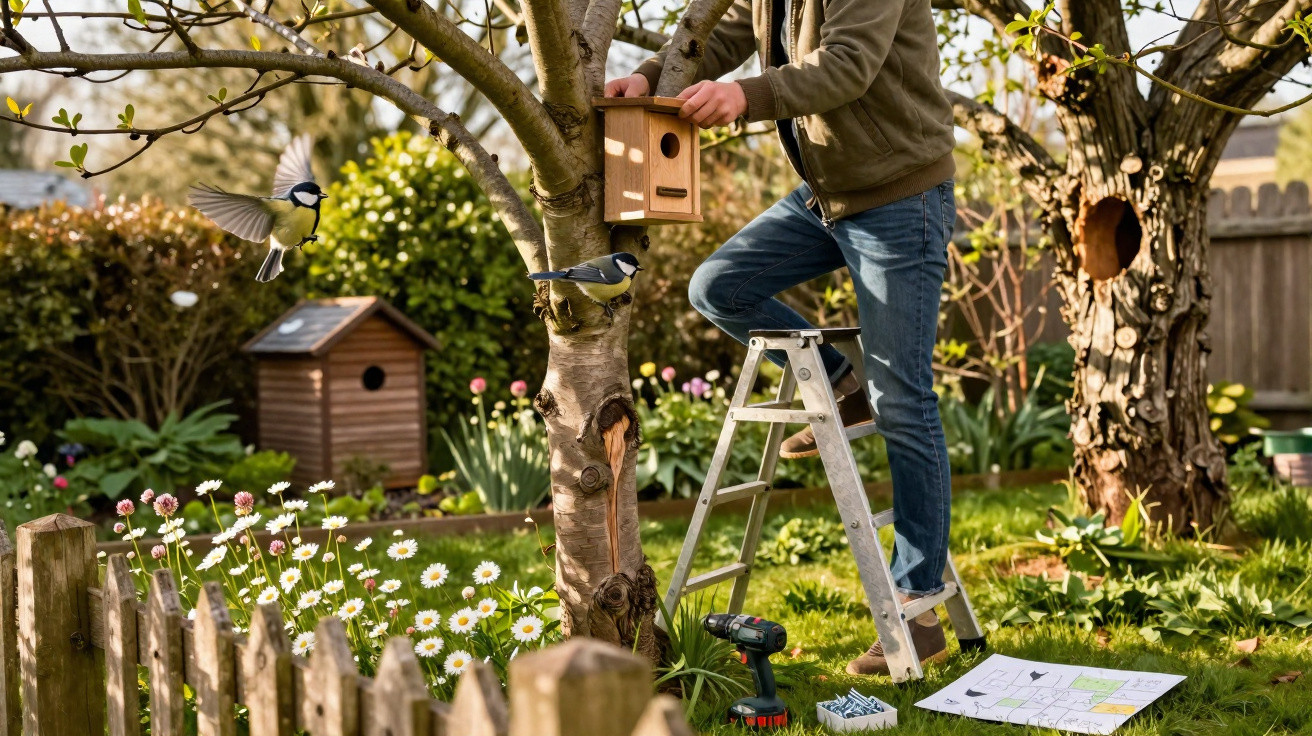
As the first mild days arrive, great tits, sparrows and other familiar birds start urgently searching for sheltered nesting cavities - and those are becoming harder to find in modern housing estates. Conservationists are raising the alarm: anyone with a garden, or even just a balcony, can make a real difference with simple nest boxes, especially in spring.
Why great tits and other garden birds can barely find shelter anymore
At a glance, towns and villages can look wonderfully green and busy: hedges, lawns, neat front gardens. For many bird species, though, these places function more like an ecological desert. Cavity nesters are hit particularly hard, including great tits, blue tits, house sparrows and common swifts.
The reason is straightforward: the very gaps and cracks that used to serve as nesting sites are disappearing. Building refurbishments, new insulation and “tidy” façades quietly remove what were, in effect, the birds’ nurseries.
"Where there used to be crevices, open roof beams and holes in walls, there are now smooth, tightly sealed surfaces - for birds, it’s like an eviction."
Farming has changed too. Barns and stables are increasingly sealed up to meet hygiene requirements and limit energy loss. Barn swallows and other species that traditionally nest in such buildings are finding access less and less often.
Refurbishments save energy - and take away habitat for birds
Energy-efficiency upgrades mean lower heating bills and less CO₂. At the same time, a quiet decline is unfolding for birds that breed on buildings. Nature organisations point to figures showing that classic town and village species such as sparrows and common swifts are clearly in retreat.
A long-term study from France indicates that populations of many urban-associated species are shrinking at a similar pace to birds of the agricultural landscape. In under two decades, roughly one in four individuals in these groups was lost. Comparable trends are also being observed in German-speaking countries.
From experts’ perspective, this has direct consequences for our gardens:
- Fewer tits and other insect hunters can mean more pests on fruit trees and ornamental plants.
- The familiar spring chorus fades - gardens feel quieter and more monotonous.
- Ecological balances are disrupted, for example between caterpillars and songbirds.
Nest boxes as replacement cavities: a small box, a big impact
This is where nest boxes come in. They stand in for tree hollows, wall crevices and roof gaps that scarcely exist in manicured neighbourhoods anymore. If you choose and position them properly, they can address several problems at once.
"A simple wooden box can be the difference between an empty garden and a thriving bird territory."
For it to work, the nest box itself is only part of the picture - the garden as a whole matters. If all you offer is a closely mown lawn with no shrubs, even the most expensive box will attract little interest. Birds need:
- Secure accommodation: a nesting place that stays dry, is safe and is reasonably sheltered from wind.
- Plenty of food: insects, caterpillars and spiders - especially when feeding chicks.
- Cover: bushes, trees and climbing plants where they can hide.
- Clear flight paths: unobstructed approaches and exits in front of the entrance hole.
Which nest box suits which bird species
A nest box is not just a nest box. Different species need different cavity sizes and designs. If you simply buy any model, you may end up helping the wrong species - or none at all.
| Species group | Typical box | Entrance hole |
|---|---|---|
| Great tit, sparrow | Standard cavity box | approx. 32–34 mm |
| Blue tit, coal tit | Small cavity box | approx. 26–28 mm |
| Robin, blackbird | Open-fronted box (semi-open) | large opening, half-open at the front |
| Common swift | Shallow box on a building | elongated slit, mounted very high |
If you are unsure, ask your local wildlife or conservation group which models suit your area. Some organisations even lend out nest boxes or run build sessions with residents.
The right place in the garden: shade instead of midday heat
Once you have the right box, the location largely determines success. Modern summers can be extremely hot, and for chicks inside a closed box that can be life-threatening. Overheated nests dry out, nestlings become stressed, and heatstroke is possible.
"A well-sited nest box sits in partial shade, is protected from driving rain and offers a clear flight path."
Practical rules for installation
- Orientation: ideally east or south-east, not due south.
- Height: for tits, around 2–4 metres; for common swifts, much higher on the façade.
- Protection: prevent easy access for cats or martens; if needed, fit a deterrent collar around the trunk or on the wall.
- Peace and quiet: avoid constant disturbance from a barbecue area, children’s swing or a clattering gate right next to it.
Spacing around the garden also helps. If you hang several boxes, do not place them right beside each other - otherwise breeding pairs can end up under constant stress.
Keep natural cavities - don’t “tidy up” everything
As useful as nest boxes are, specialists stress that they are not a perfect substitute for natural structures. The best approach is not to remove existing holes and crevices in the first place - or to create them deliberately.
This can start with small steps:
- Leave old trees with woodpecker holes standing where it is safe to do so.
- When refurbishing façades, plan specific openings as nesting sites.
- Under eaves, avoid sealing every gap airtight with foam.
- Build sheds or carports so that nests can be accommodated.
"Buildings can be habitat - if, during planning and refurbishment, we remember to leave a few centimetres of space for birds."
What a bird-friendly spring garden looks like
Nest boxes work best when the surroundings are right. A garden that attracts birds often looks less “perfect”, but it is far more alive.
Typical features include:
- A mix of trees, shrubs and open areas, rather than lawn alone.
- Native shrubs and trees such as hornbeam, elder, blackthorn or dog rose, which provide insects and berries.
- Corners where leaf litter is allowed to remain - insects gather there as bird food.
- No blanket use of poisons against weeds or insects.
If you tidy less thoroughly in spring and leave some dead plant material standing, you give caterpillars and beetles places to shelter. Tit parents repay that with less stress during foraging and healthier young.
Risks and mistakes you should avoid
Nest boxes are helpful when they are used correctly. Some common mistakes can greatly reduce their value - or even cause harm:
- Wrong cleaning approach: scrubbing with water and chemicals in mid-summer creates unnecessary disturbance. It is better to remove old nesting material dry in autumn or winter.
- Cheap plastic models: these heat up quickly and do not last as long. Wood or woodcrete is much more suitable.
- Permanent feeding on the roof of the box: food right on the nest box attracts predators and leads to territorial disputes.
- Mounting too low: within a cat’s reach, any box can become a trap.
In spring, nest boxes should be left as undisturbed as possible. A curious look from a metre or two away is fine; repeatedly opening the box or knocking on it can cause a nest to be abandoned.
Added value for people and nature - why the effort is worth it
Putting up a nest box does not only help wildlife; it also brings a piece of nature right to your doorstep. Children can watch adult birds arriving and departing with beaks full of food, while adults notice how much a lively garden lifts the atmosphere.
At the same time, you gain natural pest control: a pair of tits feeds thousands of caterpillars and insect larvae over the season. Apple trees often produce visibly better fruit when enough insect hunters are active in the garden.
Once you have seen how an unremarkable wooden box turns into a noisy, vibrant nest site, you automatically start thinking during the next home improvement project about where another cavity, crevice or additional box might fit. In this way, a small box gradually becomes a genuine network of breeding sites - and the garden becomes a safe haven for tits and many other species in spring.
Comments
No comments yet. Be the first to comment!
Leave a Comment