
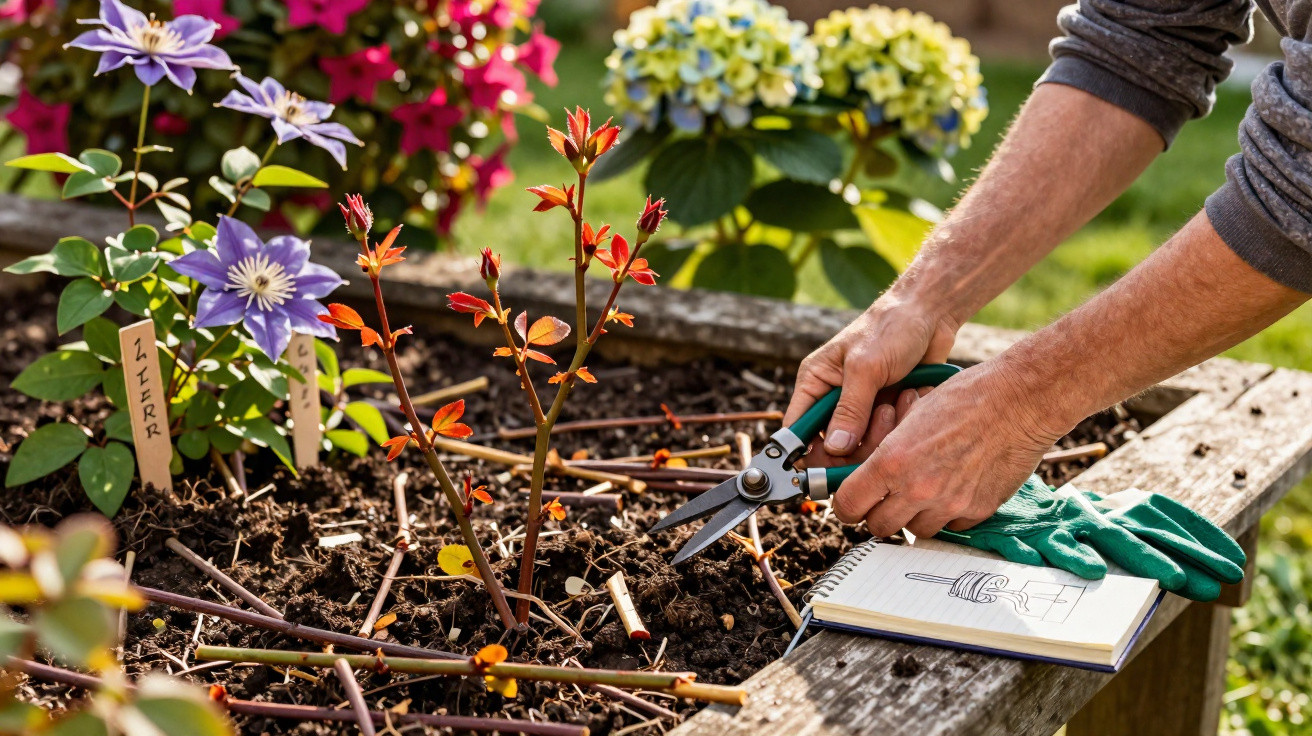
Many amateur gardeners know the feeling: you’re standing by the border with secateurs in hand, you can see something needs doing - and you’re worried you’ll cut off this year’s flowers. British TV gardener Monty Don and other experts are unequivocal: certain shrubs and perennials need a confident prune in March, otherwise the display will fall well short of what you’re hoping for.
Why March decides how abundant the flowers will be
As temperatures rise and daylight lengthens, most garden plants begin to move into the new season. That in-between period makes March so valuable: plants are waking up, but they’re not yet in full flow - which gives you the chance to shape what happens next.
Pruning now helps because it:
- removes diseased and dead wood
- lets light and air reach the centre of the plant
- channels vigour into young, strong shoots
- encourages flowers to form at eye level rather than only at the tips
The right cut in March directs the plant’s energy straight into new growth - and that’s exactly where most flowers will form later.
Woody plants that flower on new season’s growth benefit especially. This includes many roses, butterfly bush (Buddleja), late-flowering clematis varieties, and some hydrangeas. These plants don’t set their flower buds the year before; instead, buds form on fresh shoots. If you leave them unpruned, they often become tall and gawky, with only a sparse show right at the top.
Monty Don’s most important pruning rule
Monty Don relies on one straightforward rule of thumb that takes the nerves out of pruning: “Always cut to something.” In other words, don’t snip halfway along a stem with no purpose - make each cut just above a bud or a side shoot.
In practice, that looks like this:
- identify the shoot you want to keep
- find a clearly visible bud, ideally one facing outwards
- cut on a slant about 0.5 cm above it
If you leave a short stub with no bud, that piece of wood often dies back, looks untidy, and can make fungal problems more likely. A cut made just above a live bud, by contrast, prompts the plant to grow from that exact point.
Monty Don also cautions against being too eager too early. In areas prone to late frosts, it pays to hold the main prune back until March. If you cut hard in February, newly emerging buds can be blackened by the next cold snap.
The 5 plants that really should meet the secateurs in March
1. Roses - the spring-pruning classic
Roses nearly always top the list for March pruning. British plant expert Julian Palphramand suggests that, as soon as roses start to break into growth, it’s time to “tidy up thoroughly”.
A typical approach for shrub roses and bed roses:
- remove all dead, brown, or blackened shoots right back
- cut out stems that cross, rub, or grow towards the centre
- shorten the remaining strong stems by roughly one third to one half
- always cut to an outward-facing bud
The aim is an open, bowl-shaped plant with air moving freely through the middle. That reduces the risk of powdery mildew and black spot, and it also helps prevent flowers ending up only at the top of long, whip-like stems.
2. Late-flowering clematis (Group 3)
Many people hesitate with clematis because the pruning groups can feel confusing. For late-flowering types (Group 3, such as Clematis viticella), the method is simple: cut back hard in March.
How to do it:
- reduce all stems to around 30–50 cm above the ground
- cut just above a strong pair of buds
- remove thin, dried-out stems entirely
This encourages fresh growth from low down, so the plant flowers in summer along the full length of the new stems - not just at the ends of old, woody growth.
3. Buddleja (butterfly bush)
Butterfly bush flowers on new season’s wood and responds well to a tough prune. If you don’t cut it back, it can quickly become bare up top and woody at the base.
For a compact, free-flowering shrub in March:
- cut the main stems back to a solid framework, usually 30–60 cm
- remove thin, weak shoots completely
- favour outward-facing buds so the crown opens up
From that low structure, the plant produces strong new stems in spring, which carry the familiar long flower panicles in summer and draw in butterflies.
4. Lavatera - beautiful, but quick to turn woody
Lavatera shrubs can put on height fast. Without pruning, they often splay apart later and become bare at the bottom. That’s why Julian Palphramand recommends a firm cut in March.
Suggested method:
- cut the plant back to a low, stable framework
- shorten shoots to just above young buds
- reduce or remove old, thick stems that carry few buds
Handled this way, lavatera stays compact and produces masses of flowers through summer on fresh side shoots.
5. Fuchsias - look first, then cut
Hardy fuchsias in particular benefit from a spring tidy, but they are sensitive to cold. The key is to wait for signs of life before you start cutting.
A practical routine:
- wait until you can see new green shoots or buds
- cut back anything that looks dead or brown to healthy, living wood
- for robust outdoor fuchsias, reduce to about 10 cm above the ground
In return, you’ll get denser, bushier plants and more flowers in summer, rather than long, bare wands.
Hydrangeas that can also be pruned now
Alongside the five main candidates, experts point to two hydrangea types that respond particularly well to March pruning: panicle hydrangea (Hydrangea paniculata) and smooth hydrangea (Hydrangea arborescens, including the well-known ‘Annabelle’).
| Hydrangea type | March pruning | Result |
|---|---|---|
| Hydrangea paniculata | remove old flower heads; shorten shoots to one pair of strong buds | a stable shape and large panicles in late summer |
| Hydrangea arborescens | very hard cut back to a few low framework shoots | lots of strong new growth and large “snowball” blooms |
Both types flower on new wood. A bold prune therefore doesn’t reduce the show - it typically produces noticeably larger, more impressive flower heads.
Tools, timing, and common mistakes
To get the best from a March prune, tools matter. Blunt, dirty secateurs crush stems rather than making clean cuts.
- bypass secateurs (two blades sliding past each other) for fresh growth
- well-maintained loppers for thicker, woody branches
- clean, disinfected blades to avoid spreading disease
The most common pitfalls are being too hesitant (“I don’t want to take too much off”) and choosing the wrong moment. If you only ever lightly trim roses and Buddleja year after year, you often end up with tall, unstable plants and disappointing flowering.
With spring pruning, in many cases a confident hand does less harm than constant fear of “too much”. What matters is whether the plant flowers on new wood.
How to recognise which plants suit a March prune
If you’re unsure whether a particular variety can be cut back in March, a simple question helps: does it carry most of its flowers on fresh, green growth - or on older, already-woody branches?
With roses, Buddleja, panicle hydrangeas, many fuchsias, and late-flowering clematis, the key flower buds form on new shoots, so they respond strongly to an early-spring cut. Early-flowering shrubs such as forsythia, or some mophead hydrangeas, set their buds the previous year instead - those are pruned only immediately after flowering.
Once you’ve grasped that difference and follow Monty Don’s straightforward rule of “always cut to something”, pruning becomes far less daunting. The March prune stops being a shaky gamble and becomes a dependable annual job that brings visibly more flowers to the garden year after year.



Comments
No comments yet. Be the first to comment!
Leave a Comment