
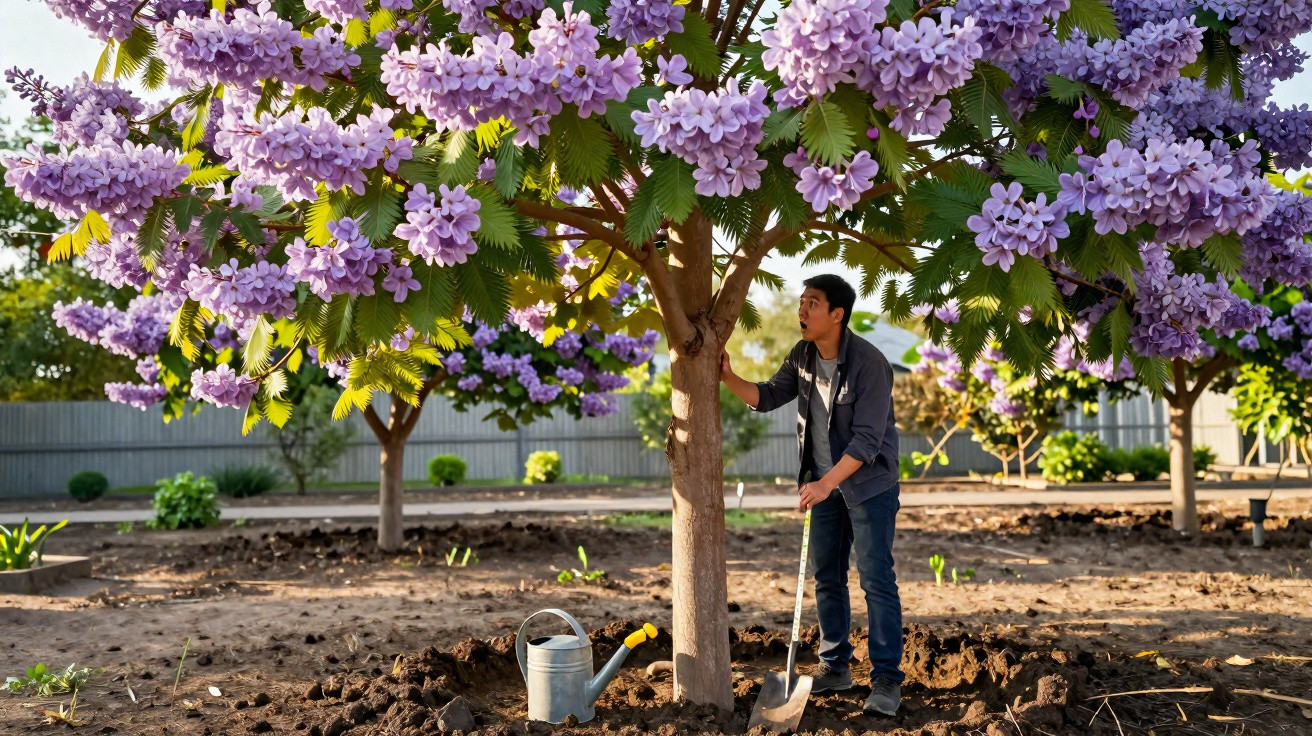
Many home gardeners want a fast-growing privacy screen, but would rather avoid the hassle of rampant bamboo. That is exactly where a tree comes into its own that has long been a bit of an insider recommendation among specialists: the Paulownia, often called the emperor tree or bluebell tree here. It combines strikingly rapid growth with one of the most dramatic spring displays you can get in a domestic garden.
The “turbo tree” in the garden: growth that surprises
Paulownia is among the quickest-growing deciduous trees you can plant in a garden. In favourable conditions, a young tree typically puts on around 1.5 to 2.5 metres a year. After three years, heights of 5 to 7 metres are entirely realistic, and mature specimens usually reach 10 to 12 metres.
Its typical form is a straight, single trunk topped with a broad, rounded crown. The leaves are enormous, soft and heart-shaped. If you want a shady spot on the patio in summer, this tree can get you there quickly.
"Paulownia creates a provider of shade within a few years-something other trees need a decade for."
A major advantage over bamboo is control: the tree does not produce a dense mat of runners that creeps into borders and neighbouring gardens. It stays where it is planted and is much easier to manage.
Flowers like a pastel cloudscape
The real show begins in spring. Before the leaves appear, the tree covers itself in countless clusters of blossom. Each individual flower resembles a small bell, most often in soft mauve and violet shades, with some varieties leaning more towards blue.
From a distance, the entire crown can look like a pastel veil. In still-bare gardens-when other shrubs and trees are only just budding-it becomes a genuinely spectacular focal point.
There is fragrance too: many paulownias give off a light, sweet scent that can recall vanilla or lilac. Bees, bumblebees and butterflies find plenty of nectar here in spring.
"The bluebell tree is considered a valuable source of forage for bees-a plus at a time when insect populations are declining."
The right location: sun, space and open soil
Choosing the site: where the emperor tree feels at home
To make the most of its rapid development and full flowering potential, it pays to plan the position carefully. This tree likes warmth and light:
- a fully sunny spot, not permanently shaded
- as sheltered from wind as possible, especially in exposed areas
- deep, open soil, ideally rich in humus
- no persistently wet or waterlogged ground
Before planting, it is worth digging a generous hole. A good rule of thumb is about 60 x 60 x 60 centimetres. The excavated soil can be blended with 10 to 20 litres of well-rotted compost to add nutrients and improve structure.
Once the young plant is in place, water it in thoroughly; around 20 litres is usually enough to get it started. A mulch layer of roughly 5 to 8 centimetres around the base helps prevent the soil drying out and buffers temperature swings.
The first few years: watering, shaping, protecting
The early years determine whether the tree truly reaches its growth potential. In summer, it needs regular watering, particularly during hot spells and on light, sandy soils.
Practical guidance for young trees in the ground:
| Phase | Watering recommendation |
|---|---|
| 1st–3rd year after planting | around 10–20 litres per week in dry periods |
| from year 4 | water deeply only during longer hot spells |
A light prune after flowering helps develop a well-balanced crown. Focus mainly on removing dead wood and any awkward branches growing inwards. This keeps the tree stable and encourages flowering.
In areas with hard winters, young trees should be given extra protection. A fleece wrap around the crown and a thicker mulch layer of 10 to 15 centimetres at the base help limit frost damage.
When winter interferes: risks and limits
Frost and flower buds
Bluebell trees set their flower buds early. Late frosts in spring can damage these sensitive buds, so flowering may be reduced in some years or fail altogether.
After severe frost, it is worth checking closely: frozen shoot tips look brown and soft. Once the cold has passed, cut them back to healthy wood. Experience shows that many paulownias then reshoot even more vigorously.
Self-seeding and possible restrictions
The tree’s large seed capsules contain many light seeds that are carried by the wind. In mild areas, occasional seedlings may establish in cracks, borders or neglected patches.
If you keep an eye on the garden, you can simply pull these seedlings out early or lift them with a spade. In some places, non-native trees are treated as a sensitive issue-especially near protected areas. A quick check with your local council or regional nature conservation bodies will clarify whether any local rules apply.
Varieties, design ideas and ways to use it
In nurseries you will mainly come across two species and their selections: Paulownia tomentosa and Paulownia fortunei. They differ, among other things, in flower details, growth habit and leaf size.
Several options work well in home gardens:
- Specimen tree in a lawn: One tree, set 6 to 8 metres away from the house, patio or neighbouring boundary, makes a particularly impressive statement.
- A row of trees along the drive: With a planting distance of about 6 metres, you get a loose, flowering avenue.
- Shade by a seating area: Positioned with some distance from the patio, it can provide a dense canopy within a few years.
To support long-term growth, you can work around 10 litres of compost into the soil around the trunk each spring. This encourages not only height growth, but also the development of strong flower clusters.
Paulownia wood is considered very light and relatively dimensionally stable. In some countries, craftspeople use it for furniture, instruments or lightweight structures. In a home garden, however, the ornamental value is usually what matters most: shade, blossom, and being friendly to insects.
Practical tips for home gardeners
Size is a common concern: if space is tight, do not underestimate how wide the crown can become. In small terraced-house gardens, the tree is better as a central specimen rather than planted right on the boundary.
If you like experimenting, you can use heavier pruning. Some gardeners enjoy cutting the tree back hard on a regular basis to produce especially large leaves. In that case you deliberately forgo flowers, but gain a striking foliage effect.
For families, the large, soft leaves can be fascinating for children, and within a few years the tree can form a green den for play. At the same time, its early flowering brings plenty of activity into the garden when bees and butterflies are searching for food again.
If you are considering non-native trees more broadly, it is worth thinking about pairing them with native species: a Paulownia alongside native field maple, serviceberry or cornelian cherry makes an interesting combination while also supporting local wildlife. The mix of fast shade, abundant blossom and ecologically valuable species makes the garden more resilient to heatwaves and extreme weather.



Comments
No comments yet. Be the first to comment!
Leave a Comment