
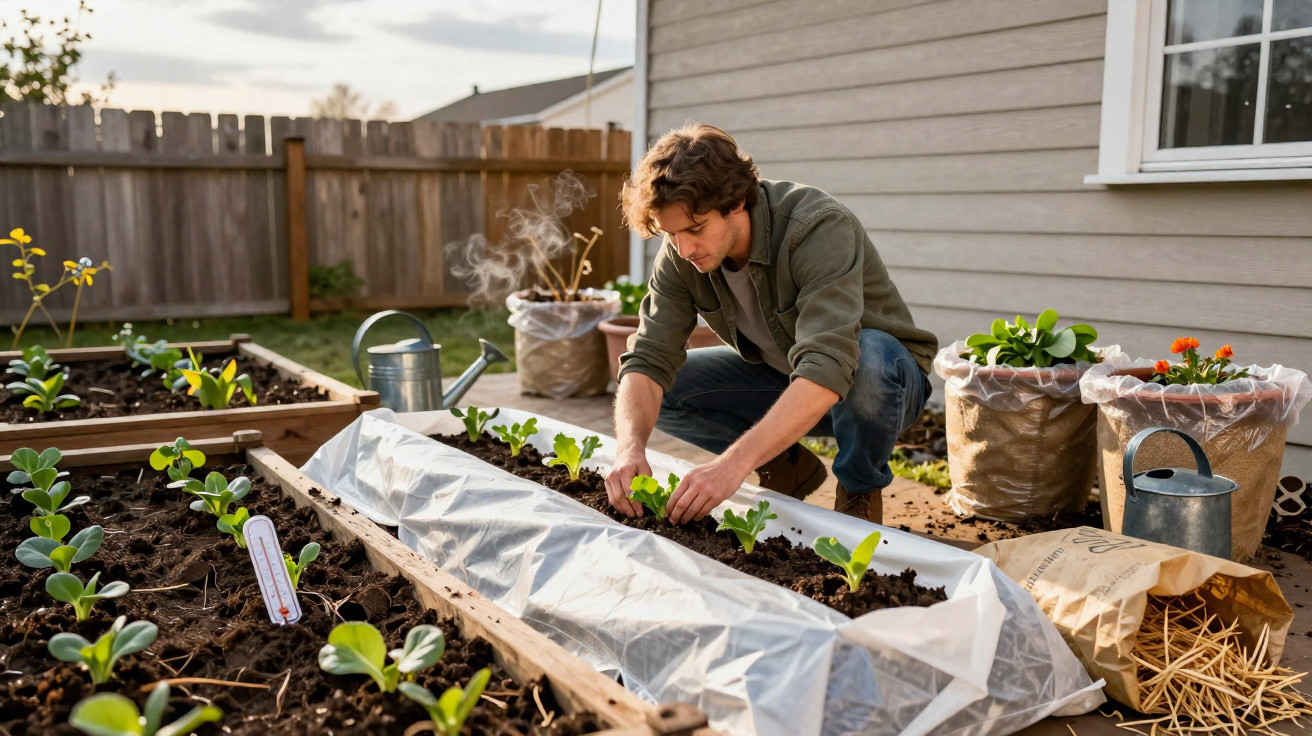
After weeks of unusually mild weather, many home gardeners have already started sowing, planting and potting on with real anticipation. Buds are swelling, the first flowers are opening - and right at this point, winter is making a comeback with cold nights and the threat of ground frost. If you do nothing now, you risk frozen shoots, brown leaves and, in some cases, lasting damage to fruit trees, perennials and vegetable plants.
Why late frost is so dangerous
A garden usually copes better with frost in January than frost in April. It sounds contradictory, but the explanation is straightforward: in midwinter, plants are properly dormant, buds stay tightly closed and sap flow is low. In spring, many plants have already "woken up".
When frost returns, young shoots are full of water and therefore extremely sensitive - ice ruptures their cells.
Typical results include:
- blackened or browned leaf tips
- dried-out flowers and flower buds
- misshapen new growth in the weeks that follow
- crop losses on fruit trees and berry bushes
These are especially at risk:
- freshly sprouting roses, hydrangeas and clematis
- fruit trees such as apricot, peach, cherry, pear and apple while in blossom
- young vegetable plants such as tomatoes, peppers, courgettes and squash
- Mediterranean container plants such as oleander, olive and citrus
- newly planted perennials and summer bedding
Don’t plant yet: avoid common spring mistakes
As soon as the March sun feels stronger, many people can’t resist getting stuck in. Garden centres fill up, balcony planters are replanted, and tomatoes get moved into beds far too early. That is exactly what comes back to bite when temperatures plunge again.
Holding off until after the Ice Saints in mid-May is the safer approach. Many professionals even wait an extra week, especially where cooler north-facing locations or very exposed, windy plots make the cold feel harsher.
What’s best kept indoors or in a greenhouse for now
- tomatoes, peppers, chilli peppers, aubergines
- cucumbers, courgettes, squash, melons
- tender summer flowers such as petunias, geraniums, fuchsias and begonias
- houseplants and container plants that were started earlier in a conservatory
If you’ve already planted these out or left them permanently on the patio, you should protect them again whenever frost nights are forecast - or, if possible, bring them back indoors at short notice.
The most important protective measures against frost damage
Fortunately, you don’t need anything high-tech to shield plants from sub-zero temperatures. Plenty of effective solutions can be improvised with everyday items.
Protective covers, fleece and improvised cloches
A tried-and-tested option is horticultural fleece. It still allows air and some light through, but it holds warmth and reduces wind chill.
- Cover beds: In the evening, cover vegetable beds with fleece or old bed sheets, then ventilate again in the morning.
- Wrap balcony planters: Enclose balcony boxes completely in fleece and place them close to the house wall.
- Protect individual plants: For small shrubs or perennials, use purpose-made covers or create a loose "pavilion" from fleece and canes.
Very important: on milder, sunny days, air coverings during the daytime so damp, stagnant air doesn’t build up - that encourages fungal diseases.
Wrap pots and containers properly
Roots cool down far faster in pots than they do in open ground. That’s why all containers need extra protection.
- wrap pots with bubble wrap, hessian, old blankets or cardboard
- stand containers on wooden battens, polystyrene sheets or old rubber mats so cold can’t pull in directly from below
- move pots tight against a sheltered house wall, ideally under eaves or on a covered balcony
Plants in terracotta pots are particularly quick to suffer, because clay conducts cold strongly. Plastic or wooden containers have an advantage during cold spells.
Create a natural insulating layer with mulch and leaves
You can also buffer the soil itself against frost. A thick mulch layer acts like a blanket.
- straw or hay
- woodchips or bark chippings
- coarse compost
- dry leaves
Important: don’t leave leaves sitting as a dense, wet mat. They can rot and effectively "smother" sensitive plants. Instead, apply a loose layer and, if needed, weigh it down with twigs so it doesn’t blow away.
Mulch keeps warmth around the roots and protects not only against frost but also against heavy moisture loss on sunny yet cold days.
Wind, wet weather, snow: when the weather attacks from several angles
Spring frost rarely arrives on its own. Often there are showers, hail pellets or strong winds at the same time. For plants, that combination is pure stress.
Create shelter from the wind
A cold, drying breeze can dehydrate young shoots even when temperatures are only just below freezing. Any temporary windbreak is worth the effort:
- position bamboo screens or wooden slats in front of beds
- stand pallets upright as a wind barrier
- use garden furniture or privacy panels as a quick, makeshift screen
Fruit trees and tall shrubs should be checked and, if necessary, tied in again so branches don’t snap in strong wind and wet conditions.
Water before frost - yes or no?
Soil should be slightly moist but not waterlogged. Dry ground loses heat faster, while saturated soil increases the risk of root damage.
| Situation | Recommendation |
|---|---|
| Very dry soil before a frosty night | Water moderately in the afternoon; don’t flood it |
| Soil already heavy and wet | Don’t water; if possible, improve drainage |
| Container plants exposed to wind | Water lightly and move to a sheltered spot |
What to do if frost damage is already visible
Even with care, nearly every garden gets caught out at some point. What matters then is responding in the right way.
- Watch frost-hit parts for a few days first; don’t cut everything back hard immediately.
- Many plants recover and reshoot below the damaged areas.
- Once the cold spell has passed, cut very mushy, blackened shoots back to healthy wood.
- Avoid a heavy feed straight after frost; it puts unnecessary strain on the plant.
Patience often saves more plants than frantic sawing and pruning after the first frosty night.
Why patience with sowing and planting is protective
A simple calendar trick helps you avoid making the same mistake each year: note down the period of the last frost risk in your region. In southern Germany and at higher altitudes, late frosts often linger longer than in mild river valleys or cities.
If you raise plants under cover, a straightforward routine works well:
- first, place plants outside on the balcony or in the garden during the day, then bring them back in at night (hardening off)
- after a few days, leave them out overnight too, as long as nights are cool but frost-free
- only then plant into beds or leave them outside permanently
This gradual approach helps young plants adapt to temperature swings and strengthens their cell structure. They respond far more robustly if another chilly night slips in later on.
Practical additions for keen home gardeners
If late frost is a recurring problem where you live, it can be worth considering small, simple DIY projects. A homemade polytunnel bed, a moveable cold frame made from old windows, or a mini greenhouse built from pallets and clear sheets can extend the season and noticeably reduce risk. In warm weather, these structures can be opened fully - and in cold snaps, closed quickly.
A simple sub-zero temperature alert via weather apps can also help, as can an outdoor thermometer with a wireless sensor in the garden. That way, you can spot early when temperatures are dropping towards zero and still quickly lay out fleece late in the evening or pull containers closer to the house.
In years with unusually mild winters, late frost is easily underestimated. Plants get an early head start, while statistically the weather can still deliver cold spells through to mid-May. Keeping that tension in mind - and storing a few rolls of fleece, mulch material and some bubble wrap within easy reach - prevents a lot of frustration and lets you enjoy much fuller beds, healthier fruit trees and stronger balcony plants in summer.



Comments
No comments yet. Be the first to comment!
Leave a Comment