
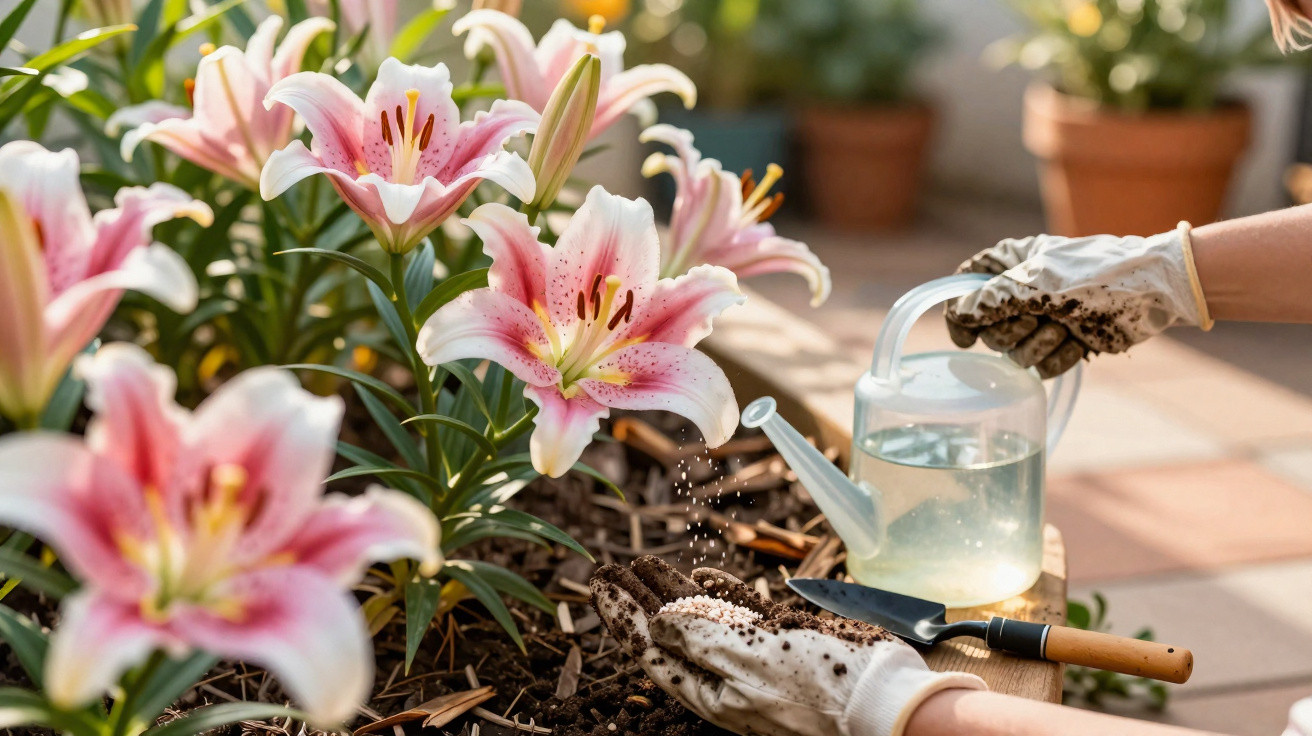
If you grow these premium lilies in the garden, you’ll know the frustration: sometimes the buds stay tiny, sometimes the stems topple over, and sometimes the bulbs come back the following year weak and disappointing. Most often, the cause is simple: the wrong fertiliser - or none at all. With the right nutrient approach, however, these temperamental beauties can be turned quite reliably into true flowering showstoppers.
What Oriental lilies actually need - and what they don’t
Oriental lilies aren’t typical perennials; they’re bulb plants. Much of their energy goes into blooms rather than foliage, which is exactly why they react strongly to the nutrient balance in the soil.
"A fertiliser high in phosphorus and potassium, but with only a moderate nitrogen content, produces the strongest stems and the largest blooms."
In broad terms, the main nutrients do the following:
- Nitrogen (N): drives leafy growth; too much can slow flowering and make plants soft and more prone to disease.
- Phosphorus (P): supports root development, bud formation and fuller flowering.
- Potassium (K): strengthens plant tissue, deepens colours, improves resilience and helps regulate water balance.
In garden use, blends around 5-10-10 or 10-10-10 have proved reliable. The key point is that nitrogen must not dominate; phosphorus and potassium should clearly take priority.
The right fertiliser at the right time
Choosing the correct fertiliser matters - but timing is just as important. Oriental lilies respond best to a season-long “feeding plan”.
| Growth stage | Recommended NPK ratio | Frequency | Benefit |
|---|---|---|---|
| Early growth | 5-10-10 | every 2 weeks | Root building, sturdy shoots |
| Strong growth | 10-10-10 | every 2–3 weeks | Even nutrition, healthy leaves |
| Bud formation | 5-10-10 | every 2 weeks | Robust buds, richer colours |
| After flowering | 0-10-10 | once a month | Bulb recovery, strength for next year |
A common mistake is to fertilise enthusiastically up to the moment the flowers open - and then stop completely. Yet that’s precisely when the bulbs need targeted support again, so they can replenish their reserves.
"After flowering is when it’s decided whether your Oriental lilies will put on a big show again next year - or quietly disappear."
Slow-release fertiliser, liquid feed or organic: what really works?
Slow-release granules for low-maintenance beds
For traditional borders, granulated slow-release fertilisers are often the most practical choice. Products with temperature-controlled release (for example, well-known smart-release fertilisers for flowering plants and vegetables) dispense nutrients in measured amounts over many weeks.
Advantages:
- steady feeding without constant top-ups
- reduced risk of root damage
- ideal for busy gardeners or those who prefer a hands-off approach
These fertilisers can be worked into the soil around the bulbs at planting time. Later in the season, you can supplement selectively with a liquid feed if growth suddenly surges.
Liquid fertiliser for potted Oriental lilies
If you grow Oriental lilies in pots or containers, it’s hard to avoid water-soluble fertilisers. Regular watering leaches nutrients quickly, so lighter but more frequent feeding is usually best.
Liquid feeds for flowering plants with increased phosphorus - often sold as “Bloom Booster” or flowering booster - are well suited here. Mixed into watering cans, they act quickly.
- weekly at half strength, or
- every two weeks at full strength
That way, you can match feeding closely to growth spurts and the bud stage without putting stress on the roots.
Organic options: best for patient gardeners
For a more natural approach, choose organic sources such as well-rotted manure, compost, bone meal or fish fertiliser.
- Bone meal: provides plenty of phosphorus and supports roots and bud set.
- Fish fertiliser: adds moderate nitrogen plus trace elements, boosting vigour and leaf health.
- Compost: improves soil structure, moisture retention and microbial activity.
Organic fertilisers act more slowly, but their effects are longer-lasting. They’re especially useful where the soil is generally poor and needs building up over time.
How to fertilise correctly - practical application tips
Many issues come not from picking the wrong fertiliser, but from using it incorrectly. A few basic rules prevent most problems.
- Keep your distance: scatter granules in a ring about 15 centimetres from the stems, not right against the plant.
- Water thoroughly: after every application, water well so granules dissolve and salts don’t concentrate around the roots.
- Don’t feed during heat stress: skip fertiliser on very hot or extremely dry days, as uptake is poor.
- Learn to read the plant: yellowing leaves can indicate deficiency; soft, floppy, dark-green growth often points to excess nitrogen.
- Go easy on young bulbs: in the first year, reduce the fertiliser amount by roughly a third.
"Better to apply small doses more often than to overfeed ‘just in case’ - lilies are ruthless about it."
Soil, pH value and mulch: the overlooked part of feeding
Even the best fertiliser won’t help much if the soil conditions are wrong. Oriental lilies prefer slightly acidic to neutral soils with a pH of around 6.0 to 6.5.
A simple soil test from a garden centre will show whether you’re in range. If the pH is much higher, phosphorus can become locked up in the soil - the plant effectively “starves” even when there’s enough present. In that situation, options include speciality acidic composts or sulphur-based products, used carefully.
A mulch layer of chipped bark or well-matured compost is also highly beneficial:
- shields shallow lily roots from heat
- keeps moisture in the soil
- breaks down gradually and supplies extra nutrients
A mulch ring 5–7 centimetres thick around the plants improves soil structure over time and makes fertilising noticeably more effective.
After flowering: this is when next year is decided
Many gardeners cut Oriental lilies back hard as soon as they finish flowering and then simply leave them. For the bulb, that approach is damaging. At this stage the plant is still working at full capacity, storing reserves for the next season.
The right approach:
- Remove spent flower heads as soon as they fade, so energy isn’t wasted on seed formation.
- Keep leaves and stems green for as long as possible.
- Feed lightly with a potassium- and phosphorus-focused fertiliser (e.g. 0-10-10).
This allows the bulb to recharge rather than limping into winter exhausted. Skip this step, and it’s common to see previously impressive lilies weaken year after year.
Risks, common mistakes and how to avoid them
Finally, here are the pitfalls that can catch out even experienced gardeners:
- Too much nitrogen: produces long, soft stems that bend in the wind; flowers are smaller or may fail altogether.
- Fertilising late in autumn: encourages fresh, soft growth that won’t mature before winter and is more likely to be damaged.
- Neglecting container plants: lilies in pots quickly suffer from nutrient wash-out, so they need a stricter schedule than those in borders.
- No soil testing: feeding “blind” for years can create imbalances that are difficult to correct.
A well-thought-out feeding plan doesn’t only increase flower size. Well-nourished plants cope far better with wet summers, fungal pressure and wind. Combine that with an airy position, plenty of light, and free-draining, humus-rich soil, and a supposed diva becomes a surprisingly dependable performer.
Plant several varieties in different colours and follow this routine, and you’ll see the border turn into a fragrant wall of lilies for weeks in high summer - with stems that stay upright and blooms that look, quite literally, as though they’re bursting at the seams.


Comments
No comments yet. Be the first to comment!
Leave a Comment