
Many balcony gardeners puzzle over why their summer planting droops and fizzles out, while other boxes look like little waterfalls of blossom for months on end. The gap isn’t only down to variety choice and feed - it often comes down to one trailing flowering plant, plus a single springtime move that can make the difference between success and disappointment.
The understated star: Diascia, the small cascading bloom
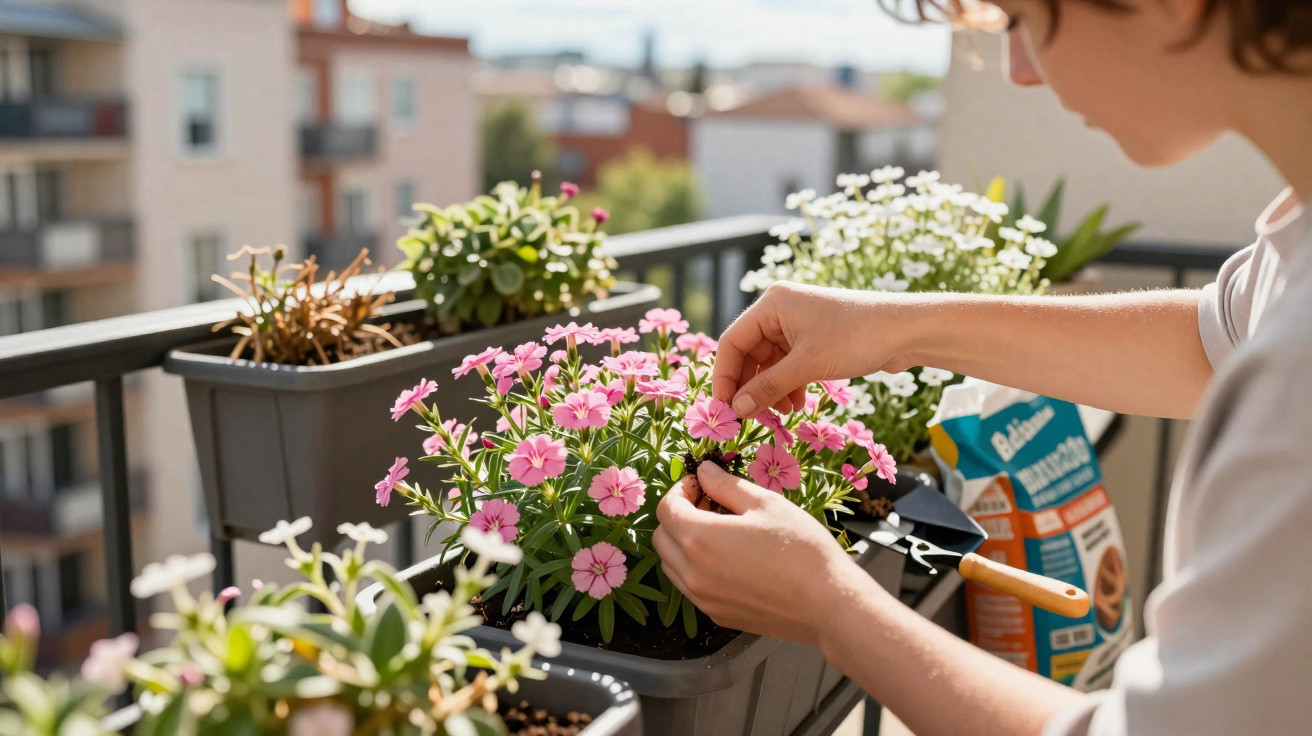
Its name still crops up fairly quietly in garden centres and DIY stores: Diascia, often called “Twinspur” in English-speaking countries. It produces small flowers with five rounded lobes, sitting in dense clouds on fine stems that either hang down or spill neatly over the rim of a pot.
Colours run from apricot and soft pink through to rich raspberry pink, orange and white. Most varieties stay around 25 to 40 centimetres tall, yet spread 30 to 60 centimetres wide. That pairing - a tidy base with gently trailing growth - is exactly what makes it such a strong fit for balcony boxes.
"Anyone who wants a summer-long cascade of flowers in a balcony box can hardly ignore Diascia - it looks like a living, blooming wave."
Botanically, Diascia belongs to the figwort family and originates in southern Africa. In milder climates it can live for several years, but in the German-speaking world it is usually grown as an annual summer bloomer.
Why Diascia changes balcony boxes so dramatically
A lot of classic balcony plants grow upright. The result is predictable: flowers at the top, but an “empty” box edge beneath. Diascia solves that problem. Its stems drape softly over the rim and create a plush, flower-filled cushion.
In mixed balcony boxes it can play several roles at once:
- Front-edge plant: it disguises unattractive pot and box rims.
- Gap filler: it visually links taller plants such as geraniums or salvias.
- Colour bridge: with its many in-between tones (apricot, rose), it smooths out strong contrasts.
- Carpet of bloom: it keeps flowering into autumn when other plants start to fade.
With just a few plants, a plain balcony box can be turned into a kind of mini colour waterfall - particularly if you use the right technique at planting time in spring.
The make-or-break spring moment: plant properly and “pinch” straight away
The ideal window for Diascia is April to May, once nights stay frost-free. Young plants from the nursery are usually ready and waiting by then.
This is where many people slip up: they place the delicate plants in the box, water generously - and then simply let them get on with it. That’s precisely when the key hand movement matters.
The hand movement you shouldn’t miss
Right after planting - or at the latest once the shoots are 10 to 15 centimetres long - take a pair of snips or use your thumb and forefinger:
"Lightly cutting back the shoot tips in spring, or pinching them out with your fingers, produces a much more branched, denser plant - and noticeably more flowers later on."
This “pinching” means removing the very top of each shoot, roughly 1 to 2 centimetres. The plant responds by pushing out several side shoots. Instead of long, thin, sparsely flowering strands, you get a compact, evenly blooming mound that later rolls over the edge of the box.
How to plant, step by step
- Wait until no night frosts are forecast.
- Choose a balcony position in sun to partial shade.
- Fill the box with loose, humus-rich compost for balcony planters.
- Make sure there are drainage holes and add a thin drainage layer (for example, expanded clay pebbles).
- Plant around three Diascia plants per 30 centimetres of box length.
- Water in thoroughly - then pinch out the shoot tips.
The spring trim looks like a minor detail, but it determines whether your box ends up with a few loose trails or a dense cushion of flowers.
Position: plenty of light, but avoid a “oven” balcony
Diascia thrives in bright conditions. A full south-facing balcony can work, provided there isn’t prolonged extreme heat with stagnant air. In sweltering inner courtyards with reflective glass surfaces, it can struggle quickly and lose vigour.
| Factor | What Diascia likes | What causes problems |
|---|---|---|
| Light | Morning sun, light shade in the afternoon | Unbroken full sun + heat for days |
| Soil | Loose, humus-rich, well-drained | Constant waterlogging, heavy wet compost |
| Water | Evenly moist, with the surface allowed to dry a little | Permanently wet or severely dried out |
On east- or west-facing balconies, Diascia often flowers for longest and most generously, making excellent use of gentler morning or evening sun.
Summer care: water correctly, feed moderately, cut back briefly
In a box, compost dries out faster than in a bed. Ideally, water in the evening at the base of the plant rather than over the flowers. Let the top layer dry between waterings, while keeping the compost beneath lightly moist.
For feeding, a standard balcony-plant fertiliser at the normal rate every three to four weeks is enough - or use a slow-release feed at the start of the season. Too much nutrition mainly produces leaves and long shoots at the expense of flowers.
"A smart care trick: feed a little less, but regularly pinch off spent flower sprays - it channels the plant’s energy into fresh buds."
If the plant pauses in peak summer or looks “tired”, a small rejuvenation cut can help: trim all shoots back by about one third, water well and apply a light feed. After two to three weeks, a second flush of flowers often begins and can continue into autumn.
Which plants pair especially well with Diascia
To keep a box from looking messy, it pays to plan a colour scheme. Diascia works in both romantic and modern combinations:
- Romantic: pink or apricot Diascia with white calibrachoa (million bells) and a blue edging of lobelia.
- Mediterranean: orange Diascia with blue salvia and silvery foliage plants such as Helichrysum.
- Minimalist: a single Diascia variety in one colour, planted densely in a simple, long trough.
Diascia is also excellent as a transition between trailing geraniums and taller summer perennials. It occupies the lower area that often looks bare and creates a softer visual step-down.
Risk factors: what balcony owners often underestimate
In practice, three issues cause frustration most often:
- Boxes that are too small: the compost dries out extremely fast and the roots overheat.
- No spring cut-back: long, thin shoots that quickly become bare.
- Constantly damp compost: root rot and weak, greyish growth.
If you’re using Diascia on a very windy balcony, it’s also worth choosing sturdy boxes. The plant itself is fairly tough, but the trailing mass of flowers can act like a sail. A securely fixed bracket helps avoid nasty surprises during summer storms.
Practical scenario: from a bare balcony to a flower cascade
Picture a typical city balcony: two narrow boxes on the railing, previously planted only with geraniums. In spring, you add four Diascia plants per box in apricot and pink along the front edge. After planting, you lightly pinch out all the shoot tips.
By June, the stems begin to drape over the rim while the geraniums flower above. In high summer, after a light cut-back and a little feed, a second - often even denser - wave of flowers develops. If you remove faded parts in autumn, you can keep colour on the balcony right through to October.
That’s how an otherwise one-dimensional balcony box becomes a layered arrangement with a clear height structure: geraniums at the top, foliage in the middle, and Diascia at the front and below as a living curtain of flowers.
How to quickly understand the jargon
Beginners in garden centres often stumble over terms like “pinching” or “drainage”. Both are simpler than they sound. Pinching just means nipping out the soft shoot tip with thumb and forefinger. Drainage means laying a layer of coarse material at the bottom of the box so excess water can run away.
For Diascia, both make a noticeable difference. Without pinching, it tends to grow long and sparse. Without drainage, the compost stays too wet and root damage becomes likely. With both measures, it gets a dense, healthy start - and it’s exactly that spring start that decides how impressive your balcony boxes will look months later.
Comments
No comments yet. Be the first to comment!
Leave a Comment