
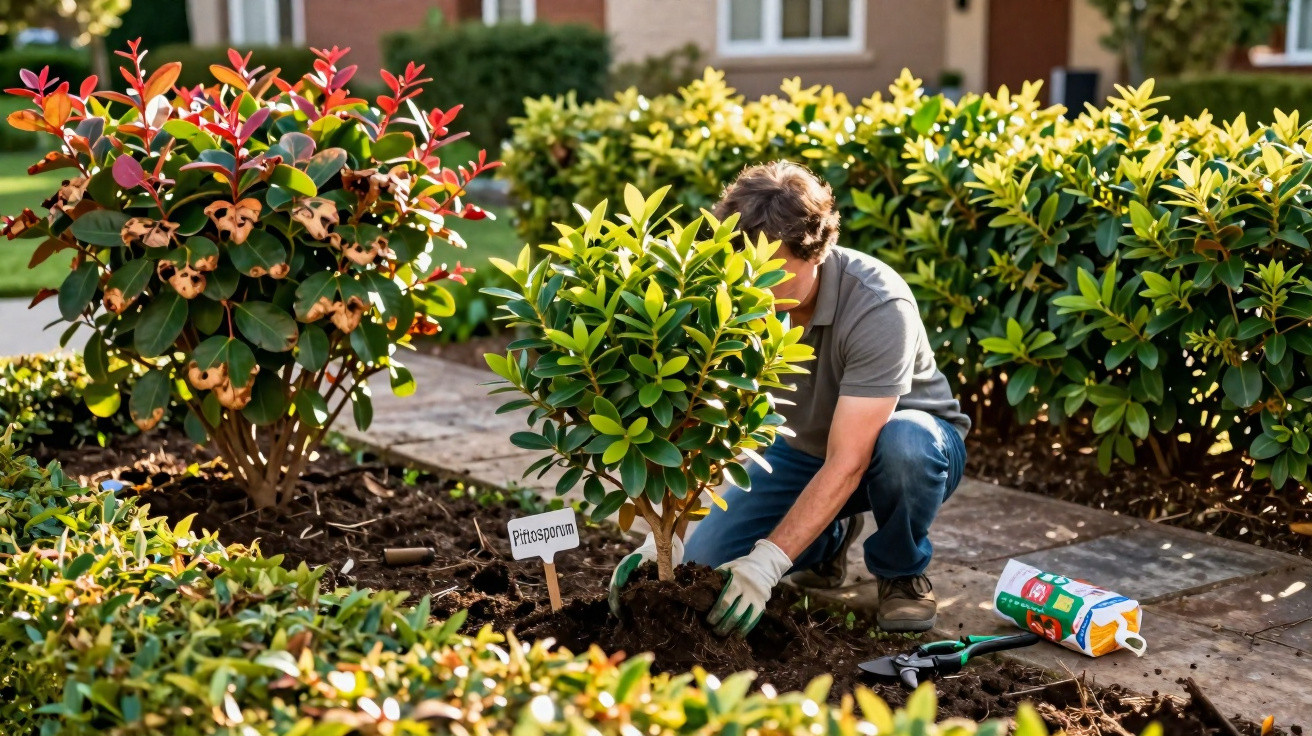
In countless new-build estates, it was seen as the quick fix for privacy: the evergreen Photinia hedge with its vivid red new shoots. Now the mood is turning. With milder winters, fungal diseases are spreading fast, and entire garden neighbourhoods are staring in disbelief at brown leaves and bare gaps. Garden professionals expect that, by spring 2026, a different shrub will be taking over along property boundaries.
How Photinia became a problem hedge
Hardly any ornamental shrub has risen so quickly in recent years as Photinia. In many housing developments you now see almost nothing else: dense, tall hedges, neatly clipped into shape, glowing red in spring. Nurseries stocked them in huge numbers, prices stayed reasonable, and the promises sounded compelling.
That very success is now backfiring. Where one street runs into the next with near-monocultures, fungi can move rapidly from garden to garden. Plant-disease specialists report that infected hedges can lose 15 to 30 percent of their leaf mass in just a single season.
"Anyone planting a Photinia hedge today is, in many regions, choosing a model on the way out-with risk built in."
The disease often creeps in at first. Leaves may look only slightly speckled, but later the once-solid green screen develops genuine holes. That is usually when frustration sets in-and often the chainsaw follows.
The disease behind the hedge dieback
Photinia’s main adversary is a leaf fungus that thrives in mild, damp conditions. It starts with small red spots, which then turn brown and spread. Necrosis forms within the leaf tissue, photosynthesis falters, and the plant gradually weakens.
Typical signs in the garden include:
- many small red-to-brown spots on the leaves
- yellowing leaves that drop prematurely
- whole hedge sections suddenly looking see-through
- new growth staying short, weak and uneven
The milder the winters and the wetter the springs, the quicker the disease takes hold. The fungus survives on old leaves, in the soil and on pruning debris. So if you simply replace affected shrubs, there is a strong chance you will reintroduce the problem straight away.
Why many garden owners have had enough of troublesome hedges
Before Photinia, another plant topped the hedge popularity charts: Thuja. For decades, kilometre-long Thuja walls screened off properties, but they also blocked light and left little room for life or diversity. Then fungal issues and drought damage arrived-followed by widespread Thuja fatigue.
With Photinia, the pattern repeated: one dominant species, attractive to look at, yet vulnerable. Many households do not have the time for spray schedules, constant attention and complicated pruning rules. After work, most people want to tidy a hedge with a few cuts-not fight fungi in protective clothing.
"The trend is moving away from the ‘always-the-same professional hedge’ towards robust, low-maintenance mixed planting."
The new star on the property boundary: Pittosporum
From the perspective of many garden designers, one shrub is clearly moving into pole position: Pittosporum. It has long been used in milder areas, and now-helped by climate change and the Photinia crisis-it is spreading north and appearing in more gardens.
What makes Pittosporum so appealing
Pittosporum offers several qualities that are in demand right now:
- evergreen and dense – ideal as a privacy screen
- moderate growth – around 20 to 30 centimetres per year
- more resistant to leaf fungi – noticeably lower disease pressure
- visually varied – depending on the variety, leaves may be glossy, pale-edged or slightly wavy
- easy to maintain – usually one shaping or maintenance prune per year is enough
Where Photinia can read as a red wall, Pittosporum tends to look more elegant and graphic. Combined with other shrubs, it creates a structured hedge that feels less “sterile”.
A concrete day-to-day example
Landscape gardeners describe the same kind of story again and again: a homeowner plants 20 metres of Photinia, enjoys the red flush for a few years-then suddenly faces a brown, hole-riddled row. After three warm winters, only bare twigs remain. To regain a full privacy screen, it would take several hard cuts, constant removal of diseased leaves, and repeated fungicide sprays.
When switching to Pittosporum, it is usually enough to:
- remove and dispose of the diseased shrubs completely
- loosen the soil and carefully collect infected fallen leaves
- plant young Pittosporum with adequate spacing
- water regularly in the first year, then only during dry spells
- lightly shape once a year
Why the future lies in mixed hedges
If you are planting a new hedge today, it is best not to swap Photinia for another monoculture-even if the replacement seems tougher. Experience and research both suggest that mixed hedges are more stable over the long term. Diseases and pests struggle to spread explosively because not every shrub responds in the same way.
A practical mix for many gardens could look like this:
| Shrub | Function |
|---|---|
| Pittosporum | evergreen privacy screen, refined appearance |
| Elaeagnus ebbingei | very robust, tolerant of salt and wind, silvery foliage |
| Hazel | native, food for wildlife, edible nuts |
| Dogwood | red stems in winter, a colour accent in the border |
Mixing these species produces a hedge that shows colour through the year, offers something to wildlife and still reliably blocks the neighbours’ view.
"A mixed hedge forgives mistakes, comes through extreme years better, and looks more alive than any sterile standard row."
How to make the change in your own garden
If a Photinia hedge is badly damaged, there is usually no real alternative to removing it. Cutting out individual diseased shoots tends to bring only short-lived relief. To give the restart the best chance, a planned approach helps:
- dig out all affected plants completely, including the root ball
- dispose of prunings and leaves in general waste, not on the compost
- leave the soil to rest for one to two months, loosening it several times
- when replanting, deliberately combine different species
- in the first two years, ensure an even water supply
If you are unsure which shrubs suit your site, speak to local nurseries. They understand the area’s soils, climate and typical issues, and can recommend suitable varieties-for instance, particularly frost-hardy Pittosporum selections or native companion shrubs.
What hobby gardeners should keep in mind now
For many people, the current situation feels disheartening: first Thuja became a problem, and now Photinia seems headed for a similar fate. In the longer term, though, this crisis can also be an opportunity. It encourages garden owners to rethink their boundaries-away from a green wall and towards living rows of shrubs with flowers, fruit and structure.
If you are already considering a hedge change, you have a clear trend behind you up to 2026: more resilient shrubs such as Pittosporum, mixed planting and greater variety. It takes a little more planning at the start, but it can save later stress, chemicals and disappointment. And the neighbours will end up looking not at brown gaps, but at a lively, colourful garden edge that offers something throughout the year.
Comments
No comments yet. Be the first to comment!
Leave a Comment