
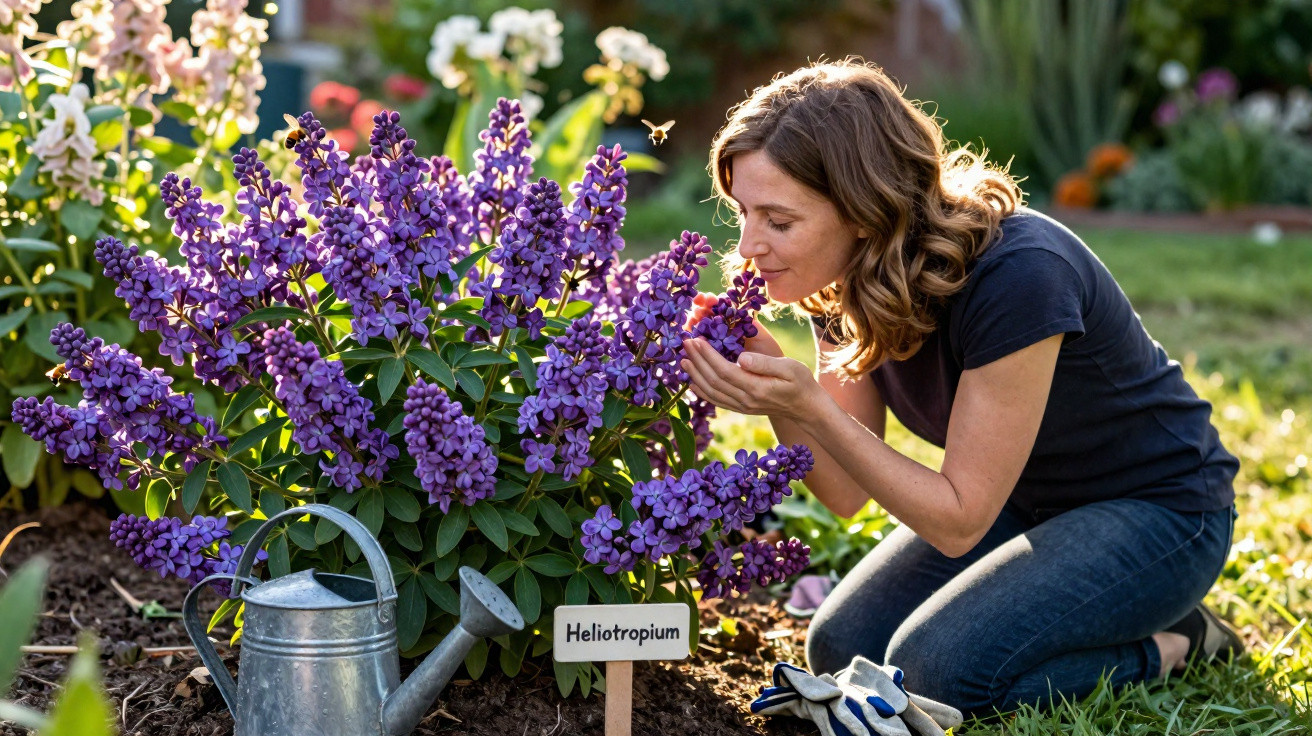
Many hobby gardeners are after a plant that offers more than something that’s simply “nice to look at”. They want fragrance, something that draws in bees, a long flowering season, and a plant that’s still straightforward to care for. That’s exactly where an old, almost forgotten garden heroine is making a comeback - bringing a show-garden-style effect to balconies, patios and borders through spring and summer.
The vanilla-scented fragrance bomb: what makes heliotrope so special
At the centre of it all is heliotrope (Heliotropium arborescens), sometimes also known in German as the Vanilleblume (vanilla flower). This perennial originally comes from South America, yet it feels surprisingly familiar in our climate. That familiarity has less to do with its appearance and far more to do with its scent.
"Anyone who steps close to heliotrope instantly gets a sweet cloud to the nose - a blend of vanilla, almond and tonka bean."
As soon as temperatures rise, the fragrance becomes even more pronounced. On warm afternoons and mild evenings, the plant seems to ‘switch on’ - even when it already looks as though it’s performing at full tilt. One single pot placed beside a seating area can be enough to perfume an entire patio.
That’s exactly why it appeals to so many people who are new to gardening: you don’t need a large border to get a noticeable result. A heliotrope in a container by the front door, on the balcony, or at the edge of a small sitting spot can deliver that “it smells like a holiday hotel here” feeling all on its own.
Violet flower clouds and a long runner right into autumn
Visually, the plant holds its own as well. Its dense flower heads usually appear in a rich violet, though white and soft mauve shades also occur. Paired with the dark, slightly crinkled foliage, the result is a strong contrast that makes beds look instantly more structured and deeper.
Heliotrope typically grows to around 30 to 50 centimetres tall. That compact habit makes it extremely versatile, for example:
- in a border as a front-of-bed plant in front of roses or ornamental grasses
- in balcony planters as a strongly scented centrepiece among lower companions
- in a container as a solo feature next to a garden chair or by the front door
- as a gap-filler within established perennial borders
Another major advantage: flowering usually begins in late spring, often from May, and - with a little care - continues right through to October. While other summer flowers are already flagging, heliotrope keeps pushing out fresh flower heads. That way, the garden stays colourful and lively for months.
A magnet for bees and butterflies
This fragrant perennial doesn’t just impress with looks and scent. Its nectar draws in countless insects. On sunny days, bees, bumblebees and butterflies gather around the violet blooms. If you’re aiming for an insect-friendly garden, this plant is a particularly strong choice.
Especially in densely built-up neighbourhoods, where classic fruit trees or large flowering hedges are missing, a few pots of heliotrope on a balcony or patio can act like small lifeboats for pollinators.
Easy care, as long as you stick to a few simple rules
Despite its lush presence, the vanilla flower isn’t considered a diva. The basics are manageable:
- Position: Sunny to part shade - the more light it gets, the stronger the scent and the heavier the flowering.
- Soil: Nutrient-rich and free-draining; avoid waterlogging at all costs.
- Planting time: Put outside after the last late frosts, so usually from mid-May.
- Watering: Keep evenly moist; the rootball should not be allowed to dry out completely.
If you’re growing it in a pot, it’s best to use a high-quality, open potting compost and a container with a drainage hole. Saucers should be emptied after heavy rain or generous watering so the roots aren’t left standing in water.
One small trick to keep it flowering even longer
To help heliotrope keep going into autumn, one quick action pays off as you pass by: simply pinch off faded flower heads or remove them with scissors. The plant responds quickly by producing new blooms.
"Regular deadheading directs the plant’s energy away from seed production - and into even more abundant flowering."
In peak season, a weekly check can be worthwhile. Many gardeners do it while watering, and it only takes a few minutes.
Sensitive to frost, but with a trick it can be used year after year
In its native habitat, the plant doesn’t experience sub-zero temperatures. In Central Europe it reacts badly to cold, and even temperatures just above freezing can cause problems. If it’s planted out in the ground, heliotrope is therefore often treated as an annual summer perennial.
In a pot, you have far more flexibility. If it’s grown in a container, you can bring it indoors in autumn or move it to a frost-free winter location quite easily:
- a bright, cool space such as a conservatory, stairwell or an unheated spare room
- ideally kept at 5 to 10 °C
- water only very sparingly; the compost should be slightly moist, but never wet
This allows heliotrope to get through the cold season and be potted back out the following spring, then tidied and shaped. Over time, the plant can become bushier and denser from year to year.
Why heliotrope is suddenly being talked about everywhere again
Garden centres have been reporting rising demand for fragrant flowering plants suited to small spaces. Many people only have a balcony or a mini patio, but want to create more atmosphere than the classic row of geraniums.
Heliotrope fits this trend perfectly. It offers:
| Feature | Everyday benefit |
|---|---|
| Intense scent | Creates a holiday feeling on a balcony or patio |
| Long flowering season | Months of colour without constant replanting |
| Insect-friendly | Supports bees and butterflies in towns and cities |
| Suited to pots | Ideal for small spaces and flexible, moveable planting |
On top of that, the vanilla scent is emotionally powerful for many people. It can bring to mind baking, childhood, desserts - in short, a sense of comfort. That’s exactly what can make an evening in the garden or on the balcony feel far richer than the visuals alone would suggest.
How to combine heliotrope particularly well with other garden stars
If you want to intensify the effect, place heliotrope deliberately where it can shine. Particularly balanced combinations come from plants that complement it in colour or fragrance:
- White-flowering roses: the vanilla scent blends with classic rose perfume, and violet and white glow together.
- Lavender: a Mediterranean note meets sweetness; both love sunny positions.
- Silver-leaved plants such as dusty miller or the “silver wire” plant: the grey foliage makes the violet flowers appear even richer.
- Night-scented plants such as night phlox or stock: in the evening, it turns into a real fragrance concert.
The key is to match the needs of its companions. Plants that thrive in sunny, dry conditions shouldn’t be paired with species that require permanently wet roots. Heliotrope likes moisture, but it cannot cope with puddling around the root zone.
What else to know: toxicity, children, pets
Like many ornamental plants, heliotrope contains substances that are considered poisonous in larger quantities. Children rarely pick and eat large amounts of flowers and leaves, but it still isn’t a plant to place right next to a sandpit or a crawling area. The same applies to curious dogs and cats that like to nibble greenery.
If you want to be extra cautious, keep pots out of reach of toddlers and choose tougher, completely harmless species for play spaces. For a normally used balcony or a patio with a seating area, however, the vanilla flower remains a very reasonable option.
For many garden enthusiasts, heliotrope has become a kind of “secret weapon” when a spot needs a special touch quickly - without major changes and without complicated gardening knowledge. One pot, a sunny position, regular watering and removing faded blooms: often that’s all it takes to create the impression of a much more high-end, atmospheric garden.
Comments
No comments yet. Be the first to comment!
Leave a Comment