
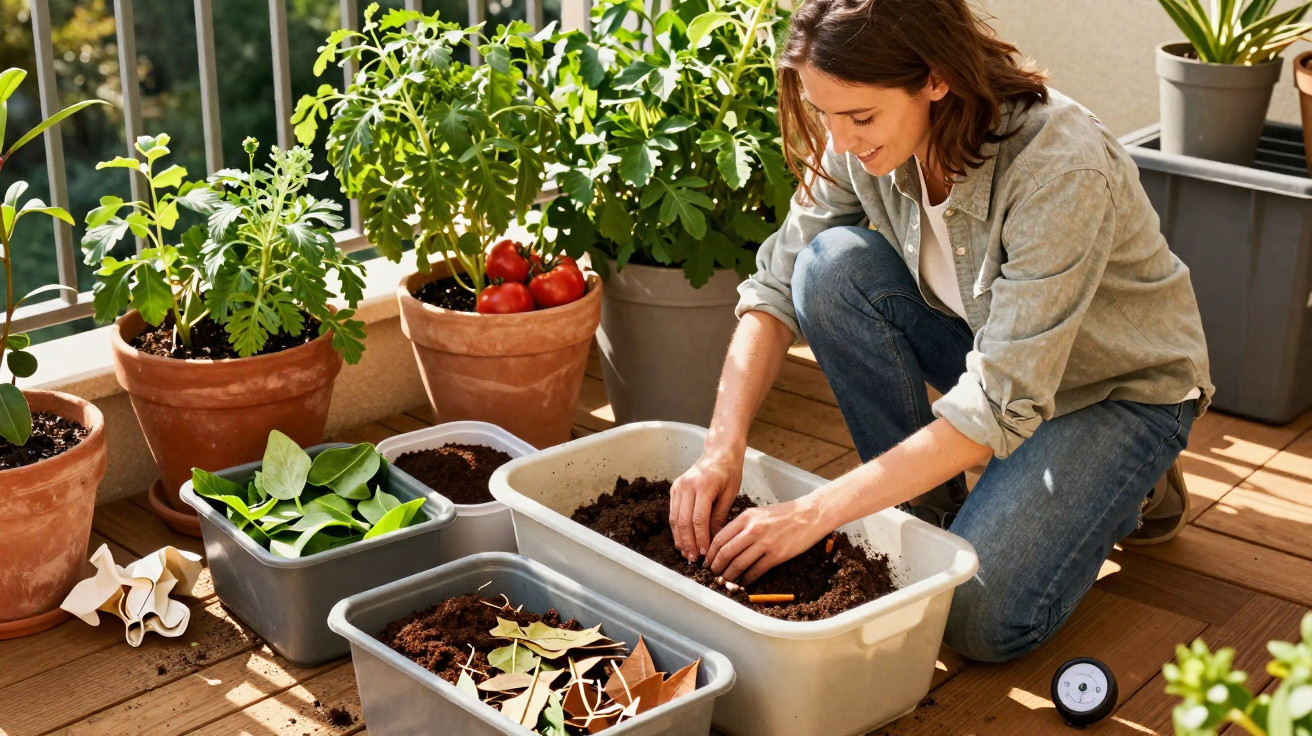
As garden centres pile up pallets of compost for spring, a quiet rebellion is taking root in sheds and back gardens.
Increasing numbers of home gardeners are rejecting plastic-wrapped, industrially produced potting compost in favour of making their own. Environmental worries, higher costs and the growing belief that gardening should begin with soil rather than a shopping trolley are all behind the move.
Why bagged compost is not as harmless as it looks
That large, yielding bag labelled “all-purpose compost” may appear harmless, but its contents and journey to the shelf paint a less cheerful picture.
Many commercially sold potting mixes still depend substantially on peat, which is removed from bogs that took thousands of years to develop. Far from being empty, waterlogged wilderness, these bogs are vast carbon reserves and distinctive habitats for plants, insects and birds.
When peat is extracted, the bog dries out and the carbon it has stored for centuries starts escaping into the atmosphere.
This contributes to greenhouse gas emissions while harming ecosystems already facing considerable strain. Governments in the UK and throughout Europe are beginning to limit peat use, although many products still sold in shops contain it, often beneath unclear descriptions such as “peat reduced”.
Transport is another issue. Bags of compost are both cumbersome and weighty, so hauling them long distances by lorry uses fuel and creates emissions. Their plastic wrapping, which is often non-recyclable or simply not recycled in reality, commonly ends up in landfill or is incinerated.
Avoiding industrial compost lowers your carbon footprint, cuts waste and makes a plain statement that gardeners care about what is under their plants.
Making your own potting soil is easier than you think
Creating compost-based potting soil at home can sound like something only experts with allotments as large as a football pitch would attempt. In fact, anybody with a small outdoor corner can make it.
At its core, the method is simple: turn everyday organic waste into a rich, crumbly material that feeds your plants instead of the bin.
Begin with waste from the kitchen and garden. Vegetable peelings, coffee grounds, tea leaves, eggshells, spent flowers, fallen leaves and small prunings can all be used. As these materials rot down together, they become dark, earthy compost packed with nutrients and beneficial micro-organisms.
For a potting soil with a good texture, combine damp and dry ingredients. Gardeners generally refer to these as “greens” and “browns”:
- Greens: fruit and vegetable scraps, fresh grass clippings, coffee grounds
- Browns: dead leaves, shredded cardboard, paper towels without ink, small twigs
The two groups decompose at differing rates and provide different nutrients. When properly combined, they make compost that is fertile while remaining open enough for roots to spread freely.
The key to a really effective home-made mix
Getting the balance between greens and browns right
A heap made solely from peelings and grass cuttings becomes slimy and unpleasant-smelling. One containing only dry leaves may sit almost unchanged for months. Success lies in the balance between them.
A compost that breaks down well usually contains roughly two to three parts “browns” for every one part “greens”.
This ratio allows micro-organisms to work efficiently and helps prevent unpleasant smells. There is no need to measure every addition precisely; simply pay attention to what goes in. If the bin appears overly wet and clumped together, add extra dry leaves or shredded cardboard. When it is dry and decomposing slowly, add further kitchen scraps or a light sprinkling of water.
Air and moisture: the invisible workers
Composting is a living process. Bacteria, fungi and tiny organisms require oxygen to do their work. If a heap is left unturned, it becomes compacted, loses air and decomposes far more slowly.
Turning the compost about once a fortnight with a fork or compost aerator opens it up and brings in fresh oxygen. This single practice hastens decomposition and produces a finer, more consistent material.
Moisture is equally important. A useful guide is that compost should feel like a squeezed-out sponge. If it becomes too dry, decomposition nearly stops; if it is too wet, it becomes a sour, airless mass.
During long dry spells, a light watering of the heap brings it back to life, but soaking it is counterproductive.
Adjusting texture for different uses
Once the compost is mature-deep brown, earthy and scented like a forest floor-it can be made into a proper potting mix. You may wish to alter its texture according to your soil and intended use:
| Purpose | Suggested mix |
|---|---|
| Seed sowing | Fine-sieved compost + washed river sand for a light, free-draining texture |
| Vegetable seedlings | Compost mixed with garden soil and a little sand for stability |
| Potted herbs and flowers | Half compost, half garden soil or leaf mould for long-term nutrition |
| Clay-heavy gardens | Compost plus sand to loosen structure and improve drainage |
Running compost through simple mesh or an old crate removes larger pieces, leaving a smoother growing medium through which young roots can readily develop.
Why gardeners who switch rarely go back
The first advantage most people see is the saving in money. Compost bags are seldom inexpensive, particularly when you raise many plants or need to fill raised beds. Producing compost from waste you already generate can reduce this expense substantially.
For a keen gardener, home-made compost can replace dozens of bags a year, freeing up money for seeds, tools or fruit trees instead.
There is an emotional benefit as well. Seeing plants flourish in a blend made from peelings and autumn leaves is deeply satisfying. It reshapes your connection with the garden: soil is no longer simply a product to purchase, but something you create and look after.
Control is another benefit. Commercial mixes are formulated for broad, general use. Making your own lets you tailor the blend to your particular situation, whether you have a windy balcony where pots dry out quickly or a shaded border with dense, sticky clay.
Practical scenarios: how this looks in real life
A small flat with a balcony
Even with no garden, a small sealed compost bin or Bokashi system can process kitchen waste into material that can finish decomposing in a shared courtyard bed or at a friend’s garden. At first, combine it with a little shop-bought peat-free compost, then gradually use it to replace commercial products.
A family house with a typical back garden
One or two ordinary compost bins placed behind a shed will generally be sufficient. Grass cuttings, hedge prunings and kitchen scraps keep the system supplied. Within six to twelve months, mature compost can be collected from the bottom of the bin. Sieve the amount required for potting mix and spread the remainder around beds and shrubs.
An allotment plot
At this scale, you can go further by keeping separate heaps for coarse material, leaf mould and fine compost, alongside piles of sieved sand. Allotment gardeners often develop individual blends for potatoes, tomatoes and salads, based entirely on what proves most successful year after year.
Terms and tips that help you go further
Two terms frequently create confusion: compost and potting soil. Compost is the decomposed organic matter itself. Potting soil, also called potting mix, is usually a combination of compost with other ingredients, such as soil, sand, leaf mould or wood fibre, to provide the right drainage and texture for containers.
Another useful term is leaf mould. Made solely from fallen leaves that are allowed to rot down slowly, usually in a basic wire cage, it is not especially nutrient-rich. However, it is excellent for improving structure and water retention. Blended with home-made compost, it creates an outstanding peat-free base for many plants.
There are potential problems, naturally. Diseased plant material added to a heap can spread disease when the compost does not become hot enough. Cooked food, meat and oily leftovers can attract rats. Both can be avoided through a few straightforward rules: use varied, plant-based materials, and leave out anything visibly diseased or invasive, such as bindweed roots.
On the plus side, pairing home-made compost with other low-impact methods-mulching, collecting rainwater and planting for pollinators-helps create a garden better able to cope with drought, heavy rain and pests. Soil containing plenty of organic matter retains water for longer, drains more effectively and supports more varied life beneath the surface. In return, that underground life nourishes your plants for free.

Comments
No comments yet. Be the first to comment!
Leave a Comment