
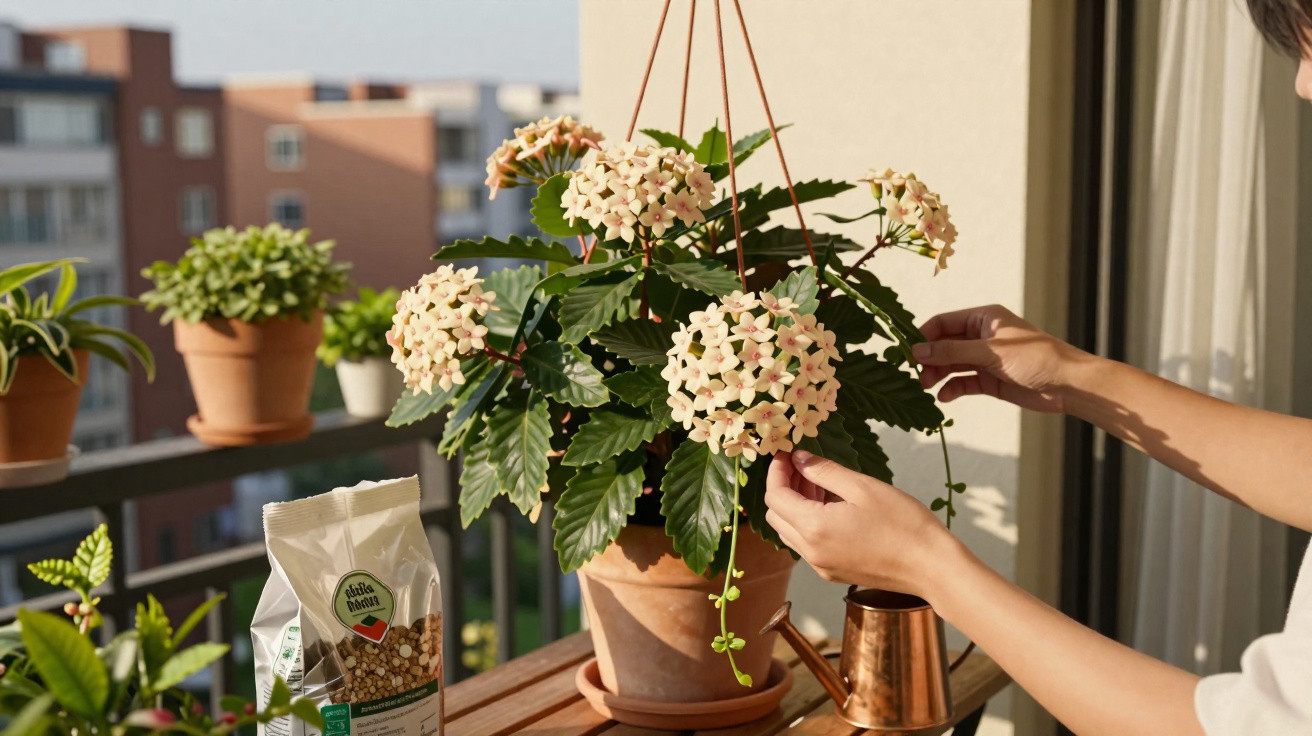
A flower-filled, charming balcony is the ambition of many flat residents looking to bring a touch of urban nature into their homes. The wax flower is an excellent choice for this setting, thanks to its remarkable resilience and distinctive beauty.
How does Hoya carnosa adapt to a balcony environment?
Native to southern China, this climbing species has highly ornamental foliage with a notably leathery texture. This physical quality enables it to cope with persistent winds and the changing weather conditions commonly found on flat balconies with great ease.
This epiphytic climber develops well when it has suitable supports on which to anchor its tendrils. It can then spread lavishly, forming an attractive green curtain that enhances the whole space.
What is the most fragrant flower to grow on a balcony?
There is an amazing plant that releases a wonderful scent and can completely transform the atmosphere of your home… Read more
How can you provide the right light for the plant?
For abundant blooms, it is essential to place the pot somewhere that receives strong indirect light throughout the day. Although it is hardy, direct exposure to intense sunlight can scorch its fleshy leaves and hinder its healthy development.
Suitable light levels encourage the production of the energy needed to develop its beautiful flower clusters. Well-lit balconies therefore provide the ideal microclimate for this Asian species to thrive and produce spectacular blooms in a consistent and vigorous way.
Below, watch an excellent explanatory video created by the Spagnhol Plantas YouTube channel to gain a better understanding of the growing techniques:
Why is an airy substrate important for Hoya carnosa?
As it naturally grows epiphytically on Asian trees, its roots require plenty of oxygen. A dense, compacted substrate holds too much moisture, which can quickly and irreversibly rot the root system of your cherished wax flower.
Choosing materials that provide excellent drainage allows water to pass freely through the roots without pooling. This straightforward care creates a highly favourable setting in which the plant can absorb essential nutrients, encouraging healthy, resilient growth.
The Perfect Substrate Kit
Drainage components
Use these three essential materials to create the ideal mix:
- Shredded pine bark, to provide structure and proper aeration;
- Crushed horticultural charcoal, to prevent fungi and unpleasant odours;
- Coconut fibre or coconut chips, to retain the right amount of moisture.
How can you encourage spectacular clusters of flowers?
To see your plant covered in glossy flowers, the key is regular fertilising aimed at flowering. Applying specific nutrients every month strengthens the flower peduncles and ensures that new buds appear with full vigour throughout the warm season.
In addition, never cut back the short stems where flowers emerged in the previous year. These same points, known as peduncles, are precisely where the plant will naturally and abundantly produce its beautiful fragrant clusters again in future seasons.
The main steps required to achieve this result are listed below:
- Continue fertilising with phosphorus-rich formulations;
- Avoid pruning older structures that have already flowered;
- Ensure plenty of daily brightness without scorching sun.
What is the ideal watering frequency?
This plant should be watered at widely spaced intervals to prevent harmful water build-up. Before watering again, feel the substrate with your fingers to make sure the compost is completely dry and aerated.
During winter or on colder days, reduce watering on the balcony even further. Ongoing monitoring prevents fungal diseases and keeps the root system in excellent condition for the next growing season.
Comments
No comments yet. Be the first to comment!
Leave a Comment