
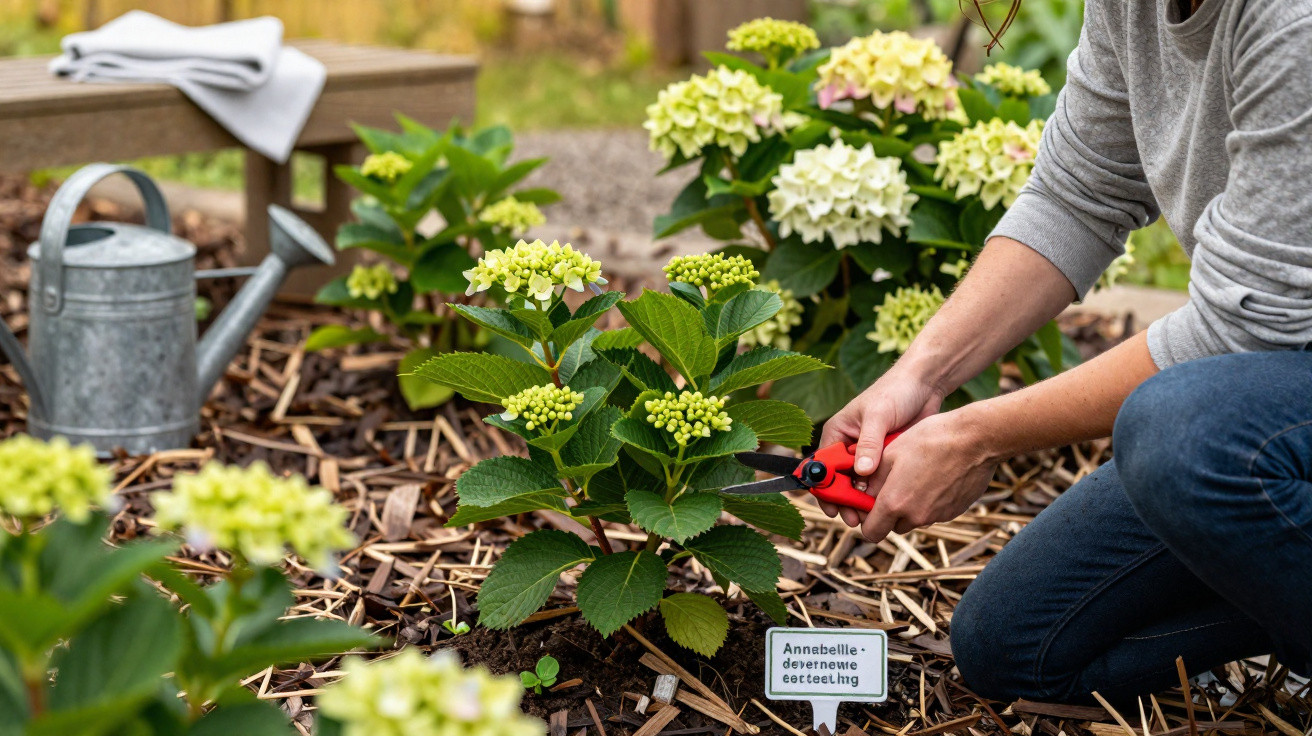
Many amateur gardeners know the feeling: a few years ago you had a glorious sea of flowers; now it’s mostly green domes with just a handful of tired-looking blooms. In most cases, it isn’t down to “bad soil” or “the wrong weather”, but to missed-or mistaken-care steps after winter. If you act purposefully in very early spring, you can keep your hydrangeas performing at their best for years.
Why spring determines whether hydrangeas will flower
Between late winter and the very start of spring, the key decision for flowering is effectively made. At this point, buds begin to swell but have not yet opened. That is precisely when hydrangeas are highly sensitive to pruning mistakes-and particularly responsive to the right touch.
"Most losses of hydrangea flowers are caused by the wrong cut at the wrong time-not by the soil or the weather."
Cut too far back and you simply remove the future flower buds. Do nothing at all and the shrub becomes woody and tired. Either way, the flower heads gradually become smaller and sparser. The aim is therefore straightforward: remove old and weak shoots, and keep strong, younger shoots carrying buds.
Getting hydrangeas right: how to prune each type
Before you even pick up the secateurs, it pays to identify which type you have. Hydrangeas can be split into two broad groups, and they need very different treatment.
Group 1: flowering on last year’s wood
This group includes in particular:
- Bigleaf hydrangea (Hydrangea macrophylla)
- Mountain hydrangea (Hydrangea serrata)
- Oakleaf hydrangea (Hydrangea quercifolia)
- Climbing hydrangea
These varieties set their flower buds in the summer of the previous year, on older wood. If you cut them back too hard in spring, you remove exactly those buds-so the plant will still leaf up beautifully, but will produce very few flowers.
For these hydrangeas, the rule is: work gently, take off little, and deliberately leave buds in place.
Group 2: flowering on this year’s wood
Panicle hydrangeas and the well-known Hydrangea arborescens ‘Annabelle’ behave differently. They form their blooms on new shoots produced in the same year, which makes them far more tolerant of pruning.
With these, you can cut back confidently without sacrificing the coming season’s display. In fact, a firm cut encourages strong new growth and impressively large flower heads.
Three simple pruning rules for years of spectacular flowering
1. Bigleaf and lacecap hydrangeas: trim with restraint
For any hydrangea that flowers on last year’s wood, the guiding principle is careful detail work rather than a drastic cut.
- Remove only the dried flower heads-cutting just above a strong pair of buds.
- Cut out dead, blackened, or very thin wood right at the base.
- Each spring, remove one to three of the oldest, thickest stems close to ground level to rejuvenate the plant.
This approach preserves flowering wood, prevents the shrub from ageing badly, and keeps the blooms plentiful and well distributed. If you avoid pruning altogether out of caution, you risk a dense, woody thicket over time-with progressively smaller flower heads.
2. Build panicle hydrangeas with a stronger cut
Panicle hydrangeas cope well with much heavier pruning. In practice, that means:
- Shorten all stems by roughly one third to one half.
- Always cut just above a pair of outward-facing buds-this opens the shrub and helps maintain a stable shape.
- Remove shoots that cross or rub so light and air can reach the centre.
If you cut back harder, you’ll get fewer flower heads, but they will be larger and more dramatic. A more moderate cut produces more blooms, though they’ll be slightly smaller-this is largely a matter of personal preference.
3. ‘Annabelle’ can be cut back hard
The popular snowball hydrangea Hydrangea arborescens ‘Annabelle’ is extremely tough. Gardeners often cut it back to about 20 centimetres above the ground. It reliably shoots again and produces large, rounded flower balls in summer.
A practical tip: if your heavy flower heads tend to flop after rain, leave the stems slightly longer. The new growth will then be a little shorter and sturdier, and the blooms a touch smaller, but they are less likely to collapse.
Spring care: soil, water, protection
Pruning is only half the job. What you do at ground level straight afterwards influences whether the hydrangea has the energy for a long flowering period.
Clear the soil and feed properly
Remove old, diseased leaves from the ground, as they can carry fungal spores that spread easily in a damp spring. Then provide a nutrient boost:
- Work a thin layer of well-rotted compost into the soil around the root zone.
- Alternatively, use a dedicated hydrangea or rhododendron feed with a mildly acidic effect.
- Apply feed not right up against the stem but in a ring further out-this is where the fine feeder roots sit.
"A proper feed once in spring does more than lots of small doses through the summer."
Mulch and water the right way
Hydrangeas thrive in cool, evenly moist soil. Hot spells in summer can be hard on them if the ground dries out. Preventing problems in spring reduces water stress later on.
A mulch layer can be made from:
- bark mulch or fine bark
- shredded leaves
- pine needle litter on chalky (lime-rich) soils
Mulch keeps the soil cooler, holds moisture, and suppresses weeds. During longer dry periods, it’s better to water less often but thoroughly rather than “just dampening” every day. This encourages roots to grow deeper and become more resilient.
Keep an eye on late frosts
In very early spring, swollen buds can look tough, but they are vulnerable to overnight frosts. A single sharp frost can damage the developing flowers.
Practical protection measures:
- If sub-zero temperatures are forecast, drape a light horticultural fleece over the shrubs.
- Move potted hydrangeas overnight closer to the house wall or into a carport.
- Avoid frost pockets in the garden, where cold air settles more strongly.
Common mistakes-and how to avoid them
Many hydrangea issues repeat themselves year after year. A quick check of the usual culprits can save a lot of frustration.
| Mistake | Result | Better approach |
|---|---|---|
| Hard pruning in autumn | Flower buds are removed or killed by frost | Prune in late winter or early spring, once buds are visible |
| Cutting bigleaf hydrangeas back too far | Lush foliage, very few flowers | Remove only old flower heads and old wood; leave pairs of buds |
| Overfeeding with nitrogen | Excess leaf growth, soft tissue, greater disease risk | Feed moderately but purposefully; use a specialist fertiliser |
| Waterlogging | Root damage, shoots die back | Choose a well-drained site; improve heavy soils with compost and sand |
Extras for hydrangea fans: colour effects, companions, risks
If you’re fond of hydrangeas, you’re often interested not only in how many blooms you get, but also in their colour. Bigleaf hydrangeas, in particular, respond strongly to soil pH.
Blues and violets develop in more acidic soil where aluminium is sufficiently available. Pinks and reds hold better in neutral to slightly chalky conditions. Special “blueing” fertilisers or alum products can influence the shade, but they only work if the variety is naturally capable of turning blue.
The right planting partners can complete the look. Good choices include:
- hostas and ferns for the shady front
- Japanese maples for subtle structure behind
- shade-tolerant grasses as a lighter contrast to the rounded flower heads
When planting new hydrangeas, allow enough spacing. Shrubs set too close together dry out more slowly, creating ideal conditions for fungal diseases. Regular checks for powdery mildew, leaf spots, and pests such as aphids are worthwhile-caught early, they can usually be kept under control with simple measures.
With well-timed pruning in late winter, a bit of feeding, mulch, and frost protection, you can keep hydrangeas flowering generously for many years. One morning of work in spring often decides whether summer is mostly green-or whether the garden glows with big, colourful spheres.

Comments
No comments yet. Be the first to comment!
Leave a Comment