
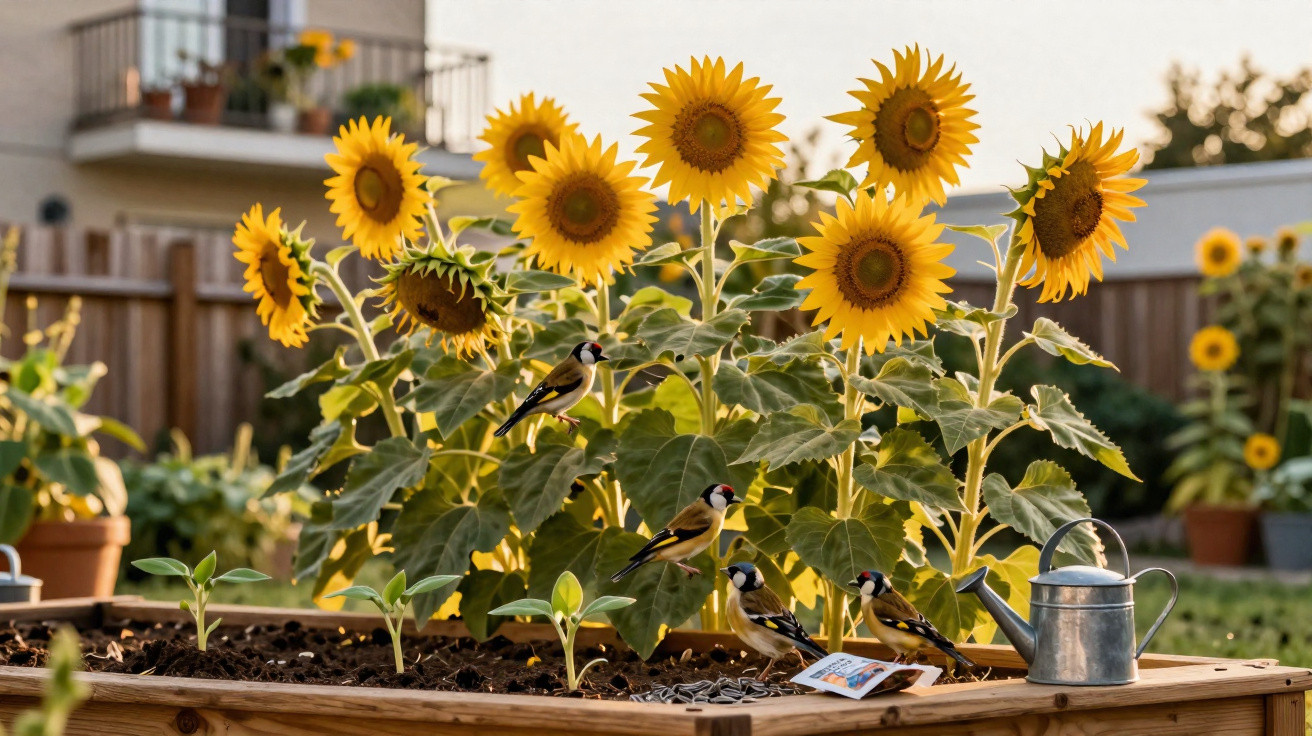
Many garden owners will recognise the scenario: an expensive feeder, a premium seed mix, topped up like clockwork - yet the birds still don’t show up. The disappointment is real and the balcony feels lifeless. Often, the answer is already in the flowerbed: one tough, reliable plant can combine food, perching space and shelter - and in everyday use it can outperform the classic bird feeder by a long way.
Why a garden plant is often more sensible than a bird table
A typical bird feeder draws lots of animals into a tiny space. It looks charming, but it also creates issues. Illness spreads more easily because every bird touches the same surfaces. If you feed this way, you need to clean very frequently - otherwise the atmosphere in the bird world quickly turns.
There’s also the stress factor: open feeding spots offer little cover. Many birds avoid them, especially if there are cats or crows nearby. What they really look for are structures where they can hide, rest and take off quickly.
This is exactly where a living plant has the advantage. It gives movement in the breeze, natural perches, shade and food all in one place. Birds know these shapes from the wild and are built for them. They land with less hesitation, stay longer, and appear far calmer than they do on a plastic feeder.
"A living food source doesn’t create an artificial hotspot - it integrates the animals into a real, small ecosystem in the garden."
The quiet favourite: sunflower as a natural feeding station
Among familiar garden plants, one stands out in particular: the sunflower. In summer it may seem like nothing more than a large yellow bloom, but by late summer and autumn it turns into a genuine buffet for birds.
Once the flower has faded, a thick, round head remains. Inside are hundreds - often even thousands - of seeds, laid out neatly in rows. The structure of the head offers light protection while still keeping the seeds easy to reach. Rain largely beads off, so the kernels usually stay dry and go mouldy far less often than seed left in open dishes.
Another benefit: that big seed head is a solid landing platform. Even slightly heavier species can grip on and feed calmly without constantly losing balance. And anything that drops doesn’t go to waste - it becomes food for ground feeders such as sparrows or blackbirds.
Energy reserve for cold nights
Sunflower seeds are compact energy boosters. They’re rich in fats and proteins - exactly what birds need in winter when nights are long and bitterly cold. Each individual seed delivers lots of energy for minimal effort.
Varieties with dark, almost black seeds are especially sought after. These types tend to have a high oil content, which helps birds warm up quickly. Tits, finches and other small songbirds eat these seeds eagerly to maintain body temperature through frosty nights.
"A single sunflower head can provide food for a whole range of bird species from late autumn well into winter."
Which bird species benefit most?
Grow several sunflowers in the garden or on a balcony and you’ll soon notice there isn’t just one ‘garden bird’. Different species use the very same plant in distinctly different ways.
- Tits such as the great tit and blue tit climb straight onto the head and snatch out individual seeds at speed.
- Goldfinches favour the deeper-set seeds and cleverly hang upside down on the flower head.
- Greenfinches and chaffinches gather fallen seeds from the ground.
- Sparrows often wait in the background and move in when things are calmer.
- Now and then, pigeons or wood pigeons use the area beneath the stems as a feeding spot.
Around just a few plants, you get a small, multi-level community: acrobats at the top, cautious climbers in the middle, and collectors below. Watching it from the kitchen window makes it easy to see why gardeners talk about ‘living beds’.
How to sow sunflowers properly
The best timing and the right spot
Sunflowers are among the most straightforward flowering plants you can grow. They need a sunny position, reasonably good soil and a bit of water to get started. Sow once the last night frosts have passed - in most areas from April, sometimes into May.
- Sowing depth: about 2–3 centimetres
- Spacing in the row: 20–30 centimetres
- Spacing between rows: 30–50 centimetres for tall varieties
- Position: as sunny as possible; a sheltered spot is an advantage
After sowing, all you need to do is keep the soil evenly moist. After two to three weeks, the first sturdy seedlings usually appear. If the ground isn’t completely exhausted, sunflowers generally manage without extra fertiliser.
Plan smart: staggered flowering for longer food
If you want to extend how long birds can feed, don’t sow everything in one go. A second sowing two to three weeks after the first is a practical approach. That way the plants flower at different times and the seed heads ripen gradually.
One more useful trick: plant sunflowers in groups rather than as isolated stems. Several stalks close together look more appealing and feel safer to birds, because predators have a harder time getting close and there’s more cover.
The most important step: simply leave the faded heads in place
Many hobby gardeners make their mistake precisely when the plants would be most valuable: they cut off the wilted heads because they look ‘messy’. For birds, that stage is worth its weight in gold.
As soon as the yellow petals drop and the head turns brown, feeding time begins for wildlife. If you leave the plant alone, you provide a natural food source for weeks and months. The seeds finish ripening, dry directly on the plant, and remain usable even when temperatures drop below freezing.
"Wilted sunflowers aren’t a garden failure - they’re winter stores, shelter, and an insect hotel all in one."
The firm, dry stems also act as hiding places for insects such as solitary bees and other beneficial species. Leaving a few plants standing until spring supports not only birds, but also pollinators and natural pest controllers.
Why sunflowers make financial sense too
Anyone who buys bird food regularly knows the cost: good-quality mixes aren’t cheap, especially in harsh winters. A small packet of sunflower seed often costs only a few pounds - yet it can fill several square metres of bed and eventually produce heavy seed heads.
Many plants will even self-seed. If ripe seeds fall onto bare soil, new sunflowers may germinate the following spring without any effort from you. Over time, that creates a more natural-looking area of the garden that effectively helps feed birds almost automatically.
Practical tips for balconies and small city gardens
You don’t need a large garden to grow sunflowers. They also work well in a container on a balcony or terrace, as long as the pot is deep enough and you water consistently. Dwarf varieties stay shorter but still form plenty of seeds.
If you live in a built-up area, choose varieties that don’t grow too tall so they’re less likely to snap in the wind. A sturdy cane for support is usually enough to keep the stems secure. Birds will find the plants even in densely built neighbourhoods as soon as there’s a green patch offering food.
What garden owners should also keep in mind
A few small points help avoid frustration and reduce potential conflicts:
- In strong winds, tie in the stems so the heads don’t bend or snap.
- Avoid planting right next to seating areas or cars where droppings would be a nuisance.
- When watering in summer, it’s better to water less often but thoroughly than to add a little every day.
- Avoid chemical sprays nearby so neither birds nor insects are exposed.
If you pay attention in the first year to which varieties thrive in your soil, you can continue with those specific types. Over time, you’ll develop a kind of ‘house line’ of sunflowers - and the local birdlife will get used to it too.
More life in the garden: effects far beyond feeding birds
Sunflowers don’t just bring birds into view. In summer, their blooms attract bees, bumblebees and butterflies. Later, the dry stems provide hiding places. The result is a web of relationships that makes the garden more resilient - against pests, and against dull, empty corners.
It’s especially fascinating for children to watch a tiny seed turn into a tall plant that later feeds birds. Involving them in sowing, watering and observing creates a direct experience of nature - a world away from picture books and apps.
So if you’ve only relied on bird feeders up to now, try a few rows of sunflowers and see how powerful living food sources can be. It costs little, needs hardly any kit, and in the best case means you’ll wake up to birdsong at the window again.
Comments
No comments yet. Be the first to comment!
Leave a Comment