
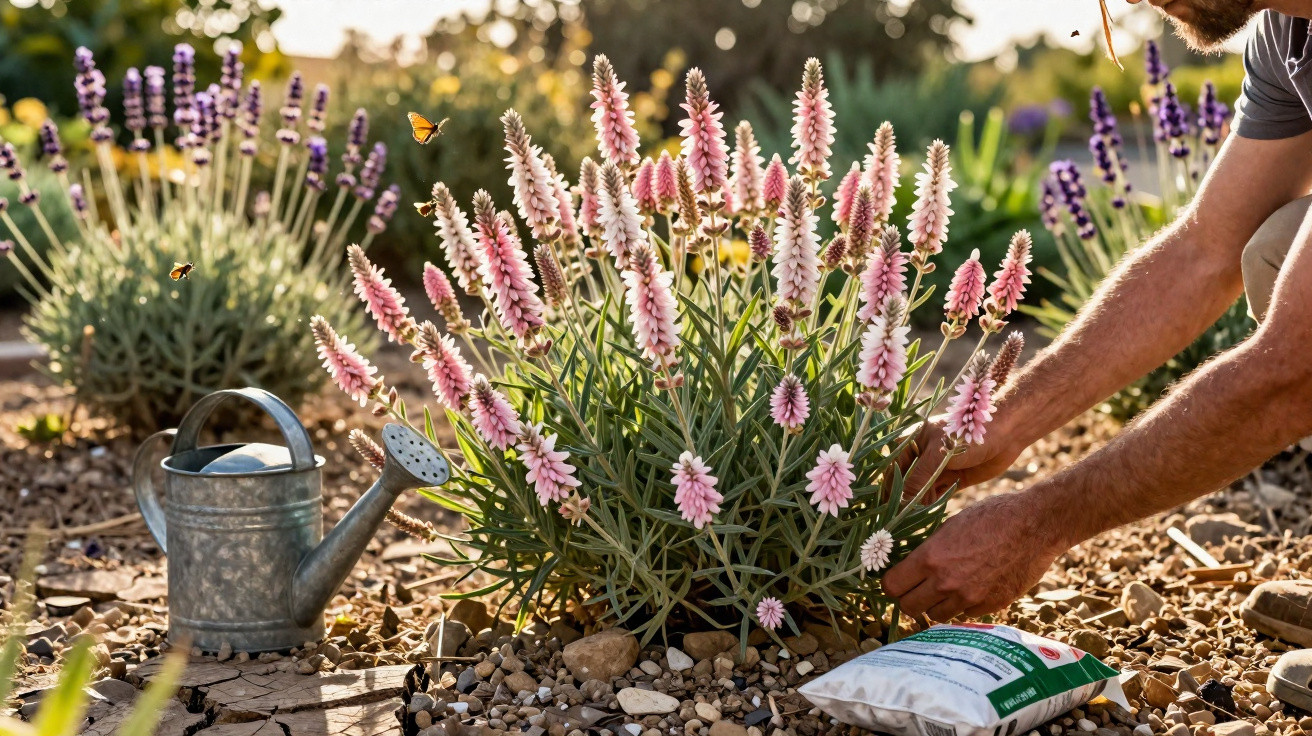
A nearly forgotten perennial comes astonishingly close to this dream.
Many hobby gardeners know the routine: you pour money, time and hope into roses, stockpile feed and sprays – and yet the border looks tired after the first heatwave. By the time you go away, it can feel downright gloomy. Yet there’s a perennial that copes remarkably well with drought, keeps flowering for months, and asks for very little attention: Gaura lindheimeri, usually referred to simply as “gaura” in everyday use.
What makes gaura so special
Gaura lindheimeri originates from the southern United States and Mexico, where it naturally grows on dry, stony ground. That background makes it well suited to increasingly warm Central European summers – and it performs just as convincingly in many UK gardens when given the right conditions.
Instead of forming a dense clump, gaura develops airy, relaxed tufts with numerous thin, flexible stems. Along them sit countless small white or pink flowers, often described as resembling fluttering butterflies.
Gaura is considered a long-lived perennial that, in good conditions, can produce flowers for up to eight months of the year – with minimal care.
Compared with more delicate roses, it doesn’t demand complicated pruning routines or a strict watering schedule. If you have a sunny, dry corner that other plants struggle with, gaura can fill gaps effortlessly and looks far more impressive than its low effort suggests.
Flowering from May into winter – with the right position
If you want the longest possible display, the key is where you plant it. Gaura thrives in full sun: the more direct sunshine it receives, the more freely it flowers. It will grow in partial shade, but it typically looks noticeably less generous.
Ideal conditions include:
- fully sunny beds or borders
- free-draining, rather lean soil
- gentle slopes or slightly raised planting areas
Gaura tolerates temperatures down to around -15 °C and handles dry spells surprisingly well. Soil fertility matters less than drainage: winter waterlogging is what it dislikes most. If your soil is heavy and clay-based, it helps to incorporate sand or fine gravel – or simply choose the driest spot in the garden.
Depending on the region, gaura can flower from May right into December – at least five to six months of colour is realistic almost everywhere.
Planting: minimal effort, maximum impact
When planting, spacing is the main point to get right. Each plant should have room to develop into an open, cloud-like tuft rather than being crammed in too tightly.
Recommendations for getting started:
- planting distance: around 40 to 50 centimetres
- water thoroughly once after planting
- on very poor soils, mix in a little compost, but use it sparingly
One of the most common mistakes is overfeeding. If gaura is heavily fertilised, it may shoot up quickly, but the growth becomes soft, it’s more likely to flop, and flowering is often less abundant. Leaner soil encourages sturdier stems and more blooms.
Watering and feeding: almost unnecessary
Once established, rainfall does most of the work in many areas. Only in prolonged, extreme drought does the plant benefit from a deep drink. Routine watering isn’t required.
Fertiliser is best avoided altogether. Gaura is adapted to nutrient-poor conditions and tends to show its strengths precisely when many other perennials have already started to struggle.
Cutting back and care through the year
Gaura becomes truly easy-going when you let go of the idea that every perennial must be kept perfectly shaped. It can cope with a hard cut, but it isn’t essential.
| Timing | Task | Benefit |
|---|---|---|
| Spring / late winter | cut stems back to just above ground level (optional) | encourages fresh growth, creates more compact tufts |
| Summer | lightly shorten spent stems from time to time | promotes new flowers, keeps the plant tidier |
| Autumn | leave some stems standing | protects the base in winter, adds structure to the border |
If you decide not to cut it back at all, the main trade-off is less compact growth. The plant may sprawl more, but it generally remains healthy.
Where gaura looks best in the garden
The real appeal of this perennial is its airy, almost floating effect. It suits naturalistic, light planting schemes especially well, but it can also add an interesting counterpoint in more formal beds.
- In herbaceous borders: as a loose veil in front of stronger perennials such as coneflower or delphinium
- In gravel and rock gardens: tucked among grasses and other drought-tolerant plants
- Along paths and patios: as a delicate edging that moves with the breeze
- In containers: in large pots with excellent drainage on a balcony or terrace
If you like pale, cloud-like planting, place several plants in groups. That way, the flowers blend into a continuous, gently swaying haze.
Popular varieties for different gardens
Garden centres and nurseries offer selections with slightly different habits:
- Whirling Butterflies: taller, with masses of white flowers – ideal for larger beds
- Belleza White: more compact, well suited to small gardens and containers
- Siskiyou Pink: pink flowers that bring soft colour to gravel beds and borders
For a small urban garden, more compact varieties are usually the best fit. In larger country gardens, taller forms can be planted generously in groups to cover broader areas.
Ecological bonus: a magnet for insects
Gaura isn’t just attractive; it’s also valuable for wildlife. Its many blooms provide pollen and nectar for solitary bees, honeybees and butterflies over a long season. In hot, dry summers – when many other plants have already finished – it remains a reliable food source.
Whoever avoids plant protection products can create a tough, insect-friendly area in the garden with gaura – with almost no work.
Combined with drought-tolerant grasses, lavender or sage, it’s easy to create a diverse, low-maintenance planting area that stays stable without constant intervention.
Tips for tricky sites and potential risks
In very wet gardens or heavy clay soils, gaura reaches its limits. The main risk is root rot in winter. In these conditions, it’s best planted on slightly raised mounds, or grown in tall containers with a generous drainage layer at the bottom.
There’s also some risk in very harsh winters with temperatures well below -15 °C, especially in exposed locations. In such areas, a loose layer of leaves or brushwood over the plant’s base can help protect the root zone.
Practical combinations for a low-maintenance flowering summer
Gaura looks particularly striking when paired with other drought specialists. Proven companions include:
- lavender as a fragrant partner at the front
- ornamental grasses such as feather grass or fountain grass for extra lightness
- steppe sage and catmint for robust flowers in harmonious colours
- small ornamental shrubs such as bluebeard, which add colour later in the year
Building a border this way can drastically reduce the need for watering while keeping things resilient through dry summers. These plantings are ideal for people who travel often or who deliberately want to garden using less water.
For many hobby gardeners, it can be worth gradually reworking at least part of a rose bed: instead of thirsty, disease-prone varieties, you introduce robust perennials like gaura. It changes the feel of the garden – and makes day-to-day care far easier, without giving up months of flowers.
Comments
No comments yet. Be the first to comment!
Leave a Comment