
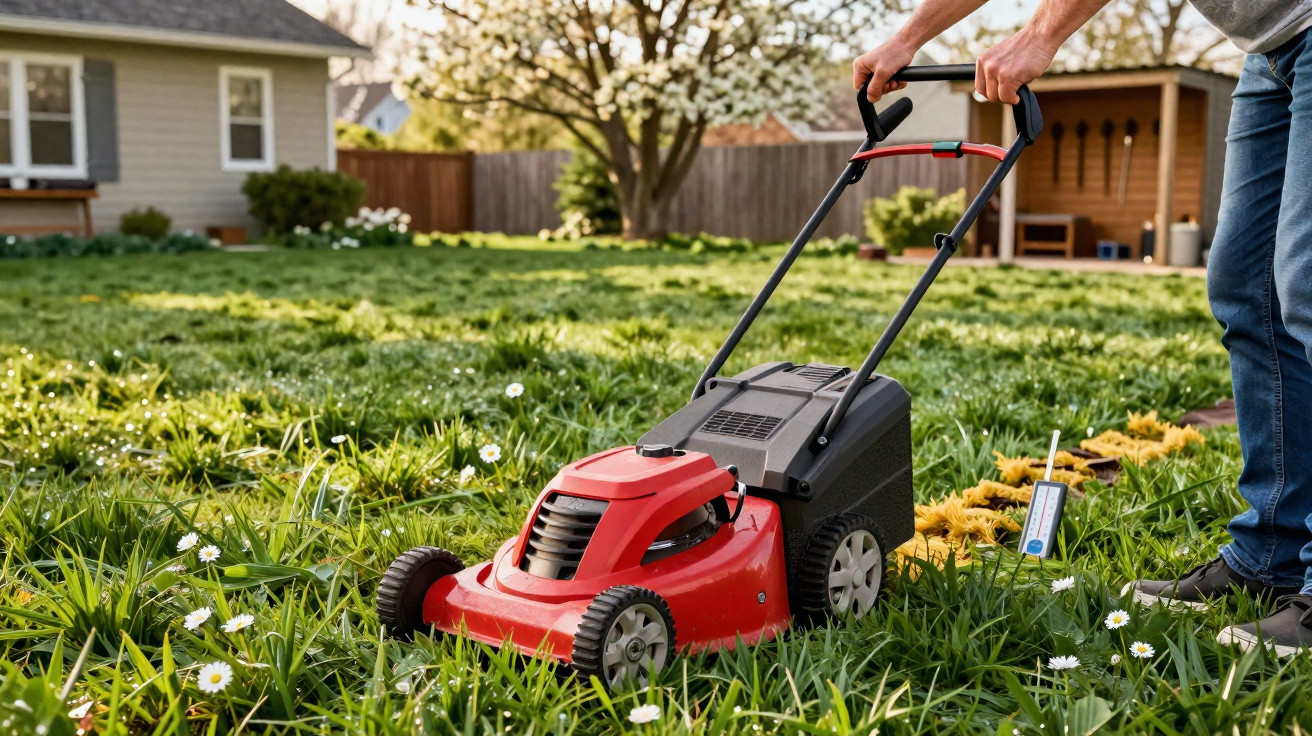
After the first bright, sunny days, it’s tempting to get straight outside: you want the garden to look tidy, the lawn nice and short, everything “like new”. Exactly here, one of the most common-and most costly-mistakes in home lawn care happens: making the first cut after winter far too early and far too severe.
Why the first lawn cut in spring is so important
During the colder months, a lawn almost completely stops growing. The blades effectively act as an energy store. The plant builds up reserves to get the roots and turf through frost and persistent wet. When spring arrives, those reserves are needed to push out fresh growth and develop a thick, strong green sward.
If you cut too soon and too low at this stage, you rob the lawn of that starting energy. Roots stay shallow, the turf becomes patchy, and the area recovers poorly. You’ll often see the consequences all summer: bare spots, more moss, increased weeds, and a noticeably less rich green.
"Cutting the lawn too early and too short after winter weakens the roots and leaves the entire lawn vulnerable for the whole season."
Rather than focusing on a particular calendar date, what matters is the weather you actually have. Only when the soil has clearly warmed and the grass is visibly growing does the first cut come into range.
The most common spring trap: mowing too early and too low
The classic spring scenario goes like this: the surface looks reasonably dry, the grass is a few centimetres tall-so out comes the mower and everything gets taken down “nice and short”. It sounds sensible, but it can do serious harm if the ground is still cold, damp, or even lightly frozen.
What happens on cold or wet soil
When mower wheels pass over soft, sponge-like ground, they compress the surface. The soil becomes compacted, water drains less effectively, and airflow in the ground decreases. New grass shoots can be flattened or torn out.
The result is a lawn that looks yellowish and uneven, and quickly develops gaps. Moss and unwanted plants move into those gaps because they cope with cold and wet conditions far better than lawn grasses.
The second trap: a “golf-course lawn” in March
Just as damaging is setting the mower too low on the first pass. A reliable rule of thumb for a healthy lawn is:
- Never remove more than one third of the current blade length in one go.
- In spring, mow higher rather than lower.
- For now, leave the finishing height at about 5 to 7 cm.
So, if your lawn is 9 cm tall, the mower should take it down to a maximum of 6 cm-not 3 cm. If you immediately trim to “summer height”, you remove nearly all the leaf area, along with the lawn’s “solar panels” for restarting growth.
"A dense, resilient lawn in summer begins in spring with a slightly longer, gentler first cut."
Slightly longer blades bring several benefits: they shade the soil, slow down drying, and encourage the roots to grow deeper into the ground. That, in turn, makes the lawn far better able to cope with hot spells later on.
Wait for the right signals: only then should you mow
Instead of relying purely on instinct, a few simple checks can guide you. Sticking to them greatly reduces the risk of weakening your lawn.
| Signal | What it means |
|---|---|
| Consistently above 10 °C during the day | The lawn is entering its growth phase. |
| Soil no longer frozen | Roots can work again, and the mower is less likely to compact the ground. |
| No night frosts expected | Freshly cut blades won’t immediately freeze again. |
| Grass looks a healthy, rich green | The plant has properly come through winter. |
| Height around 8 to 10 cm | There’s enough leaf mass to cut back gently. |
If you’re not sure, a simple soil thermometer can help. If the temperature in the upper soil layer is roughly 6 to 7 °C or higher, the lawn is usually ready for its first cut.
The right way to use your mower in spring
For the first run after winter, the priority is a gentle start. Deliberately set the cutting height higher than you would in mid-summer.
Choose the correct cutting height and technique
- Select a higher setting that leaves around 5 to 7 cm of grass.
- Mow steadily and not too fast so the blades are cut cleanly.
- Avoid tight turns on the spot, which can tear up the surface.
- Mow when the grass is dry-wet blades are more likely to be pulled and torn than cleanly cut.
It’s also worth checking the blades, especially for the first cut. Dull edges rip and shred rather than slice cleanly. The cut ends then turn brown, making the lawn look unhealthy.
"Sharp blades are almost as important as the right timing: only a clean cut supports a healthy, closed lawn surface."
If you simply parked the mower at the end of autumn, take a moment in spring to check for rust, built-up debris, or blunt cutting edges. A quick sharpen-or replacing the blade-often makes a very visible difference to how the lawn looks.
What you should do before the first cut
Before you start mowing, it pays to inspect the whole area. A few quick tasks make it easier for the lawn to begin the season well.
- Clear away leftover leaves, twigs, and dead plant material with a rake.
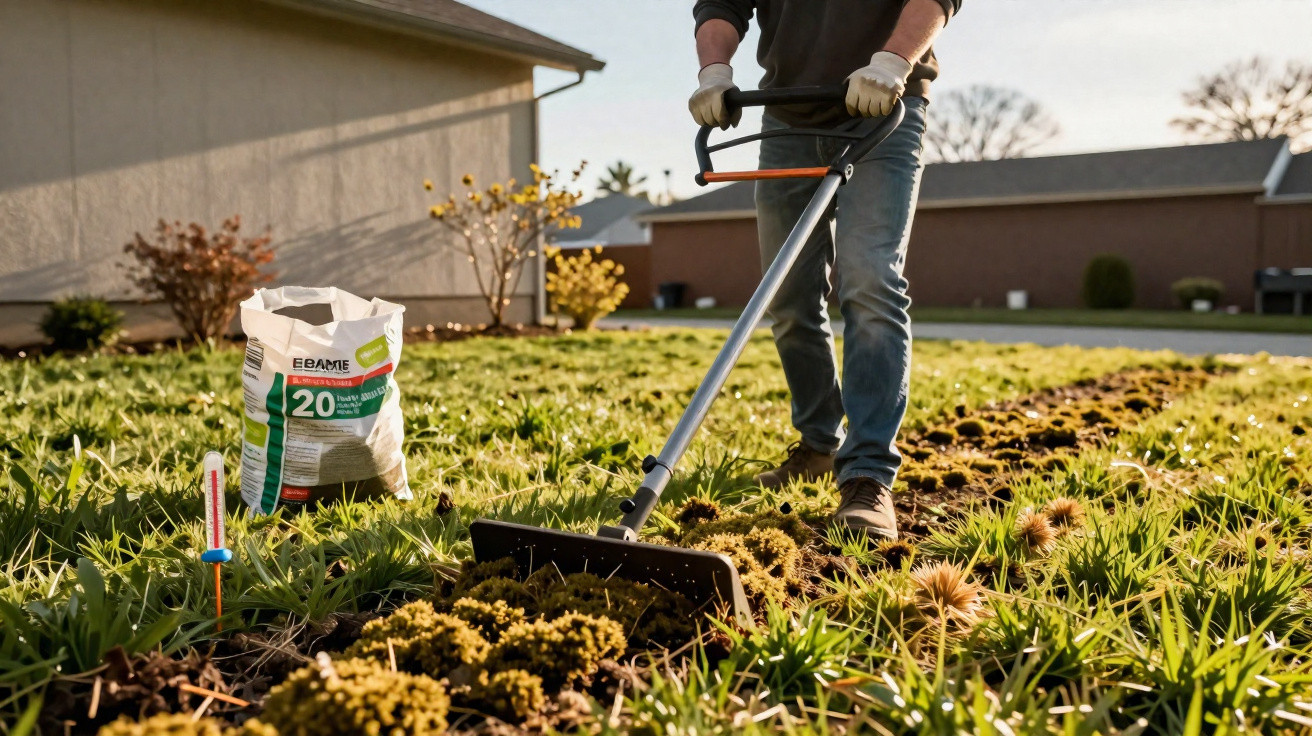
- Mark patches of moss so you can scarify or treat them later.
- Check heavily compacted areas and, if needed, lightly spike or aerate them.
- Remove animal mess and stones to protect the mower blades.
If your lawn contains a lot of moss, avoid making the first cut too short on purpose. Leaving the grass slightly higher gives lawn grasses a better chance to outcompete moss once temperatures rise further.
How to strengthen your lawn after mowing
After the first cut, the lawn mainly needs time and even moisture. If it turns cold again immediately afterwards-or becomes very dry-growth can stall once more. In mild periods with light rain, the lawn often puts on visible growth.
An early but moderate spring feed can help the plant pick up speed. If you apply fertiliser, it’s best timed when rain is expected within the next few days. That helps move nutrients into the soil and reduces the risk of scorching the blades.
Common mistakes to avoid after the first cut
- Mowing again too quickly even though the grass has hardly grown.
- Ignoring long dry spells and not watering the area.
- Scarifying immediately after a very short cut.
- Leaving heavy equipment or furniture sitting on the fresh turf for long periods.
If you give the lawn one to two weeks after the first mow, you can see clearly how it responds. If it fills in, stays a rich green, and grows back evenly, your timing was fine. If many pale or bare patches remain, you likely started too early or cut too short.
Why patience with the first cut is genuinely worthwhile
A lawn may look tough, but after winter it’s a sensitive system. One wrong cut at the start of the season can shape how the entire grass area develops. With a little patience-and by watching temperature, soil condition, and blade height-you can avoid that mistake without difficulty.
If you judge success not by how short the lawn is in March or April, but by how dense and resilient it looks in July, you’ll naturally switch to a gentler approach in spring. A moderately cut, deeply rooted lawn copes far better with heat, children playing, and garden gatherings than a “carpet” that was scalped too early and already looks tired by May.




Comments
No comments yet. Be the first to comment!
Leave a Comment