
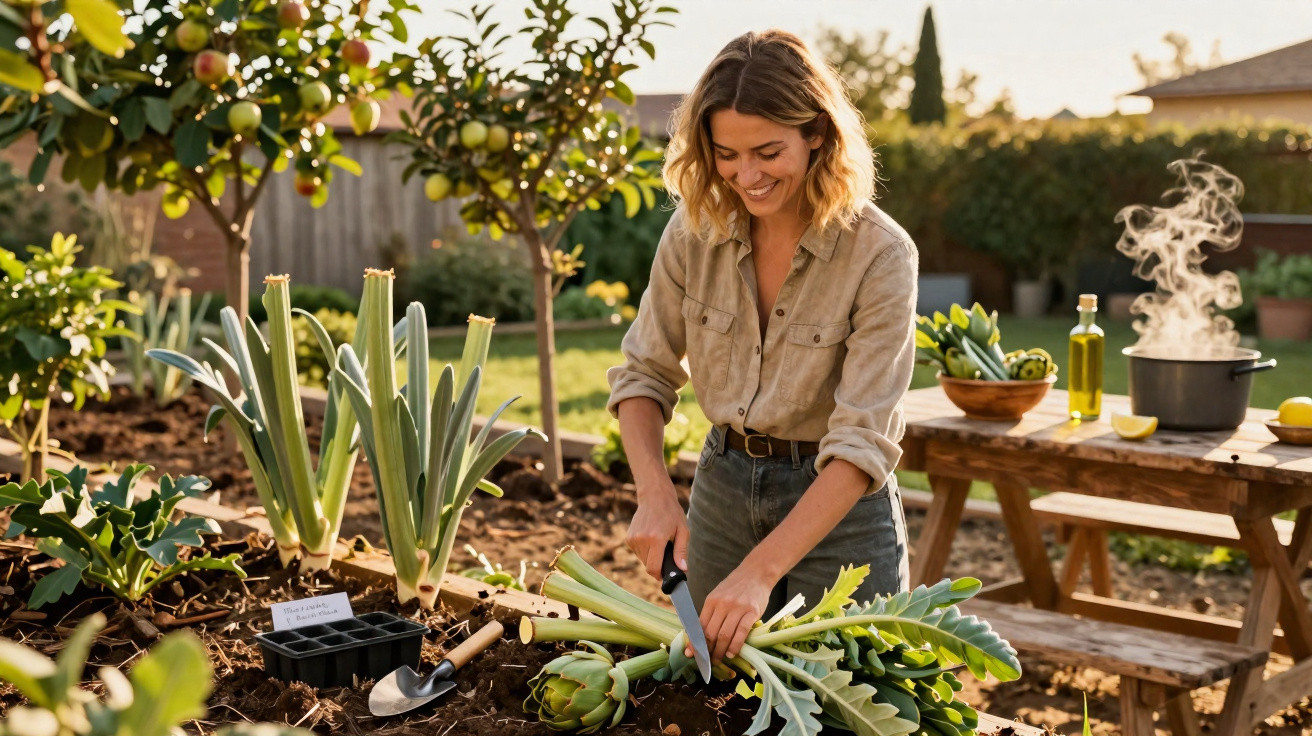
In older gardening books it still turns up with some regularity, yet in today’s vegetable beds it can look oddly out of place: the Cardy, an ancient Mediterranean leaf-stem vegetable. Visually it sits somewhere between an artichoke and a thistle; on the plate it’s a delicately bitter treat for special occasions - and it also does quiet, useful work around fruit trees. If you’ve got the room, this single plant brings three benefits at once: structure, soil care and a scarce winter vegetable.
Cardy: the overlooked leaf vegetable with wow factor
Cardy (often called cardoon) comes from the Mediterranean and belongs to the same family as the artichoke. Its flavour heads in a similar direction: refined and gently bitter, with an aroma reminiscent of artichoke hearts. It’s also instantly recognisable in the garden, with thick, bold ribs, silvery, deeply cut leaves and a slightly spiny look.
For centuries, Cardy held a firm place in gardens across the Mediterranean. Even in Roman times it was regarded as a delicacy. Later it became particularly established in certain areas - around Lyon, in southern France and in the Geneva region - where a distinctive local tradition took shape.
"A Cardy can grow up to two metres tall and take up a whole square metre of space - more like a perennial clump than a ‘vegetable bed resident’."
Out of that background came a particularly striking type: the silvery, spiny Geneva Cardy, rooted locally as a traditional Christmas vegetable. It is cultivated there almost exclusively in a small handful of areas and remains a niche crop by volume - more something for enthusiasts than for the weekly market down the road.
Why Cardy has disappeared from gardens
Despite its long history, Cardy now feels like an oddity. In most home gardens you’ll rarely see it at all. There are several reasons for that:
- It needs a lot of space and can look “bulky” at first glance.
- Many people stick to modern staples such as tomatoes, courgettes and peppers.
- It’s seldom sold commercially, whether as a young plant or as a vegetable.
- Its mildly bitter taste is unfamiliar and calls for a bit of willingness to experiment.
Yet those very traits make it appealing to gardeners looking for something out of the ordinary. If you already enjoy growing heritage varieties, Cardy is a true character vegetable - highly ornamental, genuinely practical and refreshingly different in the kitchen.
Sowing in March: how to start Cardy plants on the windowsill
Getting started is easier than the plant’s imposing size suggests. In spring, you simply begin indoors in pots on a bright windowsill.
Step-by-step guide to sowing
- Fill small pots or seed trays with fine, well-drained seed compost.
- Place two to three seeds per pot about 1 cm deep.
- Moisten the compost, but do not waterlog it.
- Put the containers somewhere bright and warm, ideally around 20 °C.
- Allow 10 to 15 days: seedlings usually appear within this window.
Important: don’t let the compost dry out during germination. If several seedlings come up in one pot, you can later keep the strongest and gently remove or transplant the others.
Planting out after the last frosts: choosing the right spot in the garden
Once night frosts are no longer a risk - in many areas from mid-May onwards - Cardy can be moved outdoors. Site choice largely determines whether the plant can reach its full potential.
Site and soil requirements
- Plenty of sun: A fully sunny position encourages strong growth.
- Deep, nutrient-rich ground: The roots run deep, so loose, humus-rich garden soil is ideal.
- Generous spacing: Leave at least 1 metre in every direction.
- Reliable moisture: Water regularly during dry spells.
If you’ve already grown many members of the daisy family (Asteraceae) in the same bed - such as artichokes or certain lettuces - it’s better to choose a different spot for Cardy to avoid soil fatigue. It pairs particularly well with everyday vegetables such as leeks, carrots or beetroot.
"A single Cardy clump can look like a small ornamental shrub in the bed - ideal for giving vegetable plots structure or for planting as a striking stand-alone feature."
Secret helper in the orchard: how Cardy supports apple and plum trees
If you have a small traditional orchard - or simply a few fruit trees in the garden - you can place Cardy deliberately along the edge of the tree strip. There, it shows strengths that many hobby gardeners don’t realise it has.
How Cardy works in the root zone
Cardy develops a powerful taproot that drives deep into the soil. This root breaks into compacted layers and acts like a natural “soil opener”. At the same time, it draws nutrients up from deeper levels that would otherwise be hard for shallow-rooted plants to reach.
Its foliage matters too: the leaves shade the ground, helping moisture stay in the soil for longer and creating a gentler microclimate around the trunk. In hot summers, that can reduce stress for apple, plum or pear trees. If you also mulch the soil, you effectively combine two protective layers against drying out.
From the bed to the festive table: preparing Cardy in the kitchen
Autumn is when the most interesting culinary stage begins. That’s when the thick leaf ribs mature - in many places considered a classic winter vegetable. It takes a bit more preparation than carrots or cabbage, but for fans of unusual vegetables it’s worth the effort.
Blanching on the living plant
To make the flavour more tender and less bitter, the plants are blanched before harvest. The typical method is:
- Tie the leaves together loosely so the ribs stand upright.
- Wrap the stem with cardboard or another lightproof material.
- Leave it like this for three to five weeks, depending on temperature.
- Then cut the stem off just above ground level.
With light excluded, the ribs turn paler and milder. They then go into the kitchen, where they can be used much like other stem vegetables.
Typical dishes with Cardy
| Dish | Description |
|---|---|
| Gratin | Cut blanched ribs into pieces and bake with cream, seasonings and cheese. |
| Cream soup | Cook and purée; a little potato helps thicken it into a fine, lightly bitter soup. |
| Stew | Use as a vegetable component in slow-cooked dishes, similar to celeriac or salsify. |
In terms of aroma, Cardy recalls artichoke hearts, but with a more pronounced bitter note. If you enjoy bitter vegetables such as chicory, radicchio or endive, you’ll likely take to Cardy quickly. For holidays in particular, a Cardy gratin works brilliantly alongside roasts or game.
Who should grow this “lost” vegetable?
Cardy won’t suit every garden because it undeniably takes up space. In small urban plots it quickly competes with tomatoes, soft fruit or herb beds. But if you have a larger garden - or a spare edge near fruit trees - you can really make a feature of it.
The plant is especially appealing to three groups:
- People with a taste for heritage varieties and regional vegetables.
- Hobby gardeners who prioritise soil care and deep-rooting plants.
- Adventurous cooks who want to surprise guests with unfamiliar vegetables.
Visually, Cardy can also earn its place in an ornamental border: paired with grasses, dahlias or ornamental alliums, it creates an almost Mediterranean feel. If you like, let a few plants flower - the blooms resemble large thistles and attract plenty of insects.
Practical tips, risks and helpful combinations
Cardy is not entirely without challenges. Its eventual size is easy to underestimate, and it does require some baseline care. In dry summers, consistent watering is part of the job, as is a starter feed of compost in spring.
The slightly spiny leaves can be awkward beside narrow paths, especially where children play. If you have pets or young children, it’s best not to plant it right next to heavily used walkways.
Cardy becomes particularly interesting when combined with other crops. In mixed planting, it can provide shade for low-growing plants such as lamb’s lettuce or spinach in late summer. Meanwhile, its deep rooting delivers a long-term benefit: the soil stays looser and better aerated for years.
With its trio of ornamental value, soil-improving impact and festive-season cooking, Cardy fits perfectly into gardens that aim to be more than simple vegetable producers. Anyone willing to give it enough room and accept its quirks is rewarded with a real plant with character - one you almost never see in vegetable beds today.

Comments
No comments yet. Be the first to comment!
Leave a Comment