
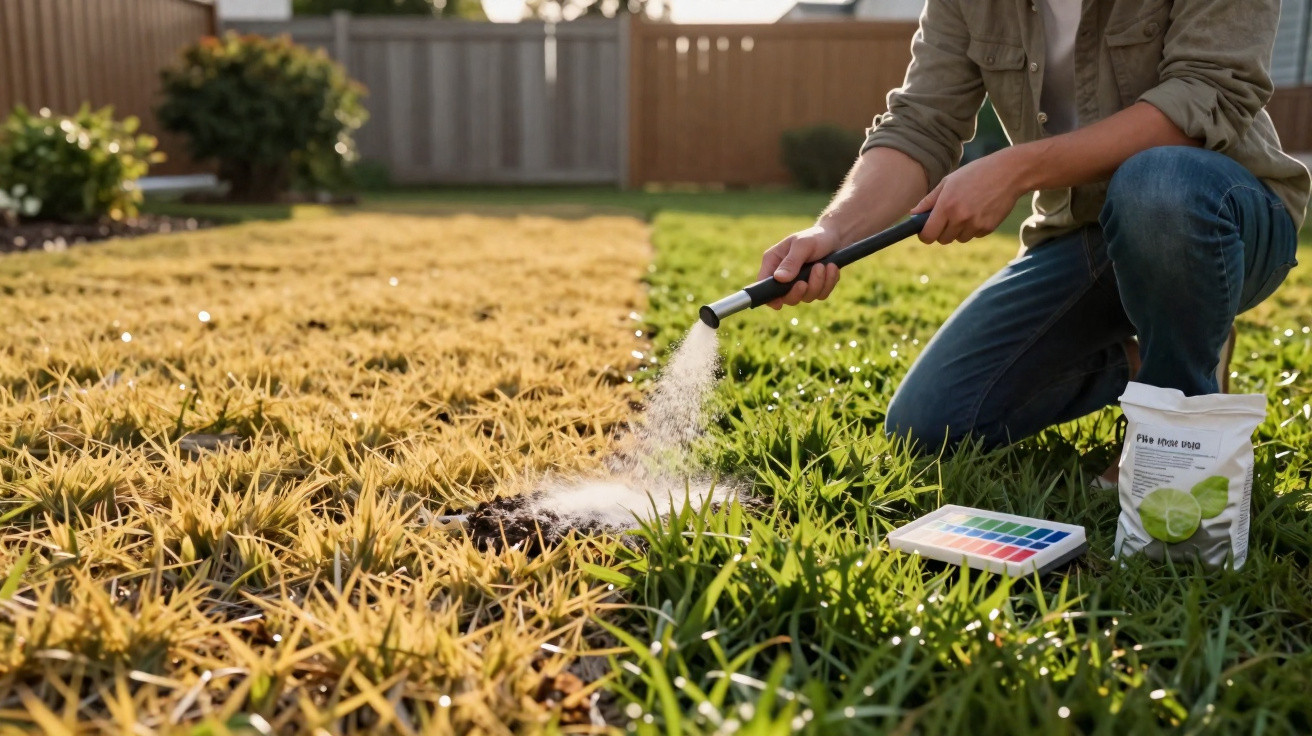
Many people instinctively reach for more fertiliser - and often end up making the problem worse.
The real answer sits much deeper: in the soil itself. Two lawn professionals from the garden retail trade swear by one simple move using a long-established soil improver. Used correctly, it can turn a tired, straw-coloured patch back into a dense, rich green lawn - without any high-tech products.
Why the lawn turns yellow even though there’s enough fertiliser in the soil
A familiar springtime scene: you walk across the grass and see the same picture in many gardens. The lawn has made it through winter and starts growing again, yet it looks washed-out and slightly yellow. Feeding it seems to do very little, and in some spots moss begins to take over. Many gardeners assume a nutrient deficiency - but very often the real cause is something else entirely: the soil pH.
In a lot of gardens, soil pH gradually drops over the years. Once the ground becomes too acidic, key nutrients get locked up. Nitrogen, phosphorus and potassium may be present, but the grasses struggle to absorb them. The result is predictable: weak roots, pale blades and bare patches.
"A lawn can be starving even though the soil is well fertilised - if the pH isn’t right."
Lawn specialists point to exactly this link. Only when the soil’s acid–base balance is back in the right range can plants fully access what’s already there. That’s where the crucial trick comes in.
The favourite trick of many pros: lawn lime as a pH regulator
Rather than constantly buying new specialist fertilisers, experienced gardeners rely on a classic: lime for the lawn. This isn’t treated as a nutrient in its own right, but as a soil conditioner. It gently raises the pH and helps make existing nutrients available to the grass again.
Garden retailers describe lime as something like a reset button for tired soil. The ground becomes less acidic, micro-organisms thrive, organic matter breaks down more effectively, and grass roots get back to the conditions they prefer.
"Lime makes the soil lawn-friendly - and at the same time moss-unfriendly."
Moss favours acidic, compacted and rather cool soils. When the pH is lifted and the ground is a bit more open, moss loses its advantage. The grasses regain the upper hand, and the lawn looks more closed-in and greener.
Calcium lime or dolomitic lime - which suits which garden?
In shops you’ll mainly come across two options:
- Calcium lime: Usually acts fairly quickly and raises pH fast. A good choice where the soil is strongly acidic and the lawn is clearly struggling.
- Dolomitic lime: Also contains magnesium. That can help if the grass shows signs of magnesium deficiency - for example, very pale green, almost yellow blades despite sufficient nitrogen fertiliser.
Which one is right depends on the condition of your soil. If you want to be completely sure, arrange a soil analysis or use a simple test kit from the garden centre.
How amateur gardeners can spot soil that’s too acidic
Not everyone wants to commission a laboratory test straight away. Even so, a few garden signs can already indicate that pH is too low:
- obvious moss areas in the lawn despite regular care
- yellow blades even though fertiliser has been applied
- slowed growth and lots of bare patches
- recurring weed problems where weeds grow better than the grasses
If you can tick off several of these, it’s very likely the soil has become too acidic. In that case, reaching for lime is worthwhile.
The right time to lime the lawn
Timing can make or break the outcome. Professionals recommend two windows during the year:
- Spring: Once the ground is no longer frozen and the grass is starting to grow again. That gives the lime enough time to adjust the pH before the main growth phase.
- Autumn: After the hottest spell, when temperatures drop and the soil becomes consistently damper again. This helps the lawn build strength for winter.
By contrast, extreme heat or bone-dry soil are poor conditions. Lime needs moisture and moderate temperatures so it can dissolve and move into the soil.
Applying lime: step by step to a lush green carpet
The workload is manageable. What matters most is even coverage. For small areas, a basic hand spreader is enough. For larger lawns, a wheeled spreader usually delivers far better results.
Many professionals follow this approach:
- Mow the lawn short so the lime can reach the soil.
- Follow the pack rate and avoid overdosing.
- Spread evenly, ideally in overlapping passes in both directions.
- Wait for light rain or water gently so the lime disperses into the ground.
- Leave a few weeks before applying heavy fertiliser, so the pH correction can take effect.
"With one afternoon’s work and a bit of patience, a yellow patch can be transformed into a strongly green lawn."
When working with lime, protective gloves are sensible. If you’re using a dusty product, avoid spreading it in strong wind so it doesn’t get into your eyes or airways.
Without these maintenance mistakes, lime only helps half as much
Lime on its own won’t deliver much if the rest of the routine keeps working against the lawn. Three points are particularly important:
- Cutting too low: If you scalp the lawn to just a few centimetres like a golf green, you put the grass under stress. Specialists usually recommend a cutting height of 4–5 centimetres, and in summer often a bit higher.
- Watering the wrong way: A quick daily sprinkle only encourages shallow roots. Better to water less often but thoroughly, so moisture penetrates 10–15 centimetres into the soil.
- No mulching, removing everything: Finely chopped clippings can be left on the lawn in moderate amounts. They break down and return nutrients.
If you follow these points, the benefit of lawn lime increases noticeably. The lawn develops deeper roots, stays denser and copes better with hot spells.
How often can you apply lime - and what’s the limit?
An annual check is a good idea. Many gardeners apply lime every two to three years; in very acidic soils, some do it a little more often. It isn’t a permanent cure-all: if you lime too frequently or at too high a dose, the balance swings the other way and the soil becomes too alkaline. Then nutrients become imbalanced again.
If you’ve already limed several times, you should definitely use pH test strips or a simple test kit. That way you can keep an eye on whether the soil remains in the optimal range for a lawn - in many cases, roughly between 6 and 7.
Why soil pH in the lawn matters so much
Soil pH affects more than nutrient availability; it also shapes the entire soil ecosystem. Bacteria and fungi that break down organic material are sensitive to big shifts. When pH sits in a balanced range, they work especially actively, release locked-up nutrients and improve soil structure. Water infiltrates more easily, waterlogging is less common, and roots get more oxygen.
A lot of garden issues that look like “not enough fertiliser” ultimately come back to this: the soil has slipped out of balance. Choosing the right type of lawn lime helps bring it back on track - and clears the way for the dense, rich green carpet so many people want.


Comments
No comments yet. Be the first to comment!
Leave a Comment