
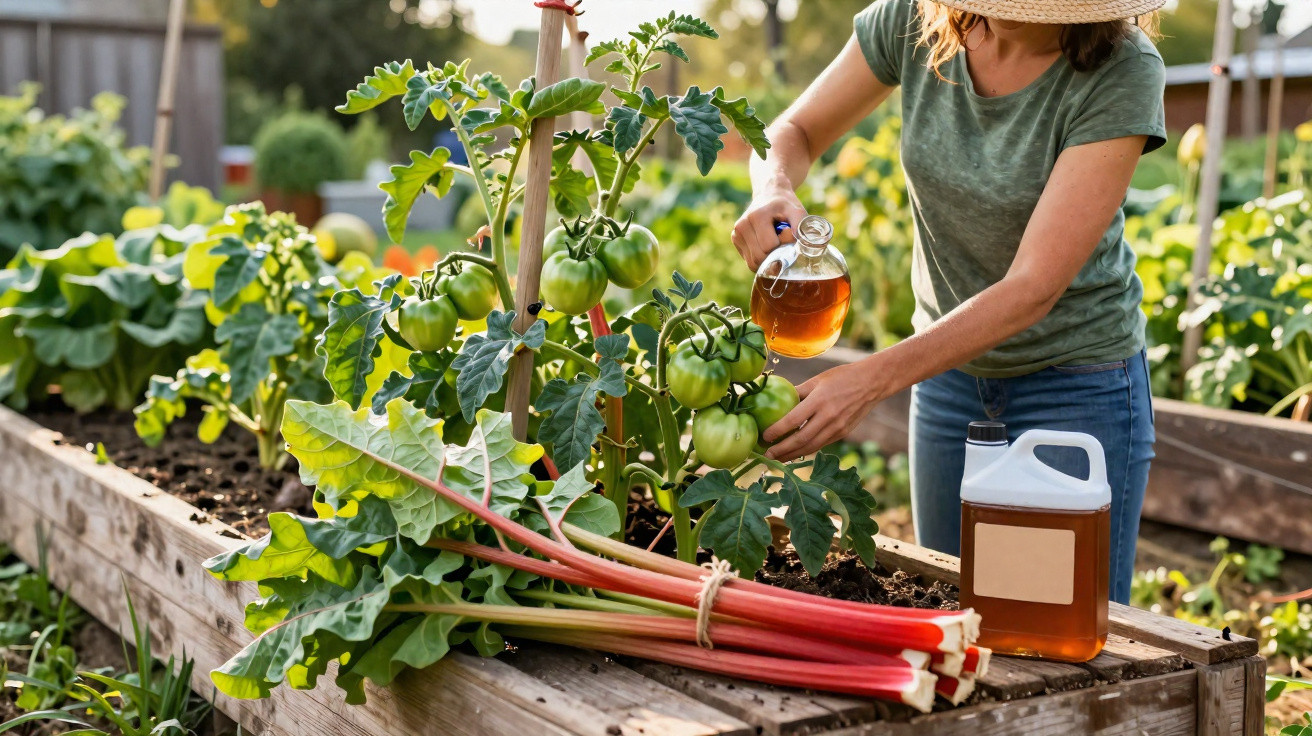
In back gardens and on balconies alike, tomato growers face the same quiet threats each summer - and the results are often hit and miss.
All over Europe, a growing number of gardeners are rediscovering a pungent liquid their grandparents once relied on. For years it sat in the shadow of the better-known nettle brew, but it is now returning for a straightforward reason: it delivers. And with tomatoes - famously delicate and constantly at risk of blight - the difference can be impressive.
A forgotten cure from the traditional vegetable patch
For generations, gardeners have leaned on nettle or comfrey brews to give crops a lift. Yet there is another fermented preparation, largely overlooked, that is aimed less at nourishment and more at protection. That distinction is exactly why it can matter so much for tomatoes.
Those who have brought this old method back into use often report fewer fungal marks, sturdier leaves and plants that continue producing later in the season. It takes aim at the usual suspects: blight, aphids, flea beetles, spider mites and other sap-sucking pests that can quickly turn an encouraging crop into a patch of yellowing foliage.
Many gardeners are turning back to simple, low-tech recipes that respect soil life yet still secure a decent harvest.
This shift is not simply sentimentality. It reflects a broader push to reduce chemical inputs, limit residues on what is eaten, and use home-made options that can be tweaked for each plot.
The surprise ingredient: rhubarb, not nettle
The liquid in question is not based on stinging nettles at all, but on something more often destined for a crumble: rhubarb - specifically the big leaves, not the stalks.
Although the vivid stems are safe to eat once cooked, rhubarb leaves contain oxalic acid along with various anthraquinone compounds. In larger amounts these are toxic to people, but they come with a useful benefit: they discourage many insects and make conditions less favourable for certain fungi.
Rhubarb leaf liquid is less a fertiliser and more a plant health treatment – a botanical shield sprayed over your tomatoes.
That difference is important. Whereas nettle brews are valued for nitrogen and trace elements, rhubarb liquid is not intended as a feed. It belongs squarely in the realm of prevention - and as a back-up when disease is threatening.
Why tomatoes respond so well
Tomatoes tend to sit at the centre of multiple challenges: they want warmth, dislike lingering damp, and may flourish in rich soil yet buckle under fungal pressure. Blight, especially, can destroy a bed within days once the weather turns cool and humid.
Gardeners who spray rhubarb liquid over tomato plants commonly describe two linked outcomes. First, the leaves remain more robust and greener, with fewer yellow or brown patches appearing during wet spells. Second, pests seem less intense: aphid groups reduce, and the fine speckling associated with mites shows up less often.
Some of the effect appears to come from how the spray alters the leaf surface. It makes the plant a less welcoming place for certain fungi and insects while still letting the leaves photosynthesise as normal. Unlike broad-spectrum chemical products, it generally does not upset ladybirds, hoverflies or pollinators working nearby flowers.
How to make rhubarb leaf liquid at home
The basic recipe
Making it is simple, though the timing and the way you handle it are key. A standard batch usually involves:
- Roughly 1 kg of fresh rhubarb leaves, chopped
- 10 litres of rainwater or dechlorinated tap water
- A large plastic or wooden container (avoid metal)
- 3 to 5 days of fermentation time
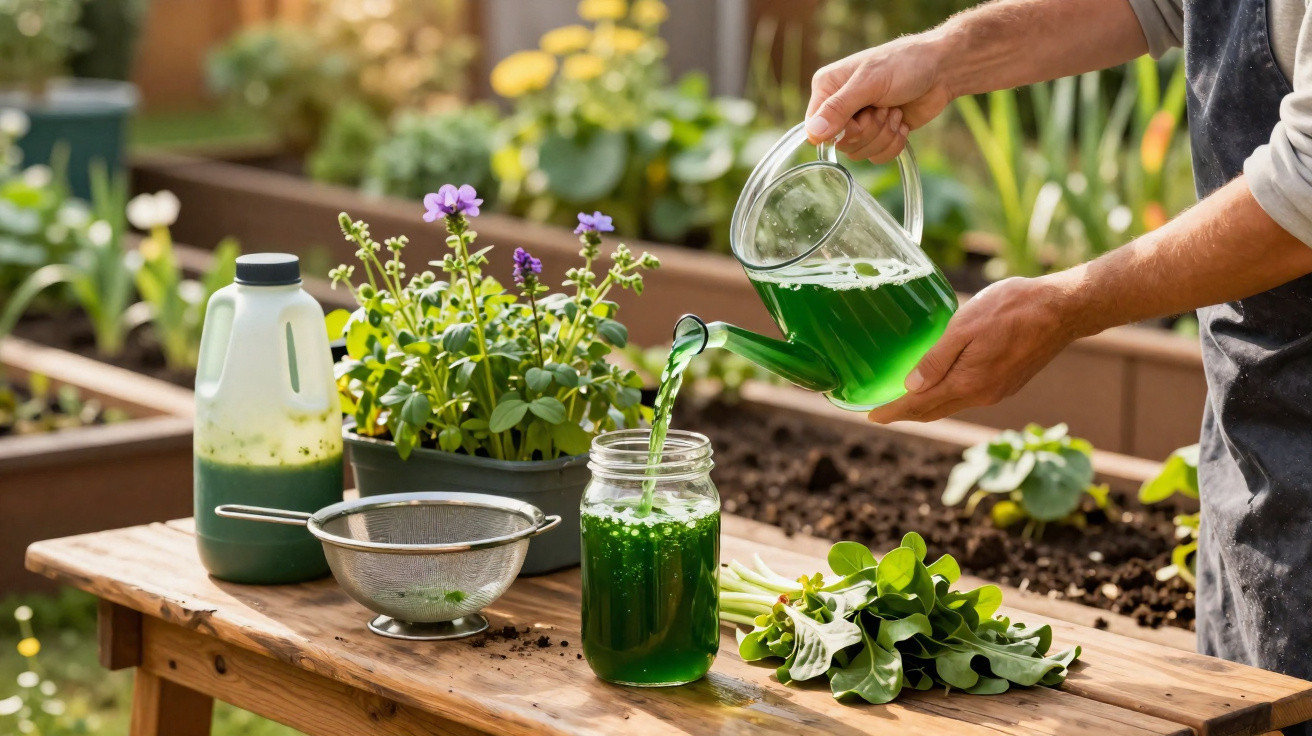
Put the chopped leaves into the water and ensure they are fully submerged. Stir daily. As fermentation begins, the mixture will darken and develop a strong odour. Aim for a short, light fermentation rather than leaving it to rot for weeks.
After 3 to 5 days, once bubbling starts to drop off and the smell is pronounced but not foul beyond measure, strain out the leaves. Keep the liquid for a few days out of direct sunlight and away from heat.
Use the brew quickly – this is a living preparation, not a long-life product.
Safe and effective application
Rhubarb leaf liquid is potent and should always be diluted before it is used. A widely used mix is one part liquid to nine parts water, making a 10% solution. Spray so that both the top and underside of tomato leaves are covered.
When you apply it matters. Spray either early in the morning or later in the evening, never in full sun, to reduce the risk of leaf scorch and to allow the coating to dry gradually. In damp weather, when blight pressure rises, spraying once per week is usually sufficient.
| Step | Action | Typical timing |
|---|---|---|
| First spray | On young tomato plants after planting out | Late spring |
| Preventative course | Regular sprays during humid spells | Every 7 days |
| Curative support | Extra spray at first signs of spots | Within 24–48 hours |
Working as part of a wider strategy
No home-made spray - however effective - will rescue tomatoes set into waterlogged clay, packed tightly with poor airflow. Rhubarb leaf treatments work best alongside solid basics: crop rotation, staking, removing lower leaves, watering at the base, and mulching to reduce soil splash.
Seasoned growers often layer several gentle techniques over the year. They might use nettle or comfrey early on to support young plants, then move to horsetail and rhubarb preparations as disease risk increases, changing the rhythm of applications according to the weather.
Used with decent spacing, dry foliage and clean tools, rhubarb liquid becomes one tool among many in a low-input system.
This combined approach can help cut reliance on copper-based products, which remain common for blight control but may build up in soil over time.
Why this old remedy is coming back now
The return of rhubarb liquid highlights a shift in gardening culture. Worries about chemical residues, pollinator decline and soil health are steering many home growers towards independent, low-cost methods.
Online forums and social media have sped this up. What used to be a recipe quietly shared between neighbours can now be circulated across regions, trialled in different climates and refined quickly. When a technique repeatedly keeps tomatoes going through wet summers, it spreads rapidly.
Cost is another draw. Rhubarb is a common perennial in many gardens, and the leaves - often dumped on the compost heap - become a free raw material. For beginners growing on a balcony, the entry point is minimal: a bucket, a handful of leaves and a little patience.
Handling risks and limits
Rhubarb leaves are not risk-free. Oxalic acid may irritate skin and is toxic if eaten in quantity. Wearing gloves while chopping or stirring is advisable. Keep the brew away from children and pets, and do not store it in containers meant for food.
The preparation also has clear limits. In a summer dominated by persistent rain and cool nights, blight may still sweep through even well-managed plants. The spray tends to slow the problem and soften its impact rather than provide certainty. Because of that, some gardeners pair resistant tomato varieties and rain shelters with rhubarb sprays to strengthen their overall set-up.
Practical scenarios in a typical garden
Imagine a small urban plot with ten tomato plants. In early June, the forecast predicts a week of showers and lower temperatures. Rather than waiting for the first black spots, the gardener ferments rhubarb leaves over a long weekend and sprays on day seven. A further spray follows a week afterwards. By July, nearby plots show obvious disease, while these plants still hold cleaner foliage and developing fruit.
A second scenario: in a community garden, aphids cluster on the growing tips of tomatoes. Instead of using a broad insecticide, members try rhubarb liquid on half a row and a simple jet of water on the rest. After two applications, the treated section shows a noticeable drop in aphid numbers, while ladybirds remain active across the bed.
Key terms and useful combinations
Two terms often come up when people discuss these preparations:
- Fermentation: the brief, controlled breakdown of plant material in water, releasing active compounds and gases.
- Synergy: the added effect when different treatments, such as nettle and rhubarb brews, are used in a thoughtful sequence.
Some gardeners alternate a feeding spray (such as nettle) with a protective spray (such as rhubarb). Others keep rhubarb for higher-risk periods, relying on compost, mulch and generous spacing for the rest of the season. The adaptability of these home brews allows each grower to adjust for local climate, soil conditions and available time.
What emerges clearly from accounts across regions is that rhubarb - long treated as a dessert plant - has found a second role in many gardens: a discreet bodyguard for summer tomatoes, operating from the cover of its oversized leaves.
Comments
No comments yet. Be the first to comment!
Leave a Comment