
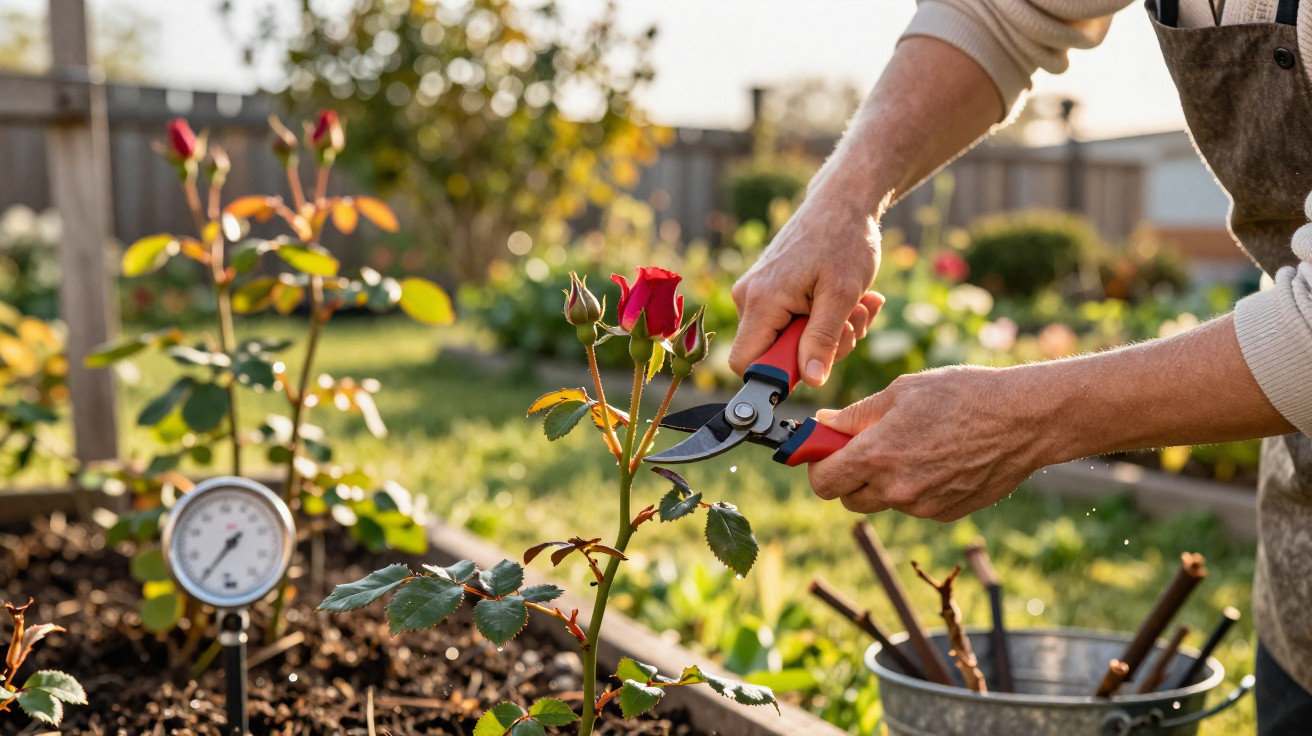
Plenty of amateur gardeners find themselves staring at their rose bushes each year, unsure what to do: prune now, or hold off a little longer? Worries about frost, a busy diary, and conflicting advice online only add to the confusion. In reality, there’s a fairly narrow window when roses cope best with cutting, cold snaps and the coming surge of new growth.
The perfect timing: when rose pruning really needs doing
Roses are highly sensitive to when you prune. Cut back too early and you increase the risk of frost damage. Leave it too late and you reduce the plant’s flowering potential. For most areas, the rule of thumb is:
"The ideal period for rose pruning is roughly between mid-February and mid-March – ideally just before the new growth starts."
At this point, winter is gradually easing, daylight is increasing, and the plant is internally gearing up for the season ahead. Sap is beginning to rise, but the shrub is not yet burdened with lots of fresh leaves that demand energy.
Why pruning too early is dangerous
In January, or very early February, many gardeners are itching to get started - understandable, but risky. A hard, early prune encourages soft, watery new shoots. If a spell of severe frost follows, those tender shoots - and the fresh cut surfaces - can die back.
Because the wounds are open, cold can penetrate deep into the wood. A single run of icy nights can be enough to damage large parts of the shrub. That drains energy, reduces flowering and, in extreme cases, can even kill the plant.
Use a thermometer, not the calendar: the signal is “the end of hard frosts”
The date matters less than the weather. A practical guideline:
- Don’t prune while hard night frosts are still common.
- Wait until temperatures are mostly staying above 0°C.
- It’s better to be a few days late than to pick up the secateurs two weeks too early.
If you’re uncertain, track the forecast. When mild nights become more frequent and the days are comfortable for garden work, the safer window is opening. In many places that’s from late February to mid-March; in colder areas it can be later.
Nature as the clock: what the buds reveal
Even more reliable than any forecast is the rose bush itself. Its buds are a clear indicator of when the moment is right.
"As soon as the buds swell and take on a slight reddish or pinkish bulge, the start of the new growth phase has arrived – that’s when you prune."
Gardeners refer to this as the “start of growth”. Sap is moving, the shoots are full of energy, but there are not yet fully formed leaves. Pruning at this stage channels the plant’s strength into the buds you keep.
If you wait until the roses already have a full set of leaves, you end up removing growth the plant has spent valuable reserves producing. It then has to push out again, which makes it more vulnerable and typically reduces the abundance of flowers.
Regional differences: not every garden follows the same calendar
Whether you’re in a sheltered valley, a city garden or an exposed hillside, local climate can vary hugely. That’s why rose growers need to read their own conditions rather than rely solely on general advice.
| Region type | Recommended pruning period | Note |
|---|---|---|
| Mild areas, wine-growing regions | from mid- to late February | Frost is rare; plants start growing early |
| Lowland, towns and cities, temperate zones | late February to mid-March | typical standard timing |
| Higher ground, harsher climates, windy/exposed gardens | mid-March to late March | wait longer until nights are consistently mild |
In particularly cold spots, patience pays. Forcing roses into growth too early there increases the chance that a late cold snap will wipe out fresh shoots.
What happens inside the rose – and why timing matters so much
Pruning a rose isn’t a cosmetic tidy-up; it’s a significant intervention in the plant’s internal balance. Every cut affects how water, nutrients and sugars are distributed.
Rising sap and concentrated energy
Over winter, the plant is in retreat. Its sap is concentrated in the roots and lower wood. As the days lengthen, it begins moving upwards again in preparation for growth.
"If you prune shortly before or right at the beginning of this sap movement, the energy is shared across fewer buds – the remaining shoots grow stronger and flower more generously."
That is exactly the aim of spring pruning: remove weak or poorly positioned buds, and keep the strong, well-placed ones. The result is a fuller crown that’s better lit, and noticeably more flowers per shoot.
Pruning too late costs flowering power
Once the rose is fully leafed and well into its growth, it has already used a lot of stored resources. Cutting shoots then removes photosynthetic area and throws away energy already invested. Instead of putting strength straight into buds and blooms, the plant must push out growth again.
In such years, roses often look more tired and flower less freely. On top of that, larger wounds made in very soft, young tissue close more slowly and provide entry points for fungal diseases.
The right technique: how to prune properly on the day
Even perfect timing won’t help much if the cut itself is rough or incorrectly made. Roses respond badly to blunt tools and poor cutting angles.
"A cleanly sharpened, disinfected pair of secateurs is essential – every crushed cut opens the door to pathogens."
The well-known “three-bud rule” for bush roses
For classic bedding roses or bush roses, a simple method works well: on each shoot, count three well-developed buds up from the base and cut just above that point.
- Keep only strong, healthy shoots.
- Shorten each shoot to around three to five buds (depending on variety and vigour).
- Always choose a bud that faces outwards, never one pointing into the centre of the shrub.
This encourages a fan-shaped, outward growth habit. The centre stays more open, light and air penetrate better, and disease pressure is reduced.
The correct cutting angle helps prevent rot
Make the cut slightly sloping, about 5 mm above the chosen bud. The slope should run away from the bud, so rainwater sheds off the wound rather than collecting directly above the new shoot.
Fine, twiggy shoots that are barely as thick as a pencil can usually be removed entirely. They seldom produce worthwhile blooms and tend to weaken the shrub overall.
Spring clean for the rose bush: healthy wood, strong blooms
Rose pruning should always include a thorough clear-out. The aim is to create light, air and space for productive shoots.
Remove old, diseased and dead wood decisively
You can spot dead wood by its dark grey-brown colour and crumbly texture. A quick test: lightly score the bark - if no green tissue appears, that shoot is dead.
Very thin, weak shoots, as well as branches growing inwards, should also go. When only vigorous, green, structurally sound shoots remain, the rose focuses its energy on fewer but higher-quality flowering stems.
Open up the centre of the shrub
A well-known horticultural image says a small bird should be able to fly through the bush without touching it - meaning the centre should be open and well ventilated.
"Where air and light can reach the interior, leaves dry faster – and fungal diseases lose their comfort zone."
So, remove inward-facing growth, crossing branches and any shoots that rub against each other. Friction creates wounds where germs can enter.
Care after pruning: what roses need now
After pruning, a rose bush is under stress: many wounds, less wood and a higher demand for energy. Good aftercare makes a real difference.
- Collect and dispose of old leaves and all prunings carefully.
- Gently loosen the soil around the rose without damaging roots.
- Work in a thin layer of compost or an organic rose feed.
- If dry weather persists, water moderately - but avoid waterlogging.
A balanced spring feed supports strong new shoots and encourages later bud and flower formation. Avoid foliar feeds or harsh mineral fertilisers immediately after pruning to reduce strain on the already stressed plant.
Extra practical tips and common mistakes
Many problems in rose gardens repeat year after year. A few straightforward rules reliably prevent damage:
- Never prune when the plant is wet - damp cut surfaces are more likely to become infected.
- Disinfect tools before moving to the next shrub to avoid spreading fungi.
- Don’t prune “just a little” out of guilt - it’s better to create a clear structure than merely snip the tips.
- In harsher, colder locations, cover sensitive hybrid tea roses with horticultural fleece for a short time after pruning if frost is still forecast.
If you’re new to it, start with a less prominent rose and build confidence. Save the favourite by the front path until last, when your hand is steadier.
How to recognise a good variety choice and the right site
Even perfect pruning can’t fully compensate for weaknesses in either the variety or the location. Strongly scented, historic roses often behave differently from modern bedding roses or robust shrub roses. In windy spots or waterlogged soils, some varieties struggle continuously.
If you repeatedly deal with fungal problems or weak growth, it’s worth looking beyond pruning dates and reconsidering whether the site and variety are a good match. Tough, disease-resistant breeding lines reduce workload - and reward correct spring pruning with a long, dependable flowering season.



Comments
No comments yet. Be the first to comment!
Leave a Comment