
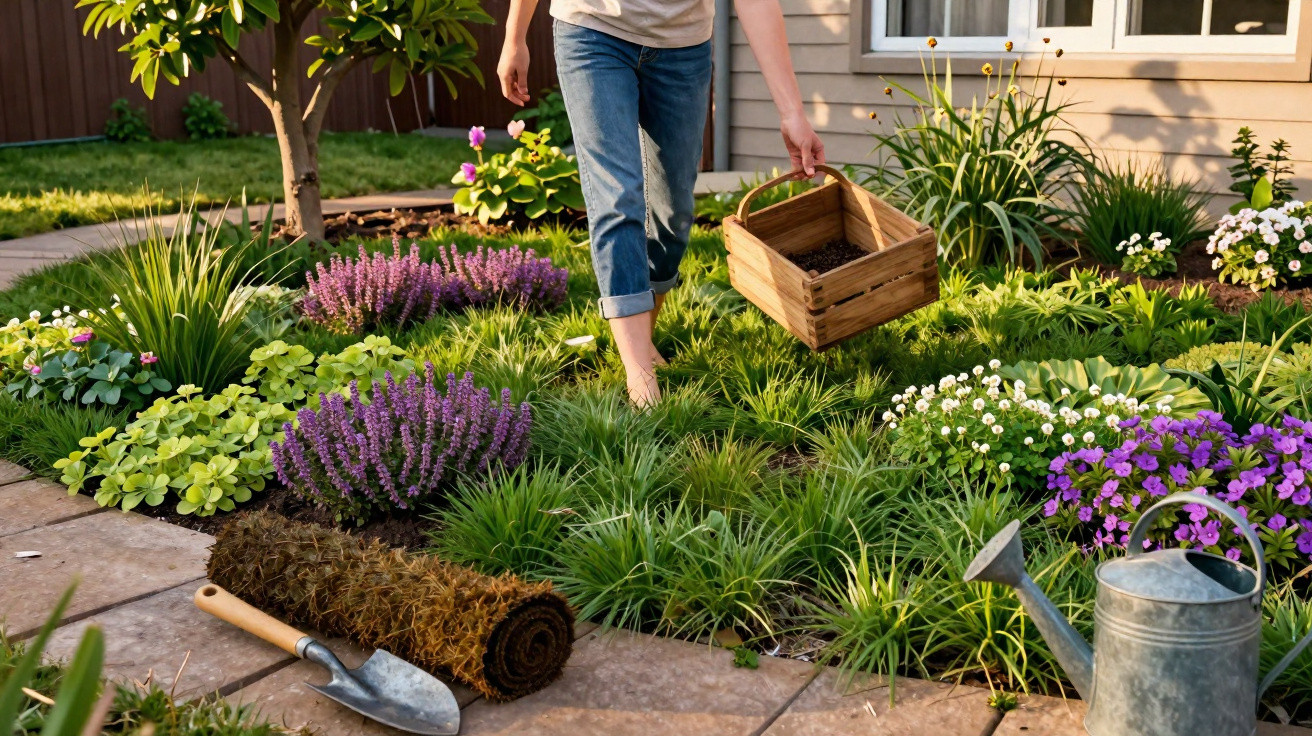
Many gardens struggle with parched lawns and rising water bills – but there is a greener alternative that needs less maintenance.
The same scene returns every summer: brown patches across the lawn, constant watering, mowing and feeding – yet the area still ends up looking tired. Increasing numbers of garden owners are looking for a living ground cover that can cope with foot traffic, attracts insects and uses far less water, time and money. This is precisely where tread-resistant ground covers come in.
Why a conventional lawn can become expensive
The dream of an evergreen carpet comes at a cost. A standard lawn demands substantial effort, especially during hot, dry summers. Several factors push up the bill:
- frequent mowing, usually every week during the growing season
- regular feeding to maintain rich green growth
- intensive watering during prolonged dry spells
- petrol or electricity for the lawnmower
- overseeding where patches scorch or become mossy
Many lawns are also planted in places that were never suitable: too sunny, too dry, too shady or with heavy soil. The result is high maintenance for only modest results. Ground covers can perform considerably better in these conditions – particularly when they are selected to suit both the site and how the area will be used.
Choosing the right ground cover saves water, work and frustration over time – while creating a tougher, more vibrant surface.
Three essential questions before choosing ground covers
Before putting new plants into the soil, it is worth carrying out a quick site assessment. Three factors matter most:
- Sun exposure: Full sun, partial shade or mainly shade?
- Soil: Is it heavy and damp, or light and dry?
- Wear: Will it only be walked on occasionally, or used daily by children and dogs?
A carpet of thyme suits sunny, relatively dry spots that are walked over only now and then. An area where children play football every day needs tougher options, or even a combination of plants and woodchip.
Top 5 ground covers that withstand foot traffic
1. Zoysia tenuifolia – a dense lawn substitute for heavy use
Known as Mascarene grass, Zoysia tenuifolia is considered an insider choice for heavily used areas. It forms an exceptionally dense cushion that copes well with intensive use.
- high resistance to foot traffic
- substantially fewer cuts than a conventional lawn (once or twice a year)
- drought tolerant once well rooted
- ideal for play areas and frequently used paths
Visually, Zoysia resembles a very fine, soft carpet. Anyone who likes the uniform appearance of a lawn can achieve a similar effect here with less work and lower water use.
2. Lippia (Phyla nodiflora) – a low carpet with the bonus of flowers
Lippia, also known as a woody verbena species, grows extremely low and quickly covers the ground. Its small flowers attract bees and other insects.
- a tolerant ground cover for repeated foot traffic
- can withstand two to three months of drought once established
- forms a closed, low-maintenance carpet
- suitable for sunny to partially shaded positions
For anyone wanting to make their garden more insect friendly without giving up a walkable surface, Lippia is an excellent option.
3. Micro-clover – robust and almost self-fertilising
Micro-clover, meaning very small-leaved clover, blends attractively into a green surface. It handles foot traffic well and offers one significant advantage:
Micro-clover fixes nitrogen from the air and supplies it to the soil – greatly reducing the need for fertiliser.
This quality makes it particularly suitable for family gardens. Children can play on it, the surface remains stable and maintenance is largely limited to occasional trimming.
4. Thyme carpets – fragrant, drought tolerant and bee friendly
For sunny, relatively infertile areas, ground-cover thyme varieties are a good choice, including wild thyme (Thymus serpyllum) and woolly thyme. They produce dense, low cushions and release an aromatic scent with every step.
- highly suitable for dry, stony sites
- tolerates occasional foot traffic, such as around seating areas or along paths
- attracts bees and wild pollinators
- needs little or no additional watering once established
Thyme varieties cannot cope with heavily used play areas, but they are ideal in courtyards, between stepping stones or around patios.
5. Turquette and Sedum – for extremely dry, infertile areas
On truly barren, sandy or stony sites, specialists such as Turquette (Herniaria glabra) and foot-tolerant Sedum varieties excel. They are especially suited to slopes, stepping stones and paving joints.
- very low nutrient requirements
- almost no extra water needed once established
- covers the soil, helping to prevent erosion and weed growth
- suitable for light to moderate foot traffic only
Anyone who has previously failed to grow a lawn in such “problem areas” will often achieve far better results with these specialist ground covers.
How to replace a lawn with tread-resistant ground cover
Remove the old lawn thoroughly
For the new plants to establish themselves, the existing lawn must be removed completely. This can be done, for example, by lifting the turf or using a powered cultivator. It is important to remove as many root remnants and persistent weeds as possible, otherwise they will slow the new planting down.
Prepare the soil properly
Next, loosen the soil to a depth of 15 to 20 centimetres. Adding mature compost improves almost any type of ground:
- heavy, clay-rich soils become looser and better aerated
- light, sandy soils retain water for longer
- microorganisms become active, supporting establishment
Spring and autumn are the best times for planting. Natural rainfall then helps roots establish, while temperatures are milder.
Water correctly during establishment
The first few months determine whether the new carpet becomes reliably robust over the long term. Rather than applying small amounts of water constantly, it is better to water deeply but less often. This encourages roots to grow downwards, enabling plants to cope far better with dry spells later on.
A simple approach also helps when weeding: work after rain or watering. Unwanted plants can then be pulled out more easily with their roots, without severely damaging the ground cover.
Everyday maintenance: far easier than a conventional lawn
Once the ground cover is established, maintenance falls considerably. In most cases, all that is needed is:
- occasional shaping cuts, or infrequent cutting for Zoysia
- checking for individual dominant weeds
- possibly a light trim of micro-clover before flowering if few flowers are wanted
In intensively used play areas, a combination is worthwhile: micro-clover or robust grasses in the centre, thyme or Sedum around the edges, plus woodchip on heavily used walking routes. This keeps the surface stable in the long term without pushing individual species beyond their limits.
Ecological and practical benefits that are often overlooked
As well as reducing work and costs, tread-resistant ground covers offer a range of further benefits. Many species flower, providing nectar and pollen for insects and contributing to a livelier garden. Rather than one uniform lawn that can often seem quiet, they create small-scale, varied carpets.
Another benefit is that ground covers protect soil more effectively from erosion and heavy rain. Rainwater can soak in more readily, reducing surface run-off. This eases pressure on both the drainage system and drainage on your own property.
Practical examples for different garden types
For small urban courtyards, a blend of Lippia and thyme around seating areas works well, with a few stepping stones used as paths. In family gardens with lots of activity, a mixture of micro-clover and robust grasses is suitable, while edge areas can be planted with Sedum and Turquette.
Allotment gardens can benefit too: anyone who does not want to mow every weekend can establish Zoysia in heavily used zones, plant the remaining area with tread-resistant flowering cushions and significantly reduce how often the mower is needed at all.
Anyone unfamiliar with botanical names can ask at a garden centre specifically for “tread-resistant ground covers” for sun, partial shade or shade, and check their suitability for gardens used by children and dogs. A quick look at the eventual plant height also helps: very low, cushion-forming varieties are more suitable for joints and stepping stones, while slightly taller, springy carpets are better for play areas.


Comments
No comments yet. Be the first to comment!
Leave a Comment