
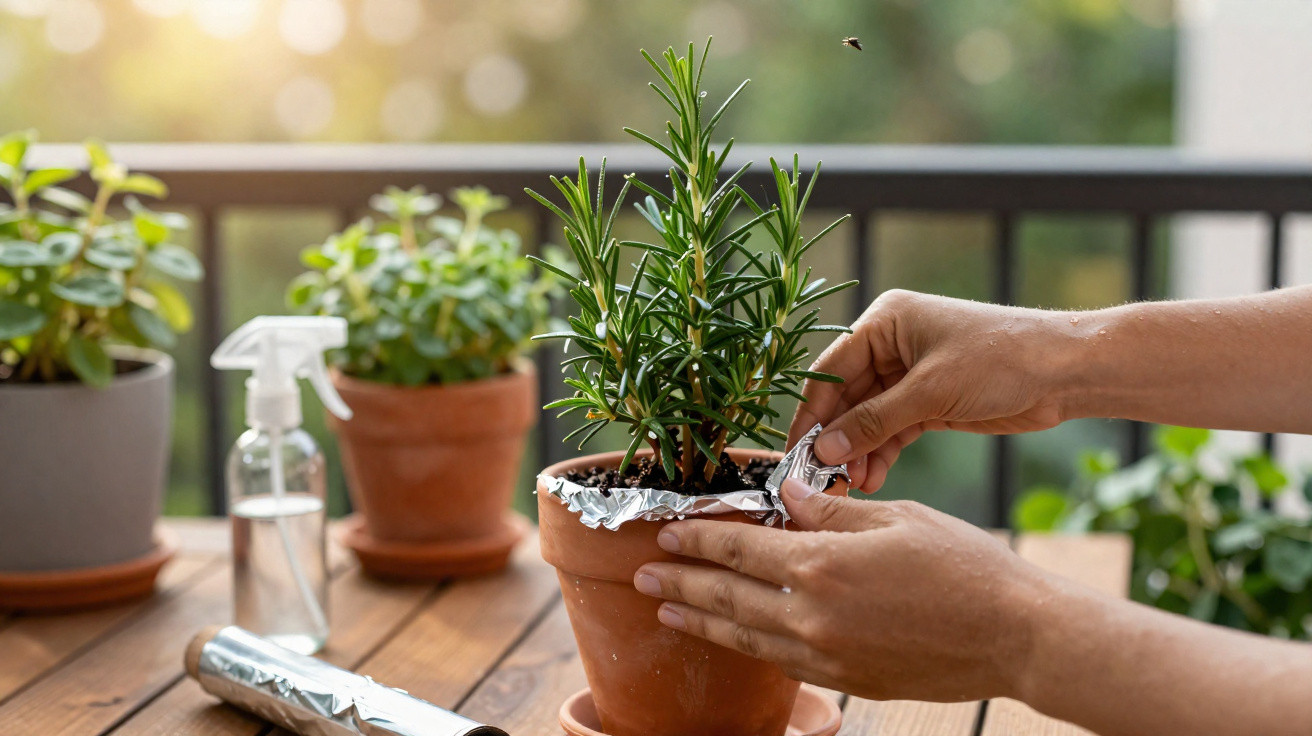
Placing aluminium foil on a rosemary pot can reflect light, help deter small insects and boost the brightness around the plant. This trick tends to work best on balconies, windowsills and in spots where the sun reaches the plant from only one side, leaving some stems in shade. The key precaution is to use the foil as an external aid-without covering the compost, without touching the roots and without blocking the pot’s drainage.
Why can aluminium foil help rosemary?
Rosemary is a Mediterranean plant that thrives with direct sun, good airflow and a free-draining growing medium. When a pot sits in a corner with light coming mainly from the side, the less-lit portion may become weak and leggy, with leaves that are less fragrant.
Aluminium foil creates a reflective surface close to the pot. The bounced light does not replace direct sun, but it can improve how light is spread across lower growth and reduce shaded patches in plants grown in compact spaces.
How does aluminium help against insects?
The shine of aluminium foil can unsettle certain small insects that come near the plant, especially when light hits the surface and produces uneven, flickering reflections. This effect may be useful for pots where you notice fungus gnats, aphids or other pests moving around new leaves.
That said, this trick should not be treated as an insecticide. It works as a visual deterrent and a support measure, not a cure for an established infestation. If your rosemary already has lots of aphids, scale insects or sticky leaves, you will need to clean the plant and review watering, ventilation and any overfeeding with fertiliser.
How to place aluminium foil on the pot correctly
The aluminium foil should sit along the outside rim or around the outer surface of the pot, always leaving space for the compost to breathe. Keeping the shiny side facing up reflects light more effectively, but it does not need to form a sealed covering.
To use it without harming rosemary, follow these precautions:
- Cut the aluminium foil into strips or small pieces.
- Position it around the pot’s rim, without covering all the compost.
- Keep the drainage holes clear.
- Avoid letting the foil touch the main stem.
- Remove it if the pot starts to heat up too much in strong sun.
What mistakes can damage the plant?
The most common mistake is covering the growing medium as if putting a lid on it. That traps moisture, slows evaporation and increases the risk of waterlogged roots-exactly the kind of problem rosemary is least able to tolerate.
It is also important to avoid using this method on pots that already receive very intense sun for many hours, especially during hot weather. The foil can warm the area around the pot and stress the plant. Watch for these signs:
- Wilted leaves even when the compost is slightly moist.
- Dried-out tips after very hot afternoons.
- A smell of trapped damp in the compost.
- Yellowing leaves close to the base of the plant.
- Compost taking many days to dry out.
When is this rosemary trick worth using?
Aluminium foil is most useful for rosemary grown in pots on balconies, windowsills and areas where light is limited and comes mainly from one side. In these situations, it can increase brightness on lower stems and make it harder for some insects to approach-without requiring chemical products.
You will see better results when the trick goes hand in hand with basic rosemary care: several hours of direct sun, watering with gaps between, a pot with drainage holes, a light compost mix and regular trimming of stems. With foil positioned correctly and drainage left unobstructed, rosemary grows more evenly, keeps its aromatic leaves and suffers less from shade building up around the pot.

Comments
No comments yet. Be the first to comment!
Leave a Comment