
Choosing the right palm tree for a small backyard sounds straightforward-until you start thinking about shade, looks, cracked paving, burst pipes… and suddenly it is not so obvious. The good news is that there is a middle ground: palms that look like they belong in a magazine garden, but with calmer root systems that are far less likely to cause damage-provided you plant them properly.
What is the best palm tree for small backyards and compact areas?
Among the species most often used in tight spaces, the lady palm (Rhapis excelsa) and the parlour palm (Chamaedorea elegans) regularly stand out as choices with less aggressive roots. They do very well in pots indoors or in sheltered outdoor spots, creating a softer, more delicate look.
If what you want is that “classic palm” feel-with a clearly defined trunk-many landscaping plans lean towards compact palm varieties. Some favourites include the pygmy date palm (Phoenix roebelenii), the fan palm (Licuala grandis) and the bamboo areca palm (Dypsis lutescens), as long as they are given suitable space and the right care.
Watch a video on the YouTube channel Vida no Jardim showing 7 palm species that are ideal for smaller places.
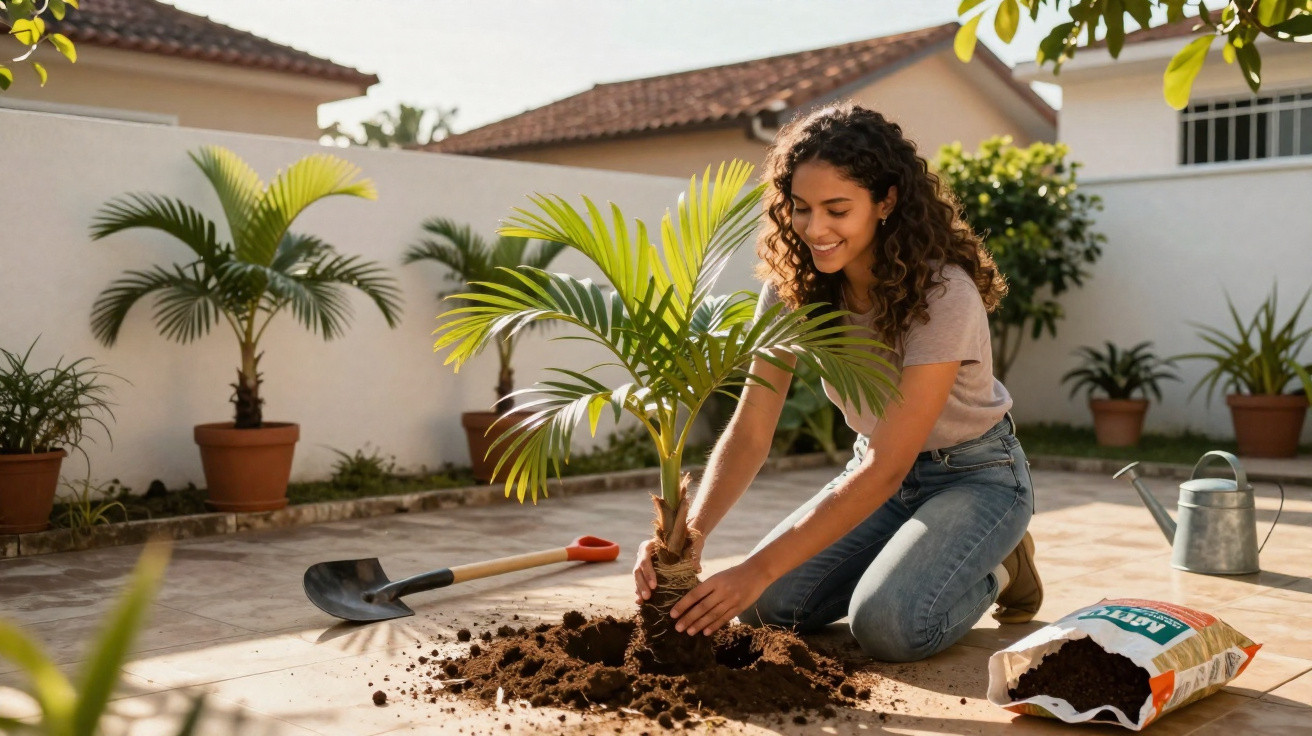
How do you plant a palm tree in a small backyard without damaging paving?
To stop a palm tree for a small backyard becoming a headache, the way you plant it can matter almost more than the species itself. A well-prepared planting area, free-draining soil and keeping a sensible distance from paving and structures all help reduce the risk of cracking and damp problems.
A few basic steps make planting safer and longer-lasting-especially in paved areas and close to walls, pipework or the edge of a swimming pool:
- Distance from paving: if possible, keep at least 50 cm away from paving, edging and sub-base to lower structural risks.
- A defined planting bed: edging or low retaining borders help keep soil in place and make the garden look more organised.
- A balanced growing mix: combining garden soil with organic compost and sand improves drainage and aeration.
- Drainage at the base: a layer of gravel or coarse sand in the bottom of the hole helps prevent waterlogging and root rot.
What daily care do palms with less aggressive roots need?
Looking after a palm with non-aggressive roots is fairly straightforward and suits anyone who wants a good-looking garden without constant maintenance. Even watering, occasional feeding and removing dead fronds are usually enough to keep it healthy and tidy.
In the first few months, keep the soil lightly moist (never saturated). After that, you can water less often-particularly outdoors where rainfall is regular. Applying organic fertiliser every three to four months, checking for pests, and using mulch (pine bark, dry leaves or decorative gravel) all help retain moisture and reduce unwanted weeds.
How can you use compact palms to add privacy and beauty in the backyard?
A compact palm is a great way to gain privacy without turning a small backyard into a solid wall of plants. Planted in a row along boundary walls, they work like a gentle “green curtain”, blocking part of the view from neighbours and the street while still allowing light and airflow through.
They also look effective lining internal pathways, acting as a focal point in a central bed, or placed near a bench, hammock or outdoor armchair. Where space is extremely tight-or on balconies-growing palms in large containers makes root control easier, lets you refresh the layout whenever you like, and keeps the tropical feel light and airy, with just enough shade to turn the area into a pleasant everyday retreat.
Comments
No comments yet. Be the first to comment!
Leave a Comment