
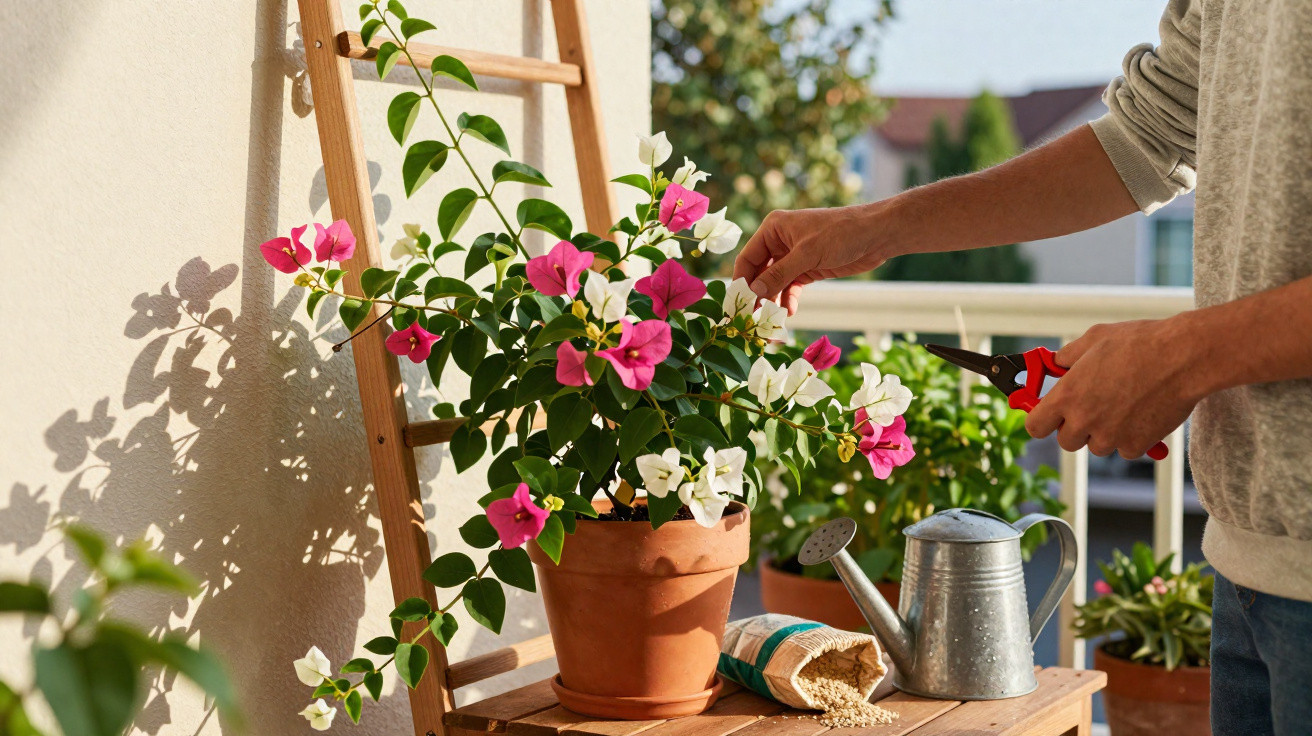
The Bougainvillea-like climbing plant many people look for is dipladenia, also sold under its botanical name Mandevilla. Its pliable stems can be trained over trellises, railings and low walls, while trumpet-shaped blooms appear in white, pink or red for much of the year in warmer regions.
Why does dipladenia resemble bougainvillea?
Dipladenia delivers a heavy flush of flowers that creates the same kind of bright colour impact associated with bougainvillea. The key difference is its growth and flowering structure: rather than thin bracts and thorny stems, Mandevilla produces tubular flowers, glossy green leaves and shoots that can be guided neatly across supports.
The trumpet-shaped flowers open singly or in small clusters, standing out clearly against the foliage. In mild or warm climates, fresh flowering can continue for months, especially when the plant receives enough light.
- White, pink or red flowers;
- Green leaves that are firm and glossy;
- Flexible stems that twine around supports;
- Extended flowering through the warmest months;
- Suitable for growing in pots, on railings and on trellises.
Does the lack of thorns make it easier to grow?
Because it does not have the thorns typical of bougainvillea, dipladenia is simpler to tie in and prune in narrow walkways, balconies and small gardens. That said, it is not a plant for handling without care or for ingestion: its milky sap can irritate the skin, and the leaves and flowers should be kept out of reach of children and pets.
How much sun and water does this climber need?
This plant flowers most freely in full sun or bright partial shade, with several hours each day of strong light. In overly shady spots, the stems may stretch out in search of brightness and the number of buds can drop.
The compost should be kept slightly moist, but never waterlogged. Dipladenia has roots that react badly to excess water, so the pot needs open drainage holes and well-drained soil that can shed surplus moisture quickly.
- Place the pot somewhere bright and sheltered from frost;
- Water when the top layer of compost starts to dry;
- Do not allow water to sit in the saucer;
- Use a light, fertile mix rich in organic matter;
- Cut back watering during cold or rainy periods.
Pruning and training keep the stems tidy
A trellis, railing or a set of wires makes it easier to steer the stems without snapping them. A light tidy-up prune should remove dry, weak or crossing growth, and gentle tip-pruning encourages new side shoots. Other climbers that flower for much of the year also rely on this kind of training to cover their support evenly.
What keeps dipladenia vigorous all year?
In spring and summer, a balanced feed designed for flowering plants supports the development of roots, stems and buds. Products containing phosphorus and potassium can help with flowering, provided they are used at the recommended rate and never applied when the roots are completely dry.
In winter, growth usually slows in colder regions, so the plant needs less water and protection from low temperatures. With adequate light, moderate pruning and regular checks for mealybugs and aphids, dipladenia keeps a dense canopy and quickly returns to strong flowering when warmth comes back.
Comments
No comments yet. Be the first to comment!
Leave a Comment