
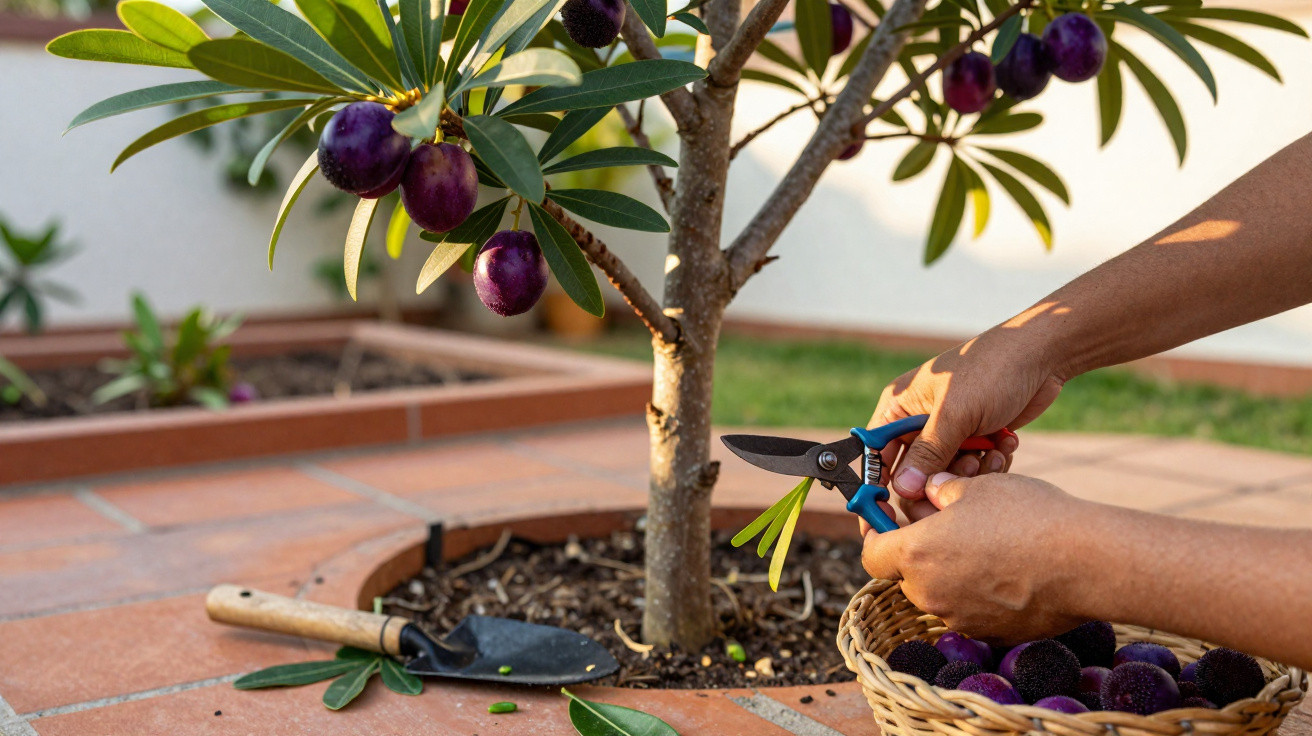
People who grow a jabuticaba tree often watch the seasons closely to judge when it is safest to step in and prune. Poor timing can weaken the tree and reduce fruiting, so many growers avoid pruning at certain times of year-particularly when the plant is highly active and more sensitive to heavy cuts.
Why is it important to choose the right time to prune a jabuticaba tree?
Pruning has a direct impact on sap flow, the sprouting of new shoots and the production of flowers. If you cut during periods of strong growth or while the tree is flowering, it may divert energy into sealing wounds rather than setting fruit, which can lower the following cycle’s yield.
There is also the issue of pests and disease, because fresh cuts leave tissue exposed. In warm, humid periods-common across much of Brazil-the risk from fungi and insects rises, which is why many growers avoid pruning when the weather is very unsettled or when relative humidity is high.
What is the best time to prune a jabuticaba tree?
In general, pruning is carried out when the tree’s vegetative activity is lower-when it is more “resting”. In many areas, that window falls in autumn or early winter, ahead of the main flowering flushes, which typically means better wound closure and less stress for the tree.
It is best not to prune just before flowering or during flowering, as flower buds can easily be removed by mistake. Once fruiting has finished, pruning can be used to reshape the canopy, remove poorly placed branches and encourage future shoots-without compromising the next crop and while keeping the tree more balanced.
- Autumn: recommended for light structural corrections.
- Early winter: used for formative pruning and clean-up.
- Spring and summer: avoided for more drastic pruning.
How can you prune a jabuticaba tree without harming its development?
Good pruning starts with a clear aim: shaping the canopy, clearing dead branches or keeping size under control. Taking too much off in one go greatly reduces leaf area, limits photosynthesis and can trigger messy regrowth-especially on older trees or those left unattended for a long time.
As part of the work, it helps to spread more significant cuts over more than one season. It is also essential to follow a few basic precautions that improve plant safety and make results more reliable.
- Use sharp, sanitised tools to achieve clean cuts.
- Remove dead, diseased or broken branches, prioritising clean-up pruning.
- Avoid taking out too many productive branches in a single year.
- Keep the centre of the canopy open, improving light penetration and air movement.
- Apply a wound-sealing paste to thicker cuts when necessary.
What additional care helps increase a jabuticaba tree’s fruiting?
Pruning works best when paired with balanced fertilising, regular watering and well-drained soil. Without these conditions, pruning on its own often fails to deliver the increase in flowers and fruit that many people expect-especially with trees grown in pots or in poor soils.
Growers also adjust canopy height and shape to make harvesting easier and to help with applying crop-protection products when needed. Keeping the tree to a moderate size reduces the chance of branches snapping under heavy loads and turns pruning into part of an ongoing plan-respecting the least suitable periods for cutting and preserving the jabuticaba tree’s natural cycle over the years.
Comments
No comments yet. Be the first to comment!
Leave a Comment