
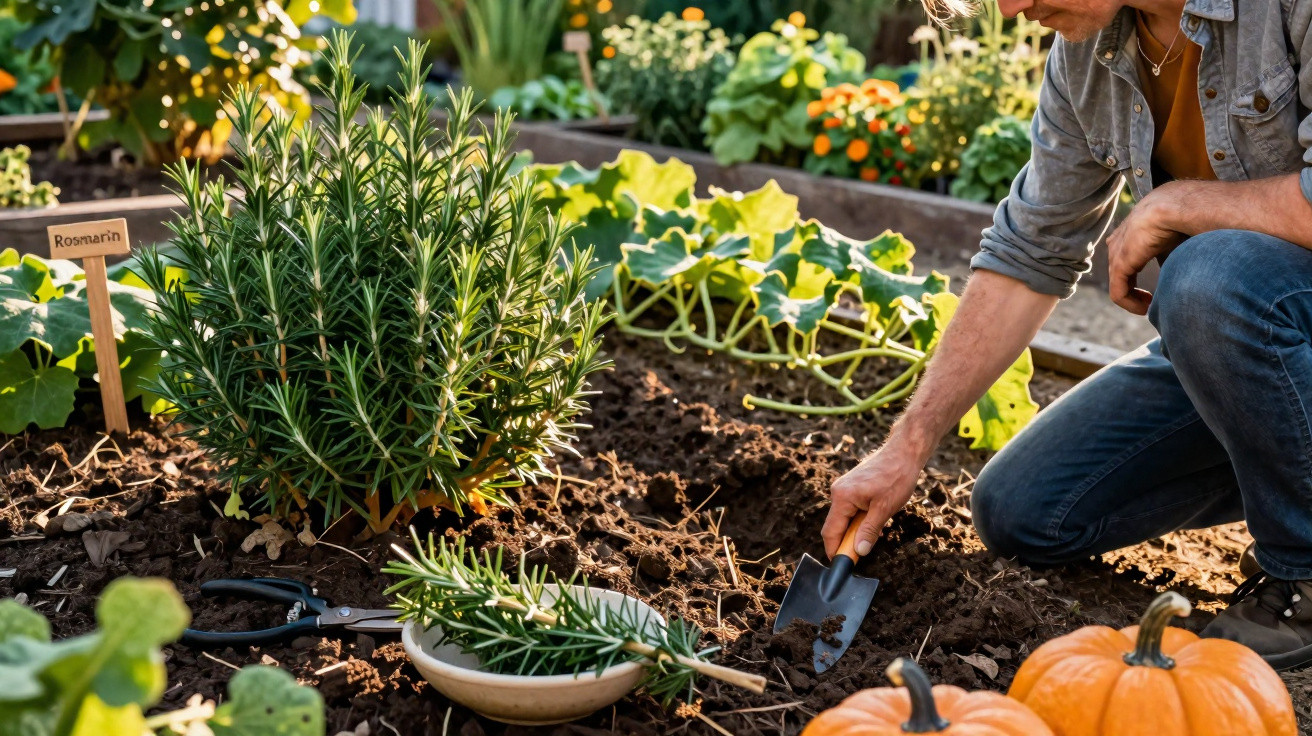
Rosemary is heat-tolerant, copes well with dry spells and needs very little fuss, yet it can lose strength when it is grown next to pumpkin. The issue is not any chemical released by the roots, but the two plants’ conflicting requirements for space, moisture, drainage and sunshine.
Why shouldn’t rosemary be kept near pumpkin?
Pumpkin produces large leaves and long runners that sprawl across a bed, and they can easily cast shade over this Mediterranean shrub. Pumpkins are also typically watered more often, whereas rosemary performs best when the compost is allowed to dry out between waterings.
Together, these habits can leave the area around the stems damp and airless, which encourages yellowing foliage, weaker roots and fungal problems. So the incompatibility is mainly about how the bed is managed, rather than an absolute rule that the two species can never share space.
Which other plants need care when sharing the same bed?
Crops that create heavy shade or require consistently moist soil are better placed elsewhere. When laying out the garden, it helps to keep species with very different needs apart, for example:
- Pumpkins, because of their sprawling runners and broad leaves;
- Swiss chard, which prefers steadier moisture in the soil;
- Cabbages and cauliflowers, which need room and regular feeding;
- Ornamental plants that are watered daily;
- Tall species that can block direct sun.
Where should the herb go in the garden?
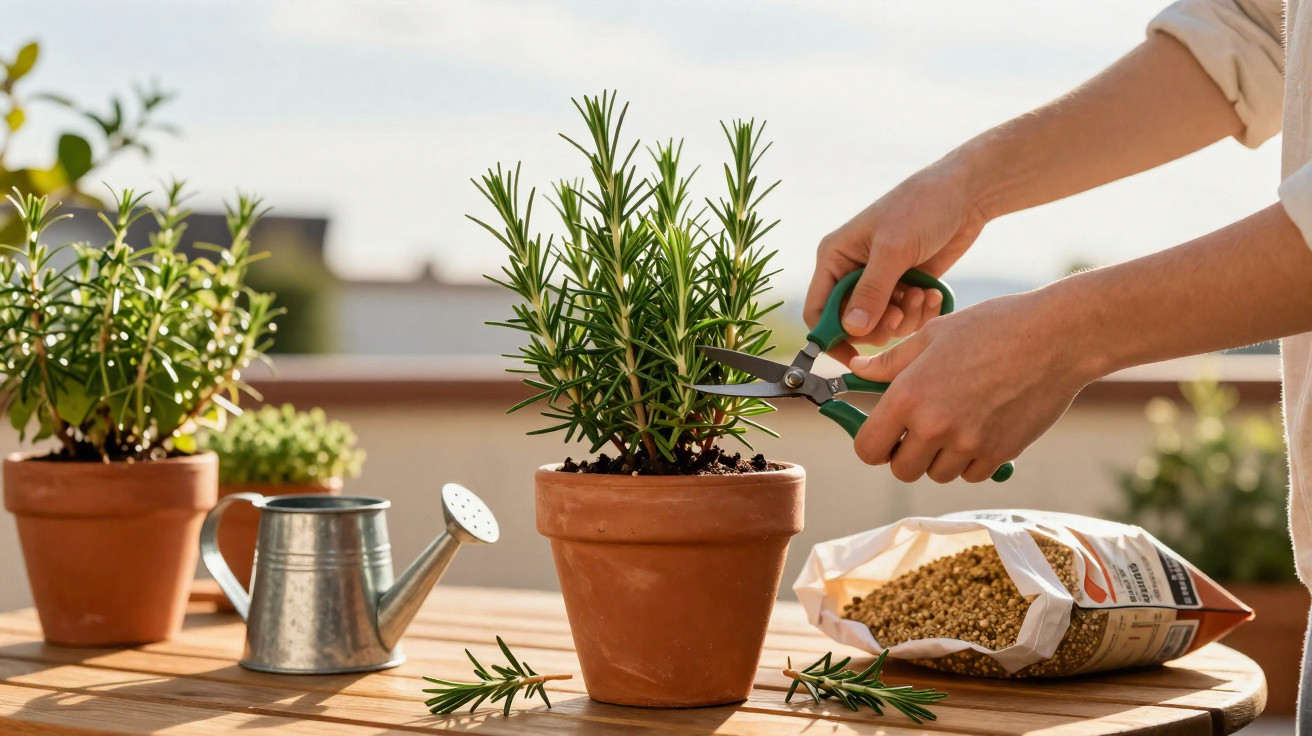
The best position provides at least six hours of direct sun and good airflow through the branches. Raised beds, bright borders and pots with generously sized drainage holes all help prevent water collecting around the roots.
The growing medium should be light, open and free-draining; you can mix in coarse sand or another material that improves drainage. Suitable conditions also mean spacing out watering, only doing it when the surface layer has dried.
How do you keep rosemary full and healthy?
Regular pruning encourages fresh shoots and stops the plant from becoming leafy only at the tips. Cuts should be made in the green growth, without taking away large sections of the older, woody stems:
- Remove dry, broken or spotted stems;
- Trim the tips after the flowering period;
- Avoid waterlogging the soil when watering;
- Keep enough space for air to move through the plant;
- Watch for mealybugs, mites and yellowing leaves;
- Turn the pot from time to time to spread the light evenly.
How can you use harvested sprigs at home?
Fresh sprigs can flavour potatoes, breads, meats, roasted vegetables, sauces and infused oils. To bring out the fragrance, chop the leaves or lightly bruise them before cooking, and use a restrained amount so the resinous taste does not overpower the dish.
Rosemary cultivation works best when the plant has plenty of sun, low moisture and room away from species that carpet the bed. With gentle trimming and frequent picking, the shrub keeps aromatic leaves available for much of the year.

Comments
No comments yet. Be the first to comment!
Leave a Comment