
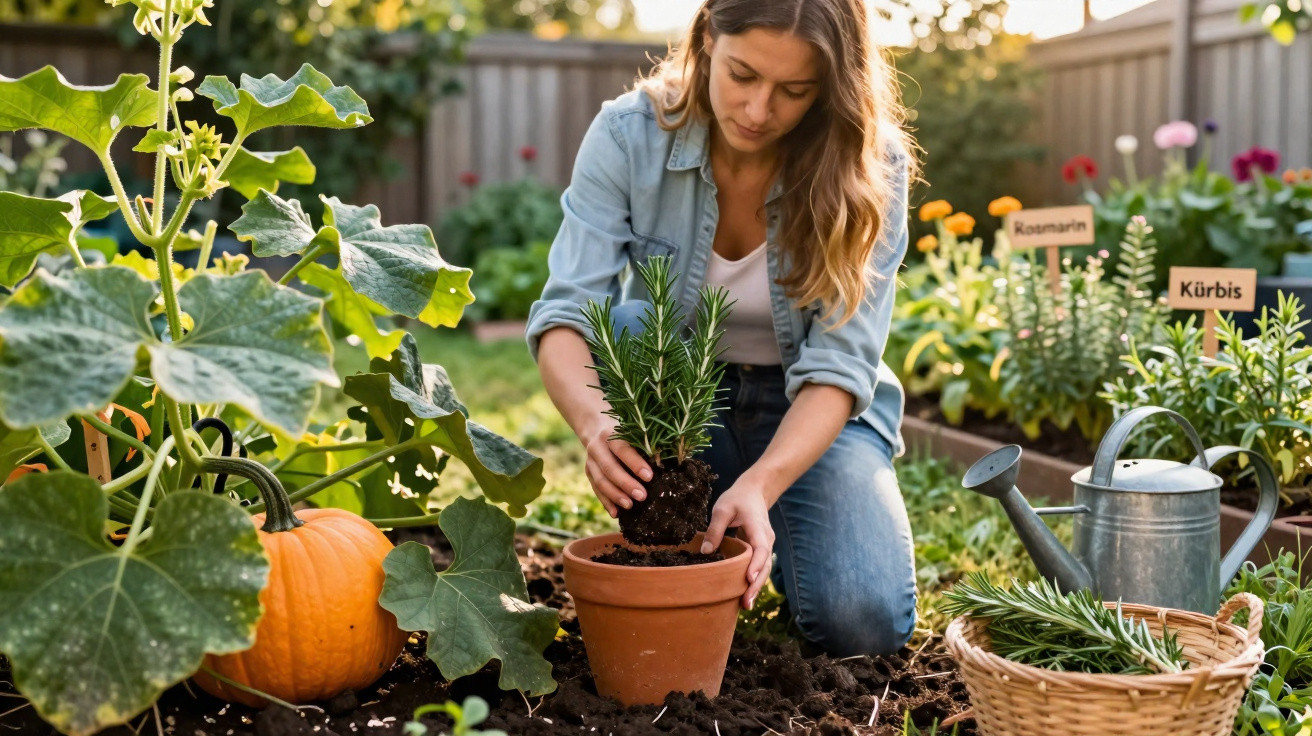
Rosemary copes well with heat, brief dry spells and soils that are not especially rich, but it does not tolerate having its roots kept wet all the time. For that reason, it is usually best not to grow it alongside pumpkin, a plant that spreads widely and is typically watered more often. The issue is the growing conditions, not any supposed substance released by either species.
Why isn’t it recommended to plant rosemary near pumpkin?
Pumpkin produces large leaves and trailing stems that sprawl across the bed, which can shade rosemary and limit airflow around it. On top of that, keeping the pumpkin area moist while it grows and sets fruit can leave the soil far too wet for rosemary’s roots.
- Pumpkin can spill over rosemary with its stems and leaves;
- Shade can reduce the herb’s growth and aroma;
- Frequent watering raises the risk of waterlogging;
- Constant damp can lead to root problems;
- Both plants compete for space in the bed;
- Poor ventilation makes fungal issues more likely.
Does that mean the two plants can never share the same garden?
No. Rosemary and pumpkin can be grown in the same garden provided they are in separate beds and you can water them independently. The difficulty arises when their roots are in the same damp area or when pumpkin runners move over the shrub and block sunlight.
The same guidance for choosing the right spot for rosemary also applies when growing chard and other vegetables that prefer consistently moist soil. There is no proven chemical incompatibility between these plants, but their different needs make managing them together impractical.
What is the best place to plant rosemary?
Pick a position that gets at least six hours of direct sun and does not hold water after rainfall. The soil should be light and free-draining, and the shrub needs enough room for air to move between the branches. On clay ground, a raised bed can be more effective than simply mixing in a small amount of sand.
- Use the sunniest part of the garden;
- Avoid low-lying spots where water puddles;
- Keep it away from plants that need daily watering;
- Allow space for the shrub to grow without being crowded;
- Use a pot with several drainage holes if the soil is very compacted;
- Choose containers at least 30 centimetres wide;
- Wait for the soil surface to dry before watering again.
Watering and pruning keep the shrub compact
Newly planted rosemary needs regular watering until its roots establish, but you should reduce the frequency once it has settled in. Before watering again, feel the soil and check whether the top few centimetres have dried out. Yellowing leaves, drooping stems and soil that stays wet can all point to overwatering.
Pruning should be gentle and focused on the green tips of the stems. This encourages new side shoots and helps stop the shrub becoming tall and bare at the base. Avoid removing a large portion of the plant in one go, or cutting deep into old wood, as it may struggle to produce new growth.
How can you use rosemary harvested from the garden?
The stems can be used fresh to season potatoes, breads, vegetables, meat and sauces. Because the fragrance is strong, a small amount is usually enough. The leaves can also be dried in a well-ventilated place out of direct sun, then stored in a sealed container for cooking.
Regularly snipping the tips helps keep rosemary bushier, as long as you do not take too much at once. To keep the plant thriving for longer, the key is plenty of sun, excellent drainage and moderate watering. Keeping it separate from pumpkin and from species that require lots of water prevents a single watering routine from harming plants with opposing needs.


Comments
No comments yet. Be the first to comment!
Leave a Comment